Plastics & injection moulding

Moulded parts and extruded sheet leave the process highly charged and attract dust before painting, assembly or packing.

Applications

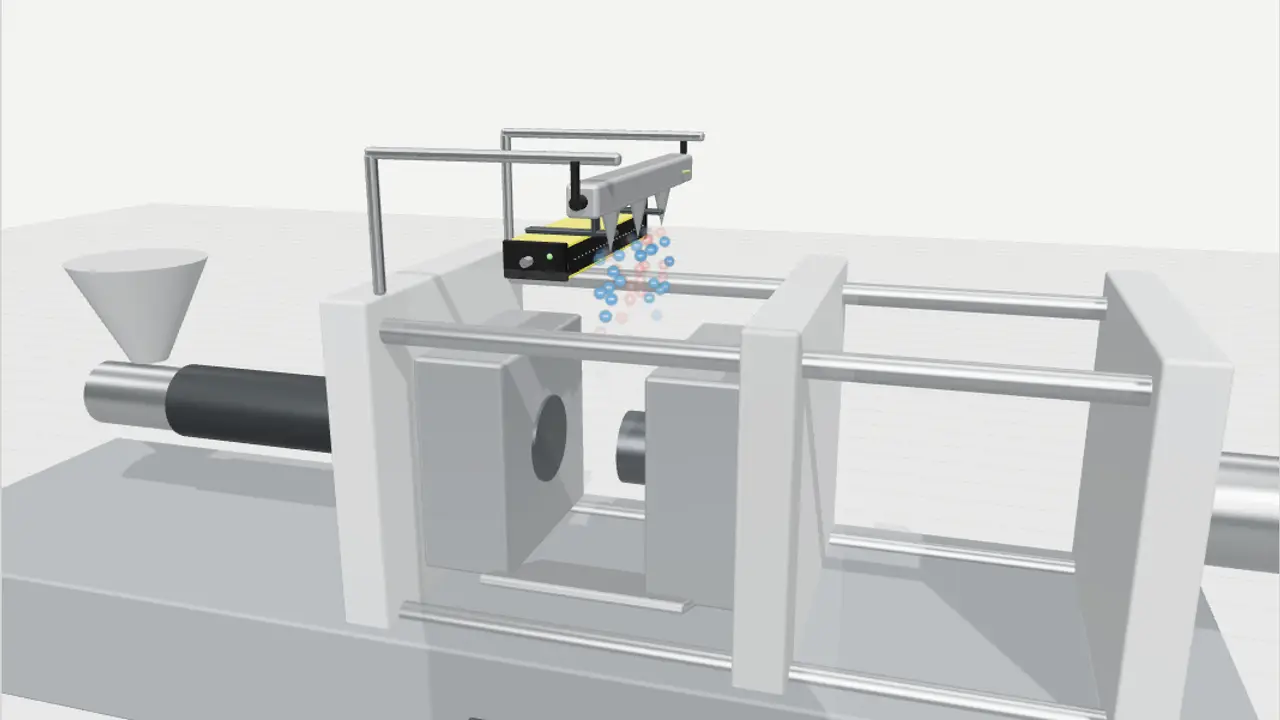
Injection Molding (Ejection and Mold Protection)

The problem

High-speed injection molding of precision parts—whether for medical devices, pharmaceutical packaging, or chemical-resistant labware—creates intense friction and heat. This leads to massive static buildup on both the plastic part and the metallic mold surfaces. The resulting electrostatic attraction causes parts to stick to the mold cavity or core instead of ejecting cleanly. When the mold cycles for the next shot with a stuck part still inside, it causes severe mechanical damage to the expensive mold faces, creates crushed "short shots," and results in costly machine downtime.

The solution

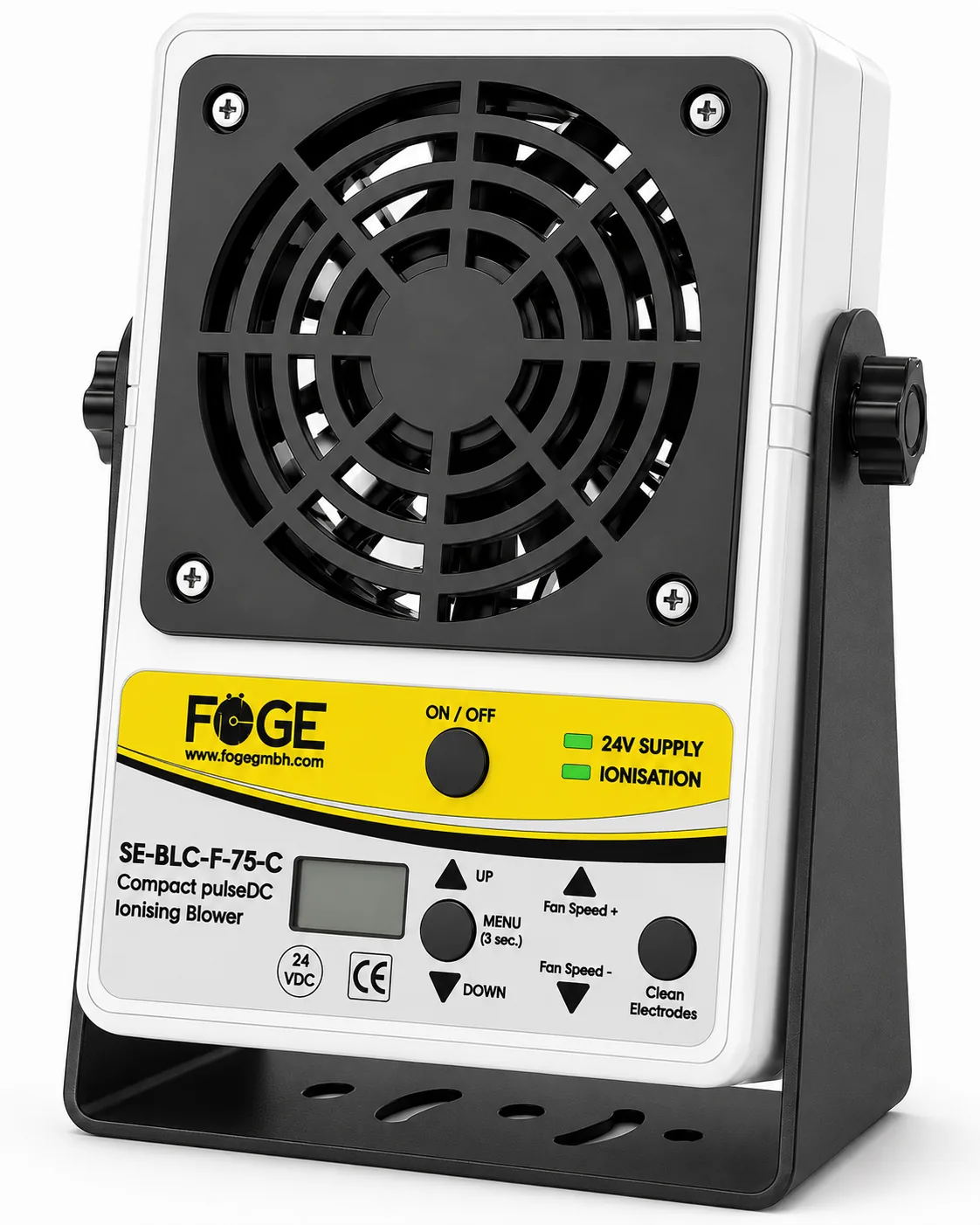
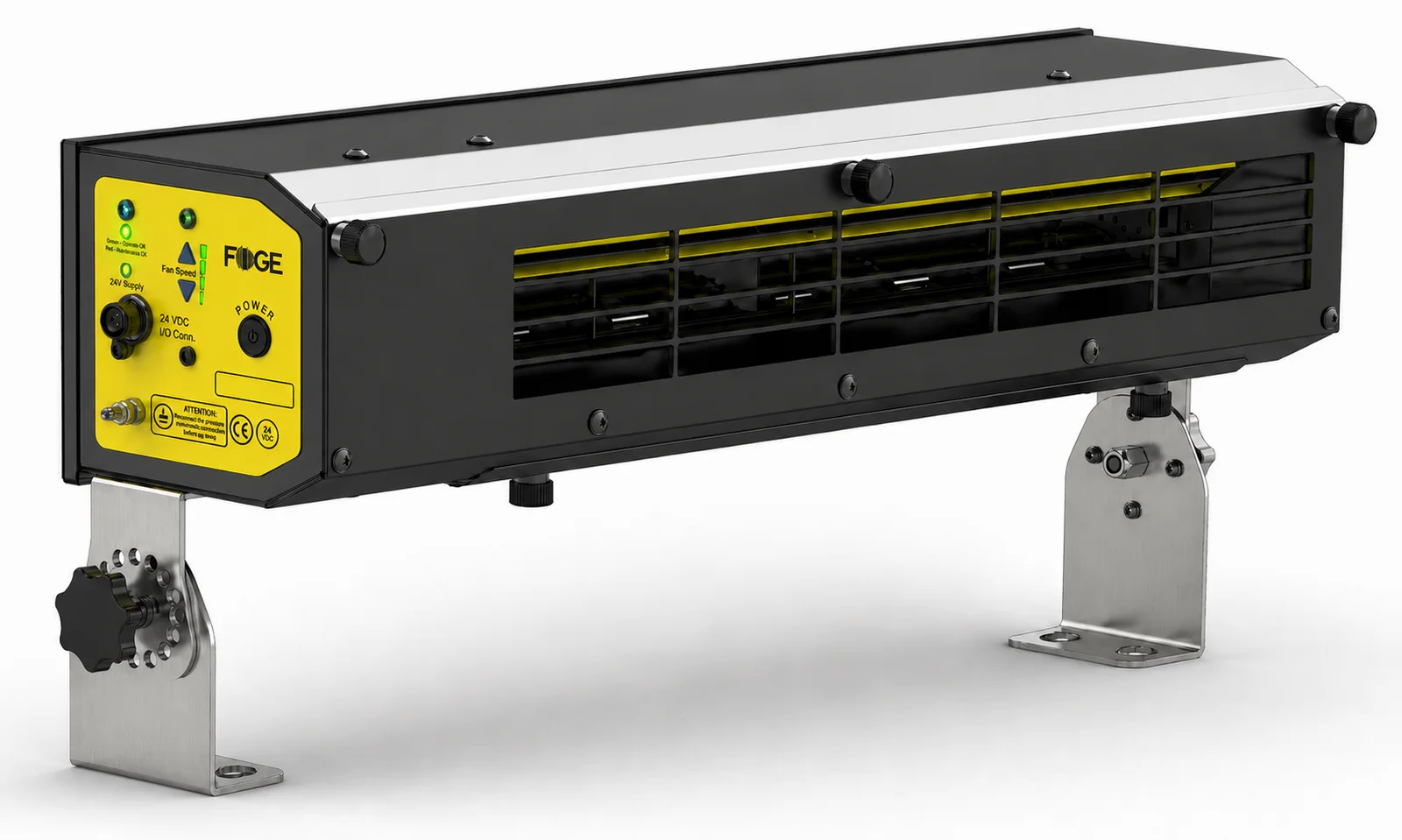
High-output ionizing air blowers or specialized ionizing nozzles are positioned to target the open mold face during the ejection cycle. By flooding the mold cavity with a balanced stream of positive and negative ions, the static bond is instantly neutralized. This allows the parts to release effortlessly and fall away cleanly, ensuring the mold is clear for the next cycle and preventing any physical damage to the tooling.

Application

Automatic part release and mold protection for high-volume injection molding of plastic components, chemical containers, medical syringes, and pharmaceutical vials.

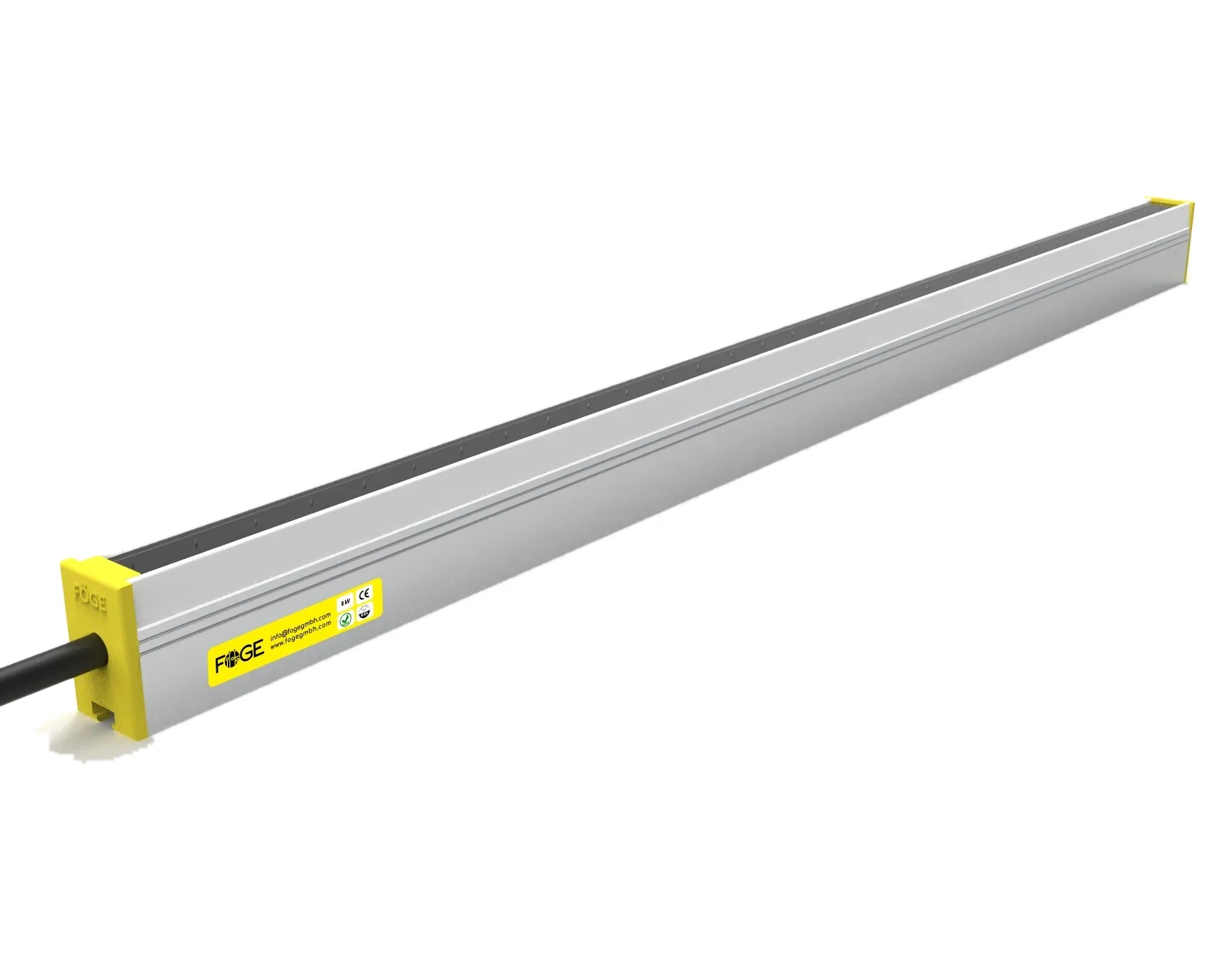
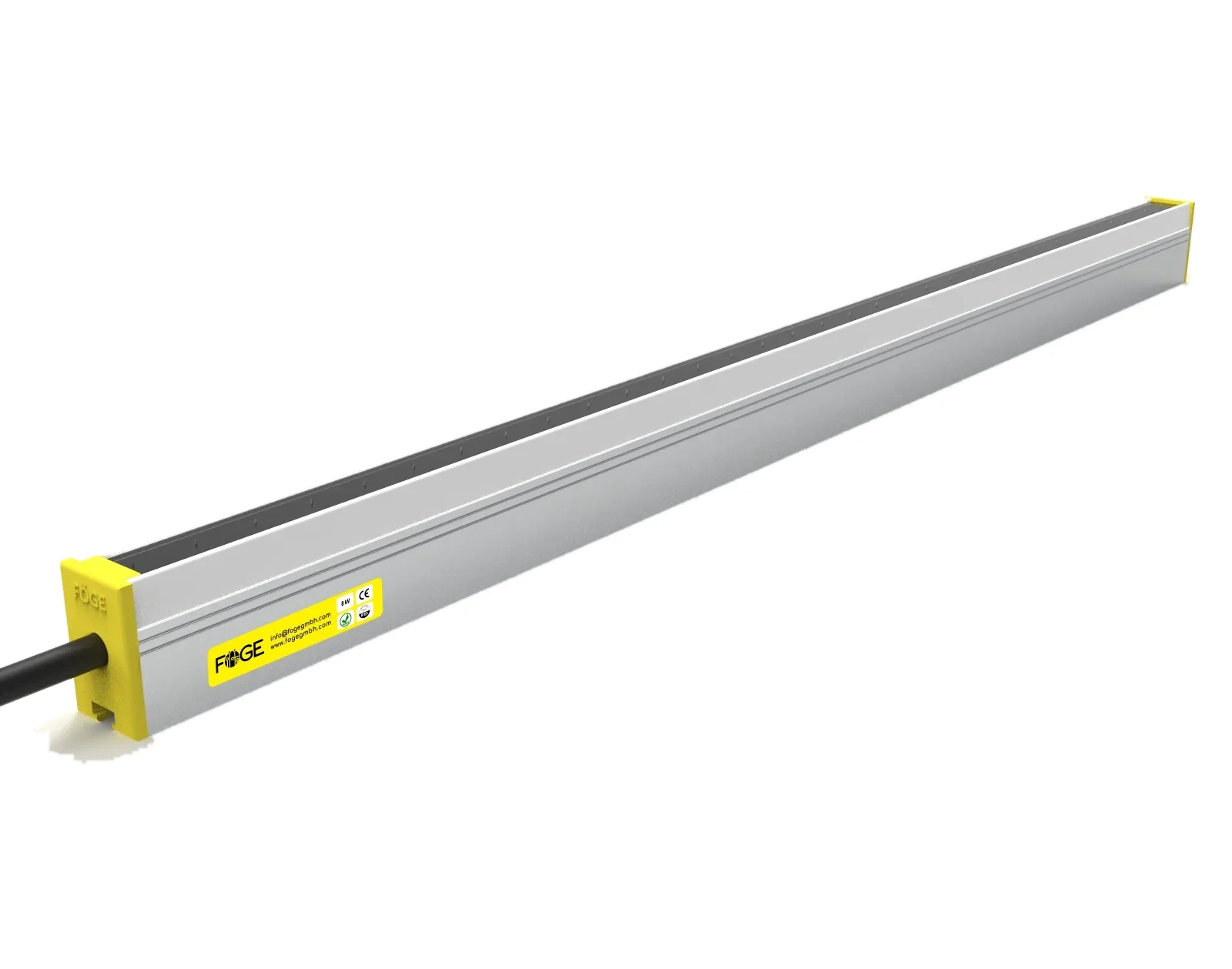
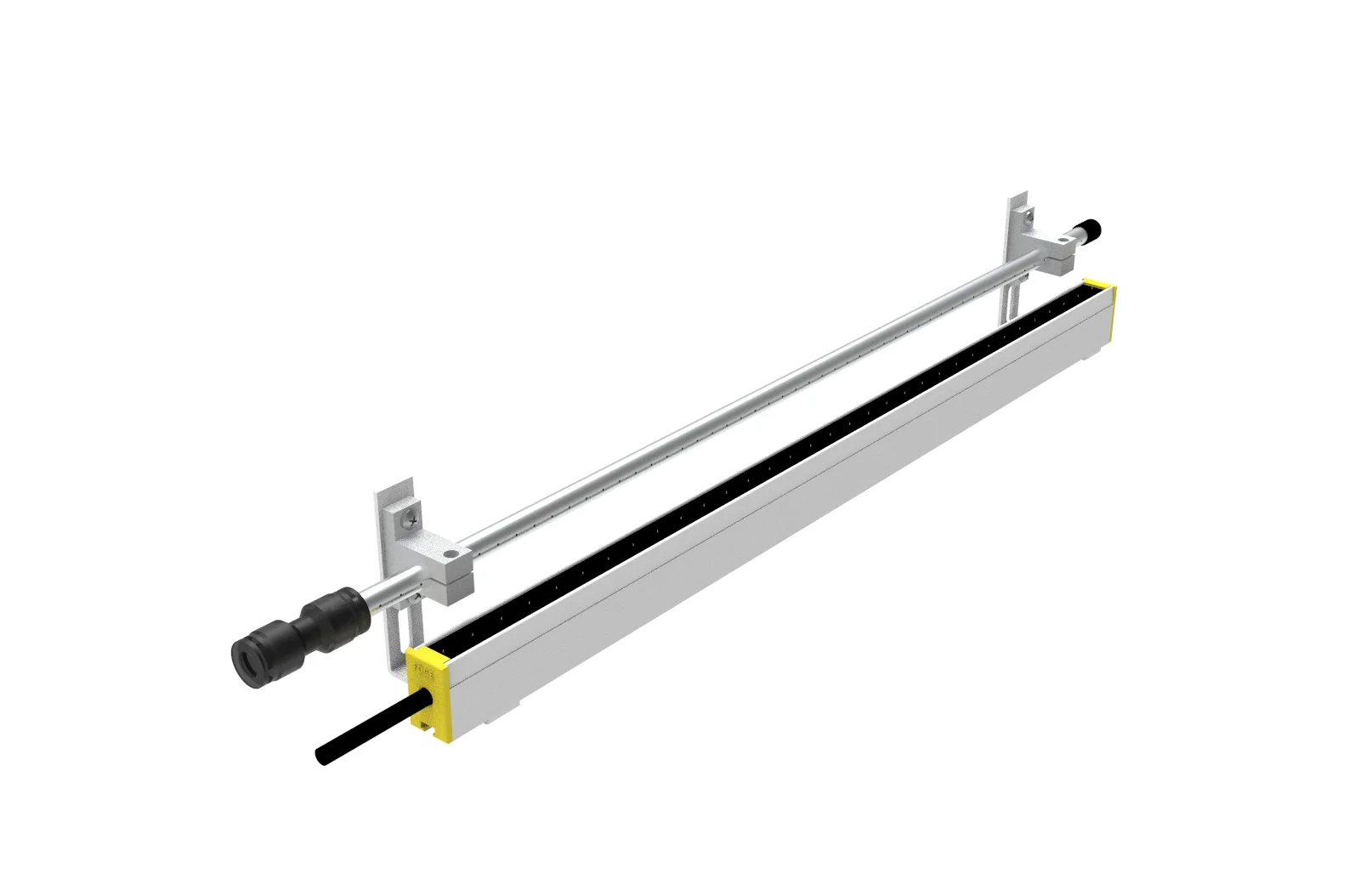
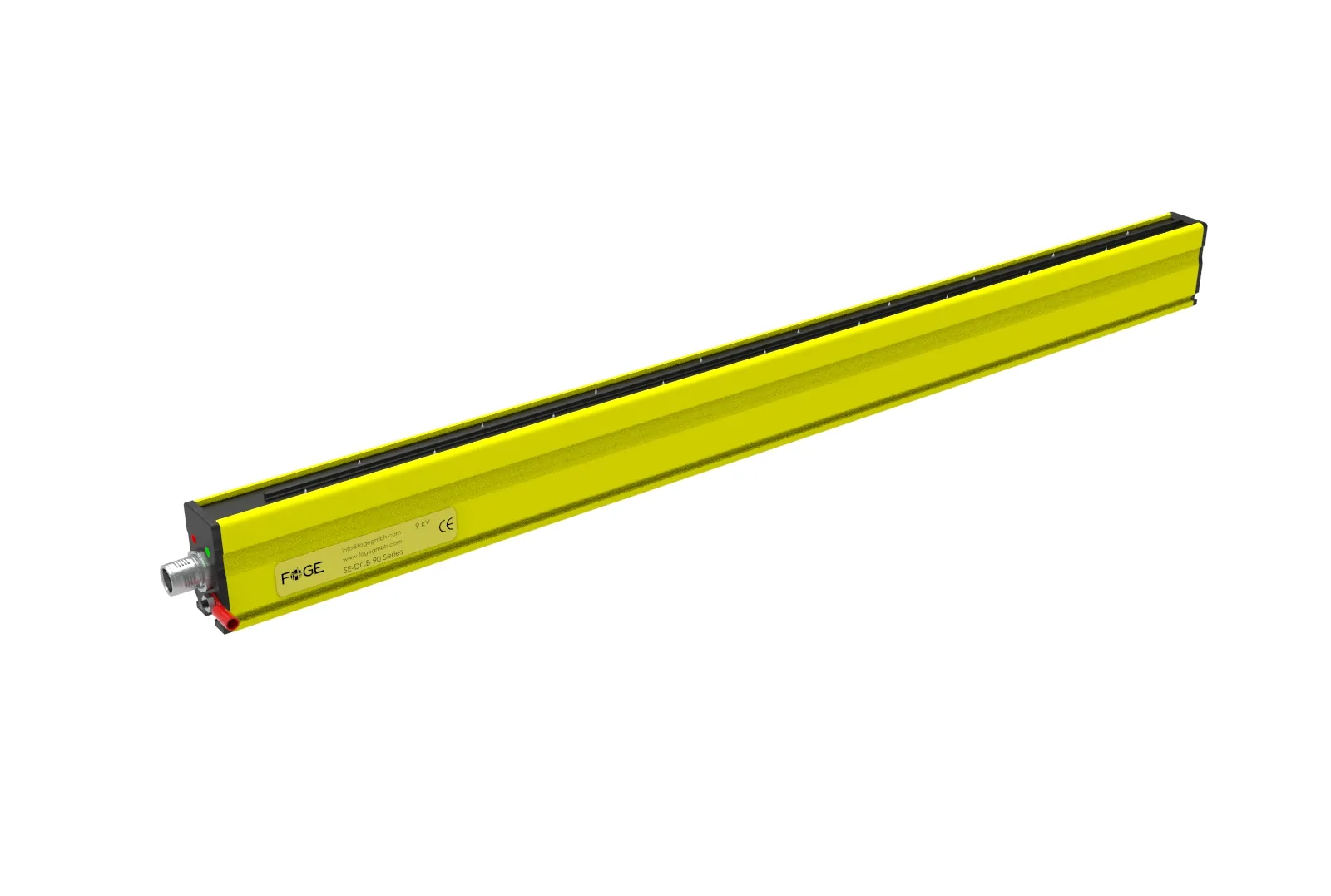
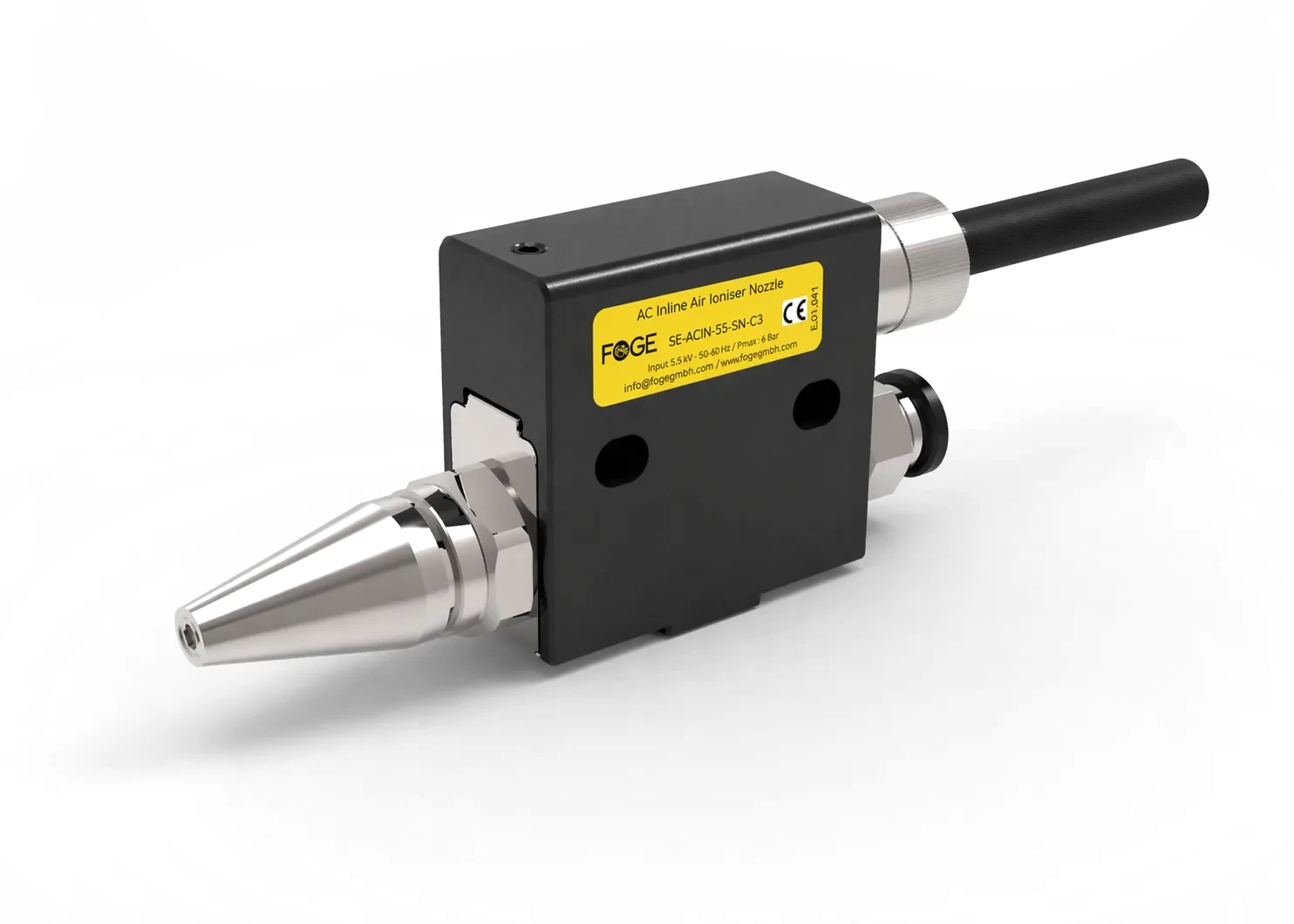
Products used: SE-DCN
Open the 3D application▶ Watch video

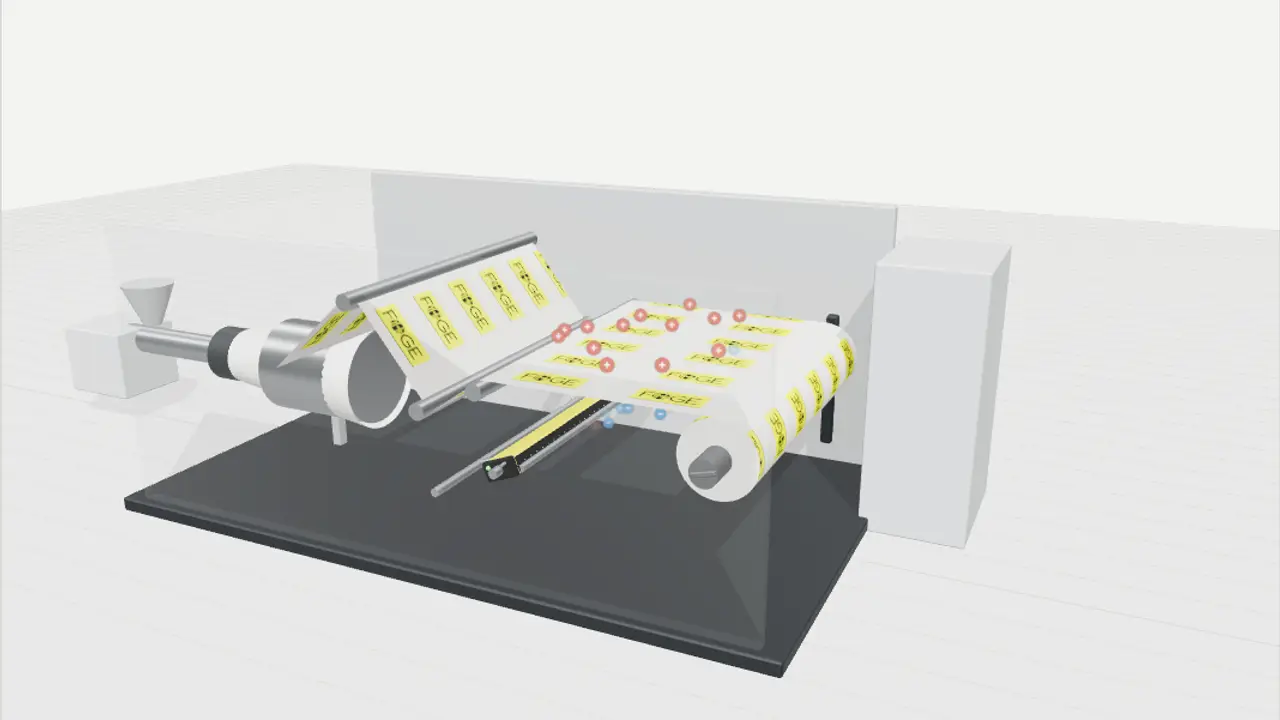
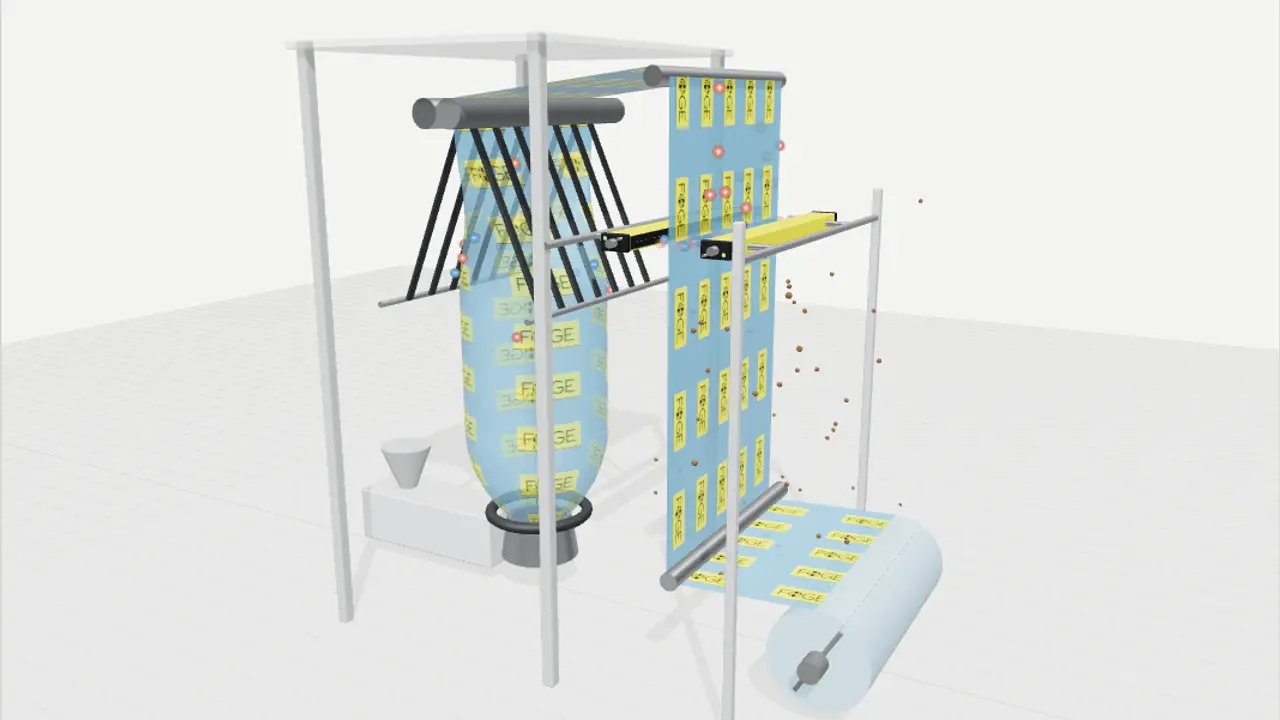
Blown Film Extrusion Line (Take-off / Collapsing Section)

The problem

In blown film extrusion, molten plastic is blown into a massive bubble, stretched, cooled, and then pulled through a collapsing frame and tight nip rollers. This extreme process generates massive levels of static electricity—often high enough to be physically dangerous to operators. This extreme charge causes the film to cling aggressively to the collapsing boards (causing wrinkles or scratches), powerfully attract airborne dust, and create severe winding issues downstream.

The solution

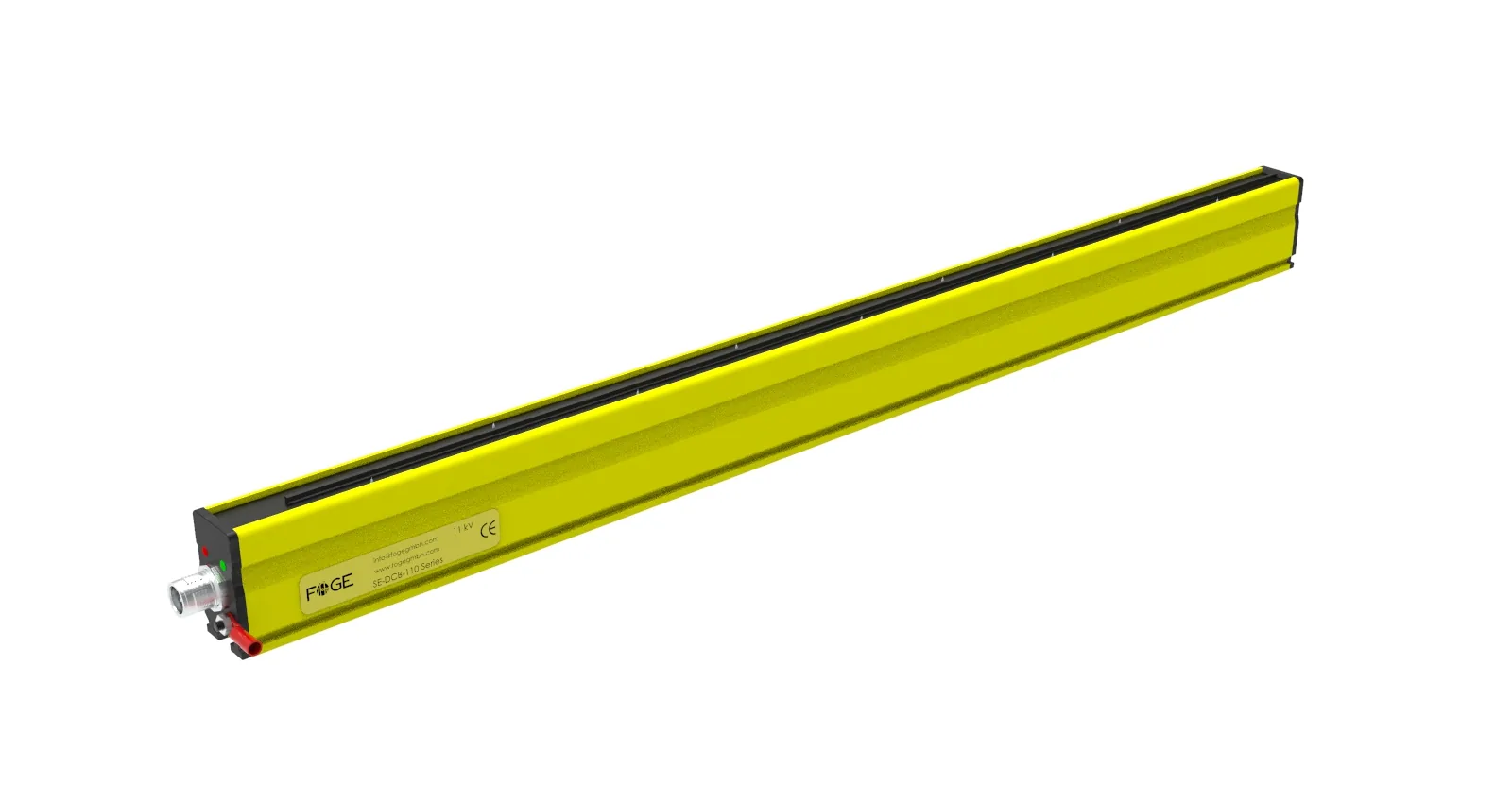
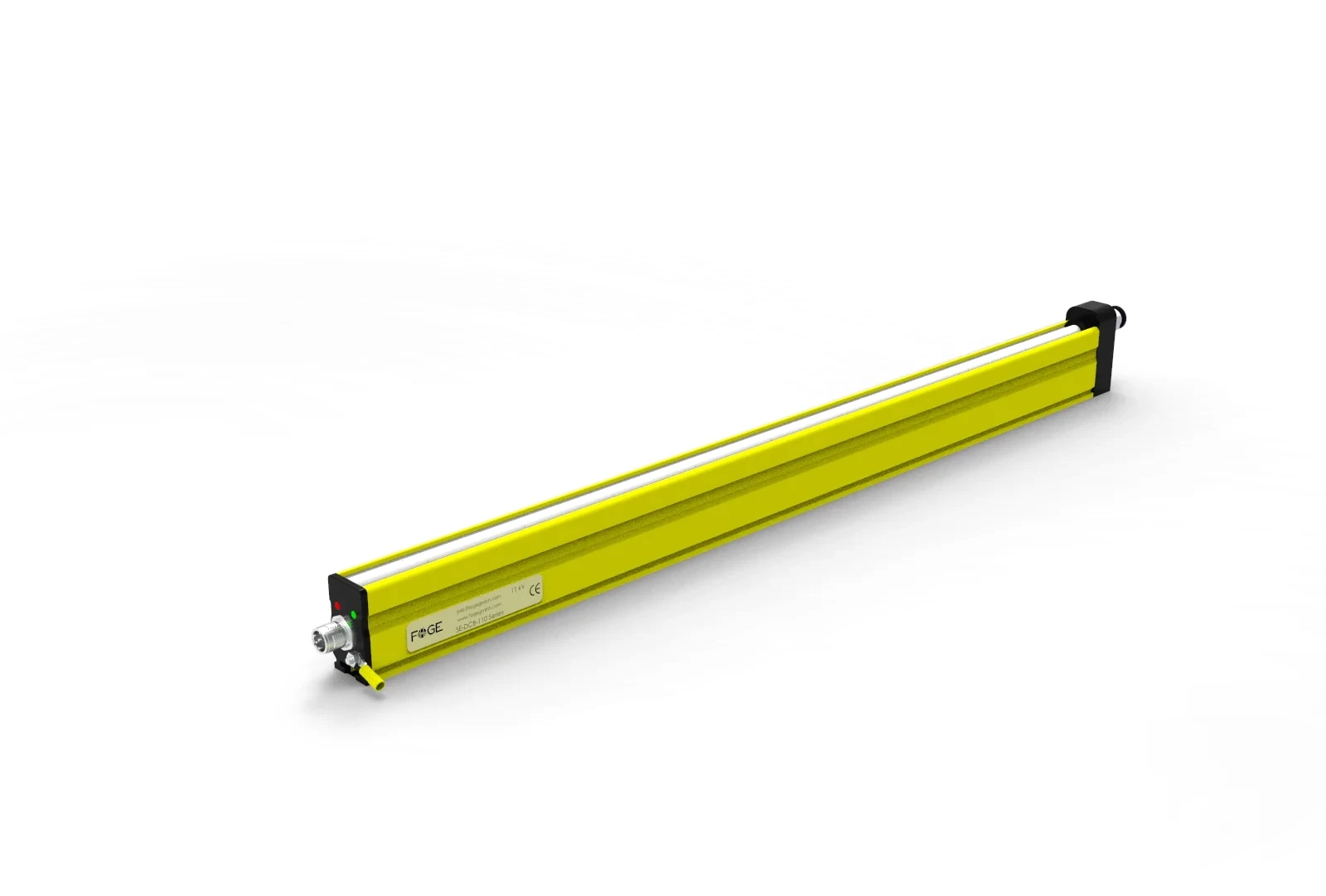
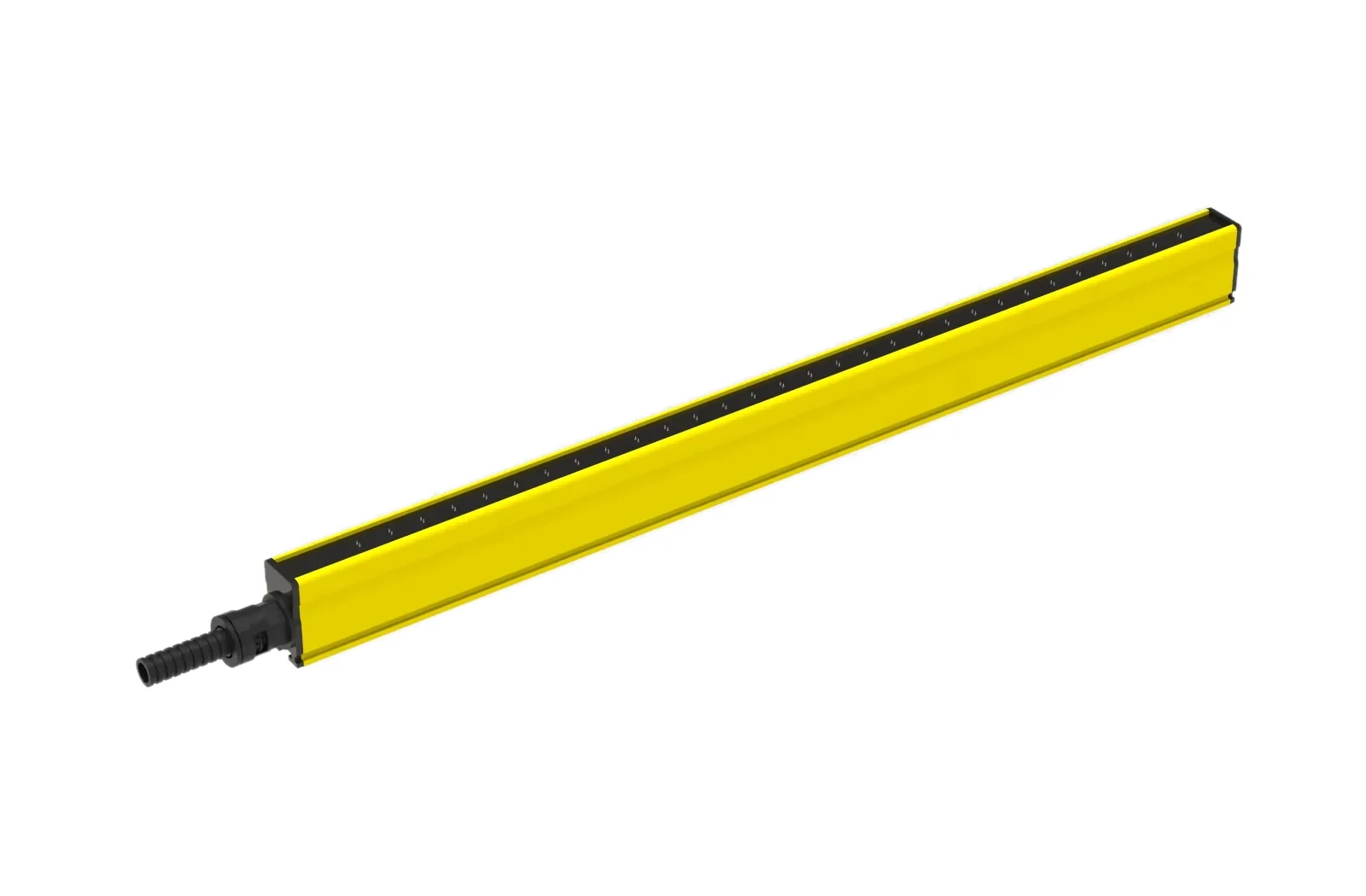
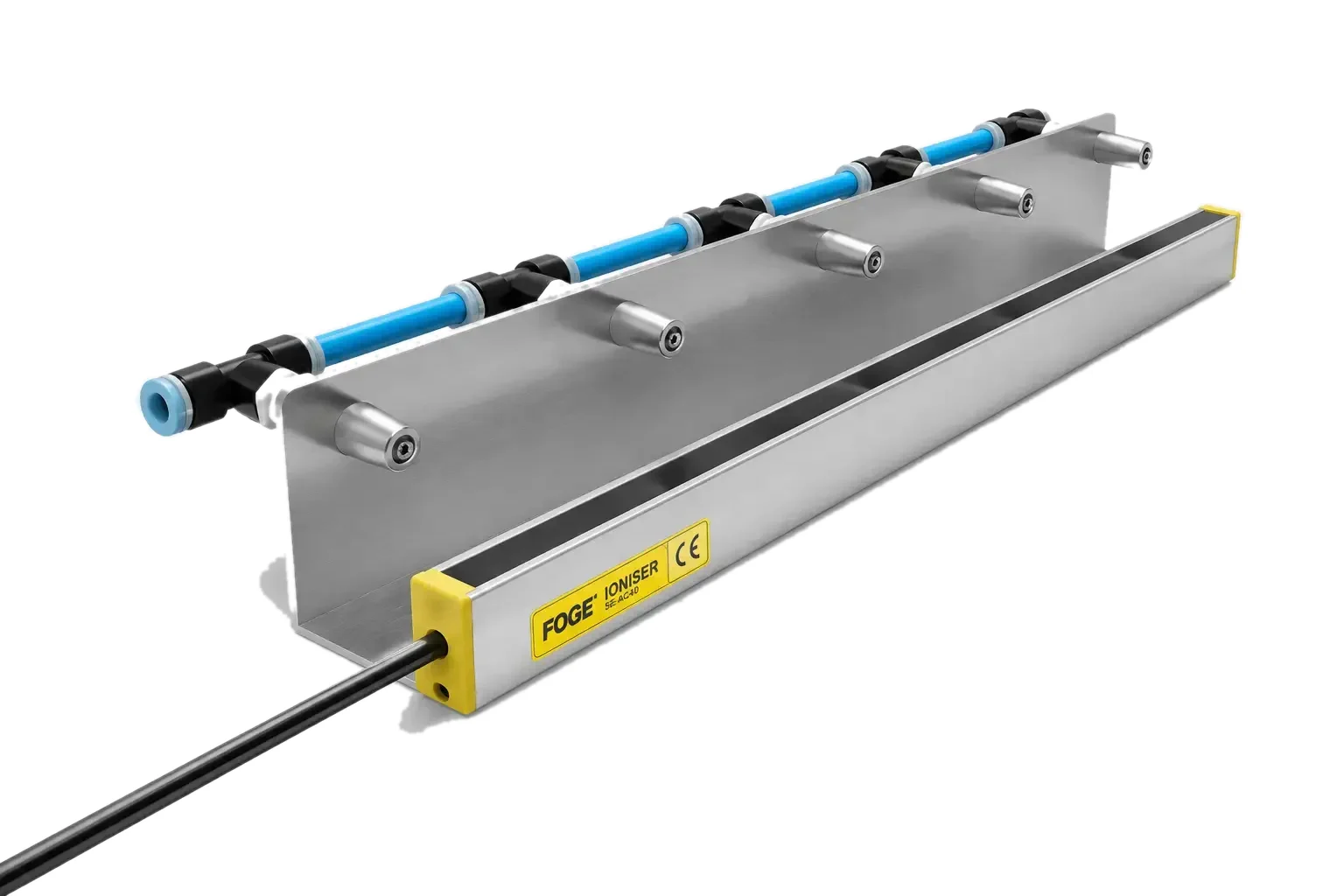
Because the initial charge is so extreme, a "hybrid" two-stage system is required. First, a passive static brush (or tinsel) is installed to safely bleed off the massive bulk charge down to a manageable level. Immediately following it, an active ionizing bar is positioned to neutralize the remaining residual charge down to zero, ensuring the film is perfectly neutral before it proceeds down the tower.

Application

Safely neutralizing the extremely high, dangerous static charges generated during the high-stress extrusion, cooling, and collapsing phases of blown plastic film manufacturing.

Products used: SE-DCB-110

Open the 3D application

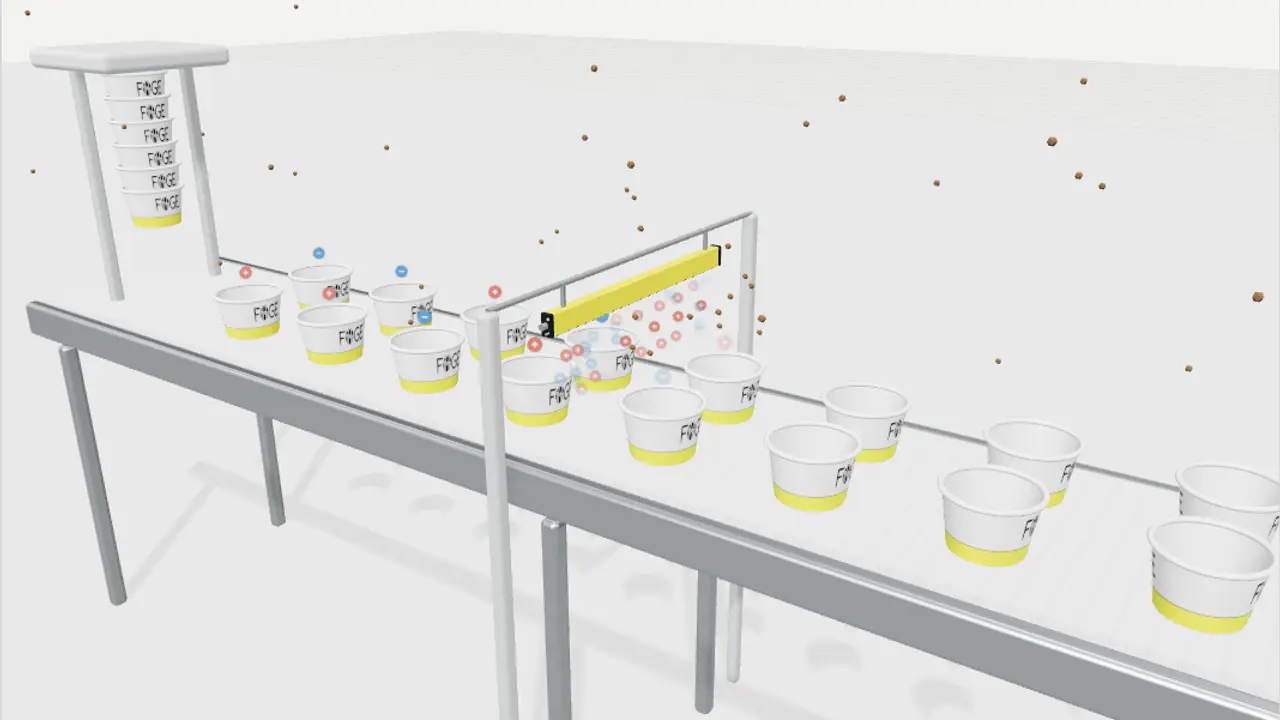
In Mould Labeling Application

The problem

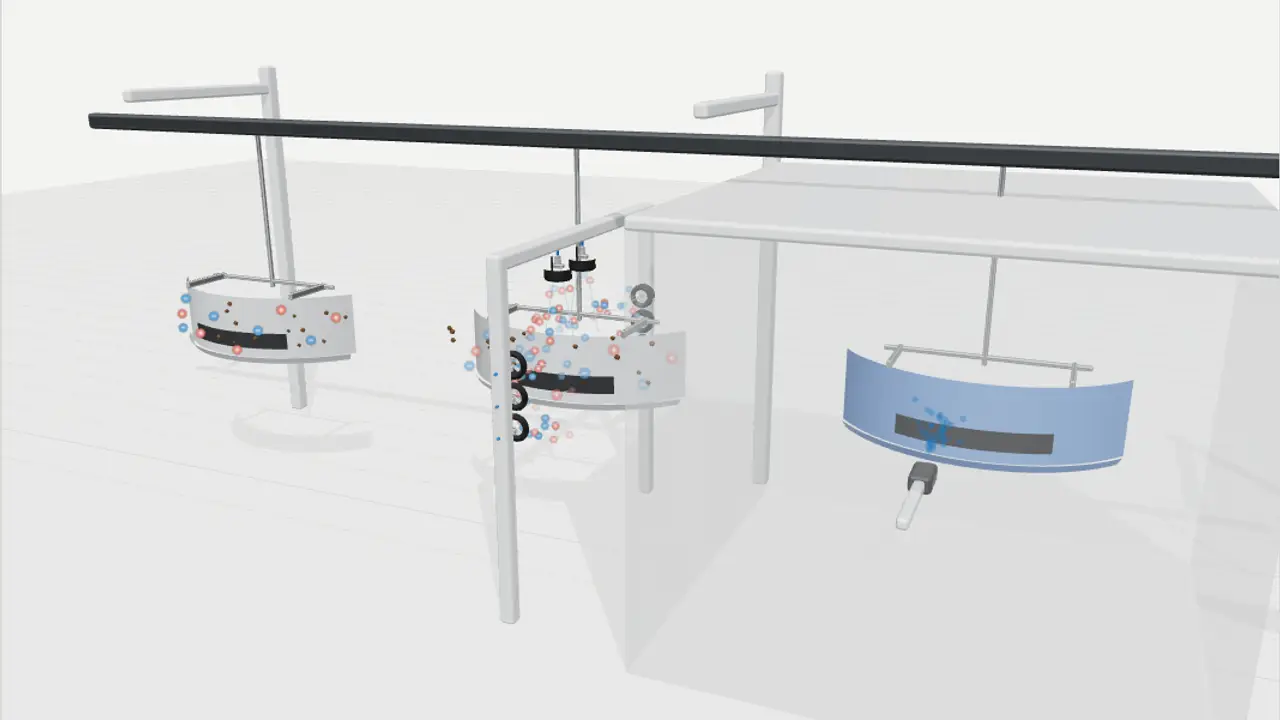
Plastic containers generate significant static charges during the molding, stacking, and unstacking (de-nesting) processes. As shown by the warning icons in the image, this high static charge acts like a magnet, attracting airborne dust and contaminants into the open containers before they can be filled. It also presents a painful electrical shock hazard to operators handling the stacks.

The solution

Overhead active ionizing bars generate a continuous shower of positive and negative ions. This neutralizes the containers as they pass underneath, preventing dust attraction, releasing any existing dust (often combined with an air blower to remove it), and eliminating the shock hazard.

Application

Transporting, separating (de-nesting), or stacking empty plastic containers, tubs, or trays on a packaging or filling line.

Products used: SE-DCB-110

Open the 3D application▶ Watch video

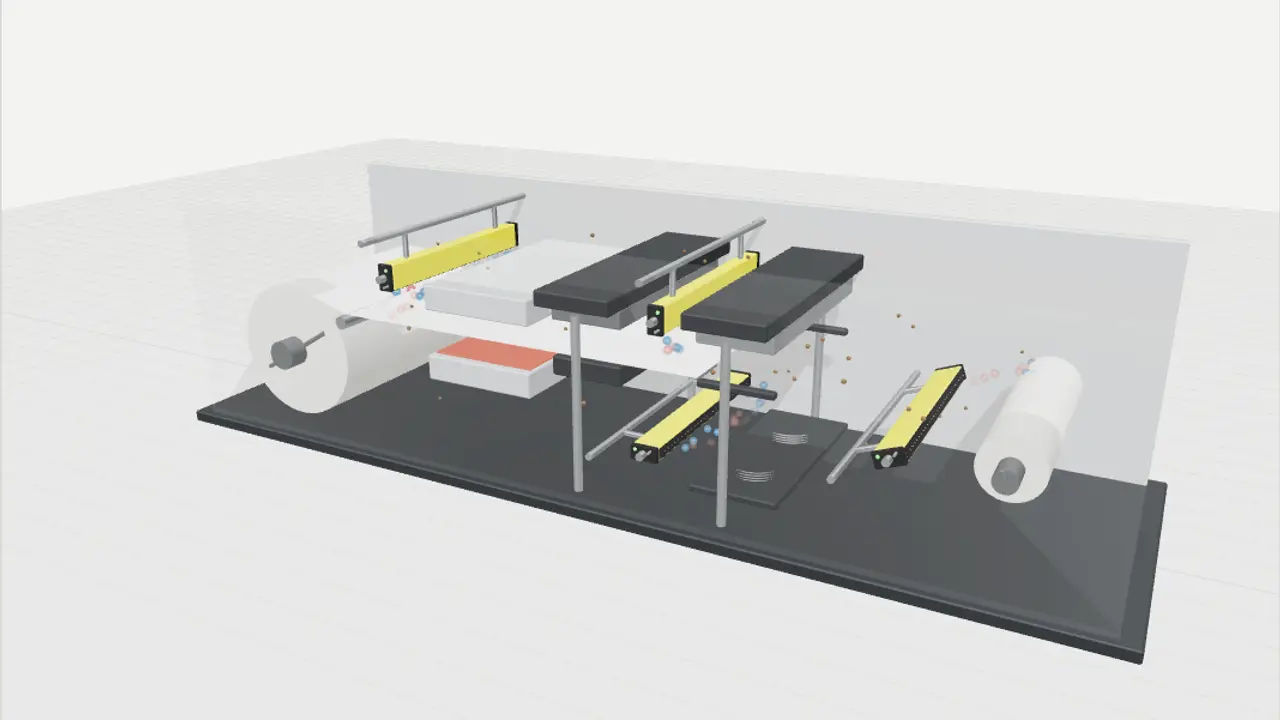
Foam Plate Extrusion & Thermoforming Line (Food Industry)

The problem

In the production of expanded polystyrene (EPS) foam plates and food trays, the extrusion and winding of the foam sheet generate immense static charges. Foam is a near-perfect insulator, meaning it holds onto static stubbornly. This leads to several critical issues: - Explosion Risk: If flammable blowing agents (like butane or pentane) are used in the foaming process, a single static spark can cause a catastrophic fire or explosion. - Product Sticking: After the plates are stamped/thermoformed, they aggressively stick to the mold or to each other, making automatic stacking impossible. - Contamination: The charged foam acts as a massive magnet for airborne dust, which is a major hygiene violation in food-grade packaging.

The solution

A multi-point static control system is utilized. Long-distance ionizing bars are placed at the primary unwind and rewind stations to manage the bulk charge. For the thermoforming and stacking area, ionizing air blowers or targeted bars neutralize the individual plates as they are cut. This ensures the plates release cleanly from the mold, stack neatly without "nesting" issues, and remain 100% dust-free for food safety compliance.

Application

High-speed extrusion and forming of foam plates, egg cartons, meat trays, and take-away food containers.

Products used: SE-DCB-110

Open the 3D application▶ Watch video

Foam Sheet Extrusion (Winding & Storage Section

The problem

During the extrusion of foam sheets (EPS/EPE), the material moves over several rollers and is wound into large rolls. Because foam is an exceptional insulator, it generates and retains massive static charges—often exceeding 100kV. This creates three severe problems: - Fire & Explosion Hazard: In many foam processes, flammable blowing agents (like butane) are used. A static spark in the winding area can act as an ignition source, leading to high-risk industrial fires. - Operator Safety: The enormous "battery effect" of the large foam roll can deliver high-energy shocks to anyone standing nearby, even without direct contact. - Material Handling: The static charge causes the foam to cling to rollers or misalign during the winding process, leading to "telescoping" rolls or surface damage.

The solution

A high-performance long-distance ionizing bar (or a series of bars) is mounted to monitor and neutralize the web as it travels toward the winder. This bar projects a dense cloud of ions that can neutralize the material from a distance, ensuring the charge is removed before the foam is tightly wound into a roll. This eliminates the risk of sparks, protects operators from shocks, and ensures a perfect, manageable roll.

Application

Winding continuous foam webs into finished rolls using a simplified, long-range static elimination setup.

Products used: SE-DCA-110

Open the 3D application▶ Watch video

Stretch Blow Molding (SBM) / Injection Blow Molding

The problem

In blow molding—frequently used in the plastics industry to produce bottles and containers—the "parison" or "preform" (the raw plastic material) is heated and moved into the mold. High static charges cause these preforms to move, swing, or misalign as they are transferred. If the raw material is not perfectly aligned when the heavy metal mold halves close, it results in a "crushed" or defective product. Worse, this misalignment can cause the mold to close onto the solid plastic, leading to catastrophic physical damage to the expensive mold faces and core pins.

The solution

Targeted ionizing air nozzles or specialized ionizing bars are installed at the preform loading station. By neutralizing the static charge on the raw material immediately before it enters the mold, the electrostatic forces that cause movement are eliminated. This ensures the preforms stay perfectly oriented and stationary as the mold closes, preventing product defects and protecting the machinery from collision damage.

Application

Ensuring precise alignment and mold protection during the high-speed production of plastic bottles, containers, and chemical carboys.

Products used: SE-DCB-110

Open the 3D application▶ Watch video

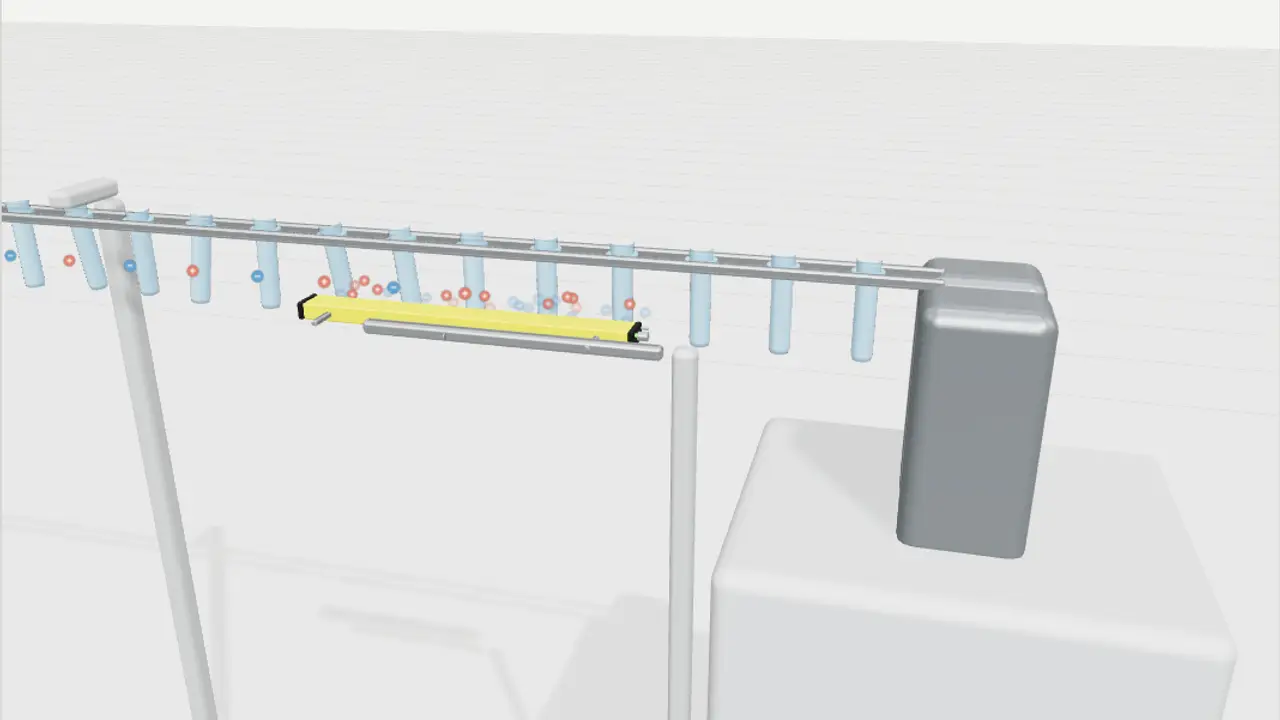
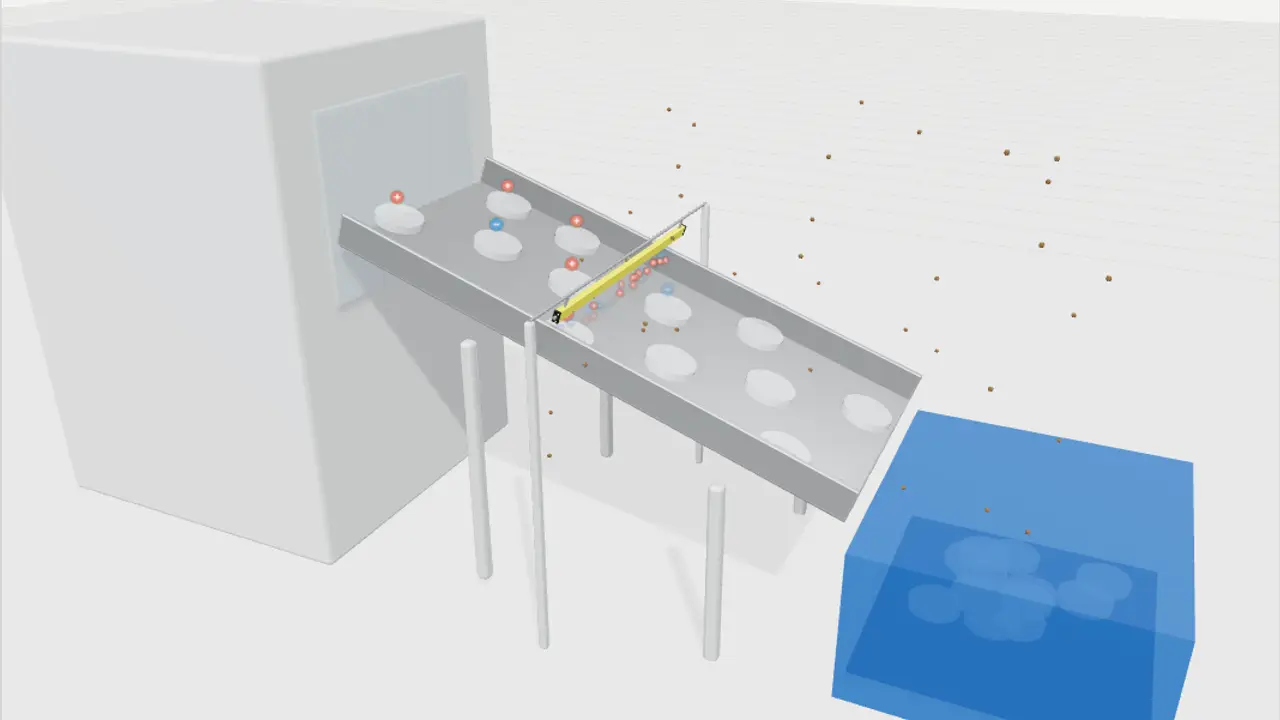
Medical Injection Molding (Collection & Sorting)

The problem

As medical-grade plastic parts are ejected from the mold and slide down collection chutes into bins, the intense friction generates high levels of static electricity. This creates three critical issues: - Contamination: The charged parts act as "magnets" for airborne dust and fibers, which is unacceptable in sterile medical environments. - Handling Issues: Parts cling to the metal chutes or stick to each other in the bins, preventing automated counting or sorting. - Operator Safety: Operators touching the collection bins or the parts themselves receive painful electrostatic shocks throughout the day.

The solution

An active ionizing bar is mounted directly over the conveyor or discharge chute. By flooding the parts with a balanced stream of positive and negative ions as they exit the machine, the static charge is neutralized instantly. This ensures the parts fall cleanly into the bins, remain free of dust, and are safe for operators to handle without the risk of shocks.

Application

Cleanroom injection molding for medical components such as petri dishes, syringe barrels, test tubes, and IV connectors.

Products used: SE-DCB-110

Open the 3D application▶ Watch video

Painting station, cleaning / static electricity discharge

The problem

High-performance plastic parts (like automotive bumpers, mirror covers, or consumer electronics) are highly insulative and build up massive static charges during the cleaning and conveying stages. This static creates two critical failure points in the coating process: - "Magnet Effect": The charged part attracts airborne dust and fibers just seconds before the paint is applied, resulting in "dirt-in-paint" inclusions that require expensive sanding and reworking. - Uneven Finish: Static charges on the surface can repel the atomized paint droplets or cause them to cluster unevenly (orange peel effect), preventing a smooth, high-quality finish.

The solution

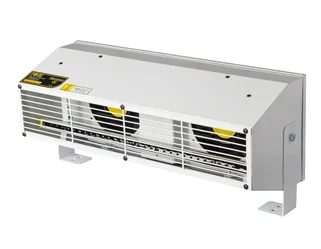
An ionizing air blower or a localized ionizing air gate is installed immediately before the painting booth. As the parts pass through, the system floods the complex 3D surfaces with a high-volume stream of neutralizing ions. This breaks the static bond holding any remaining dust and ensures the surface is at zero volts, allowing the paint or coating to lay down perfectly flat and uniform.

Application

Pre-paint surface preparation for automotive exterior parts, high-end consumer electronics housings, and decorative plastic coatings.

Products used: SE-ARN-80

Open the 3D application▶ Watch video

Granule Transfer Pipe (Pneumatic Conveying)

The problem

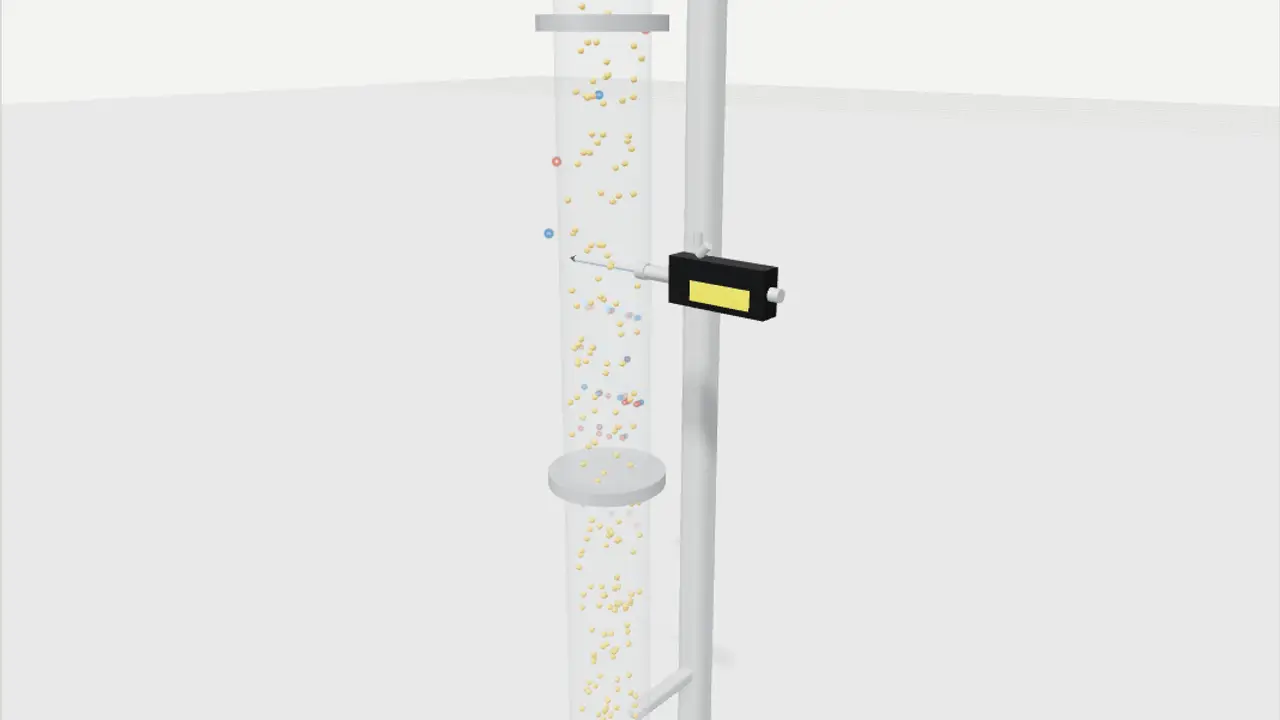
Plastic granules become electrostatically charged by friction as they are conveyed through transfer pipes. The charged granules stick to the pipe wall, material builds up, the flow is interrupted and blockages follow.

The solution

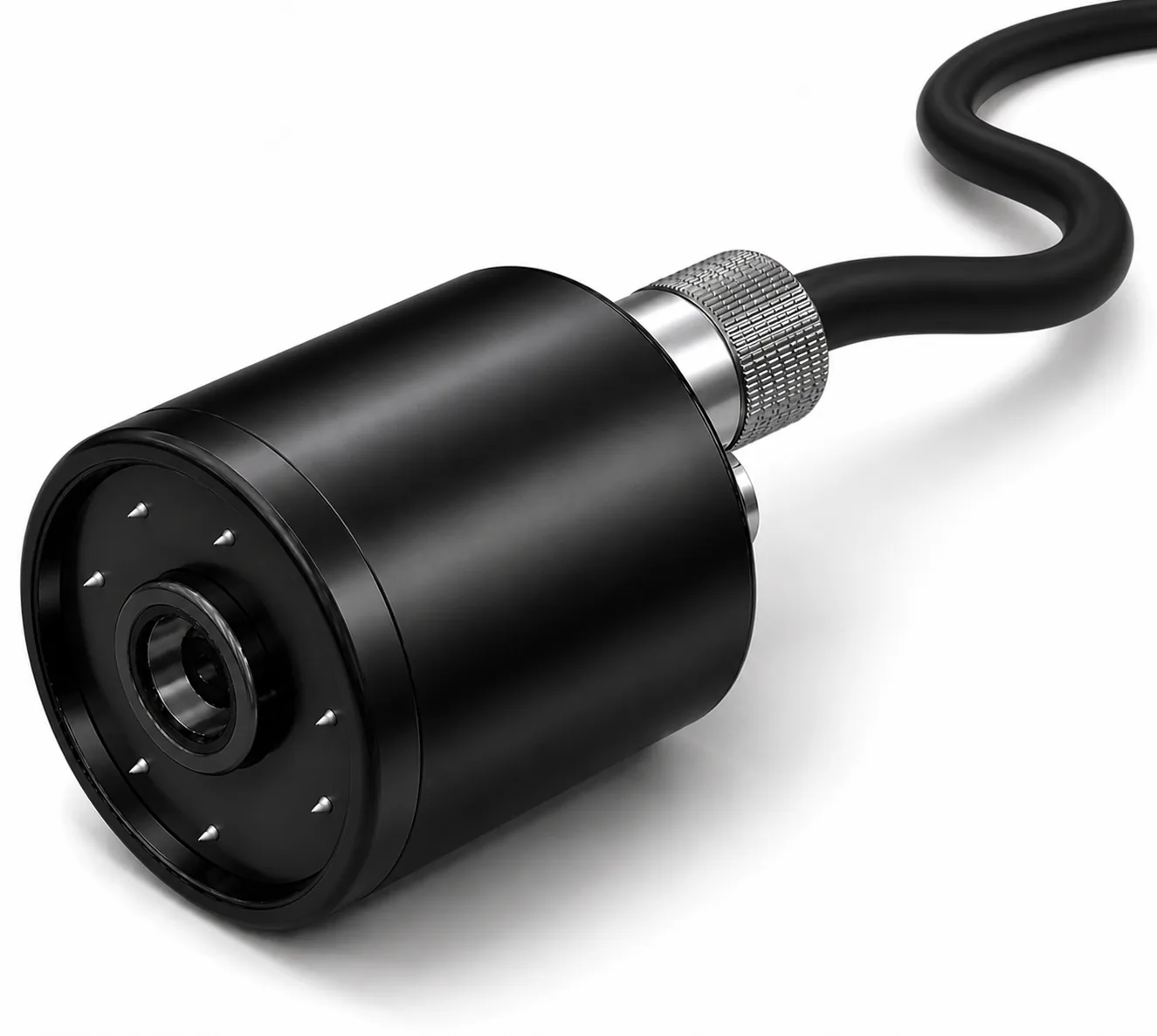
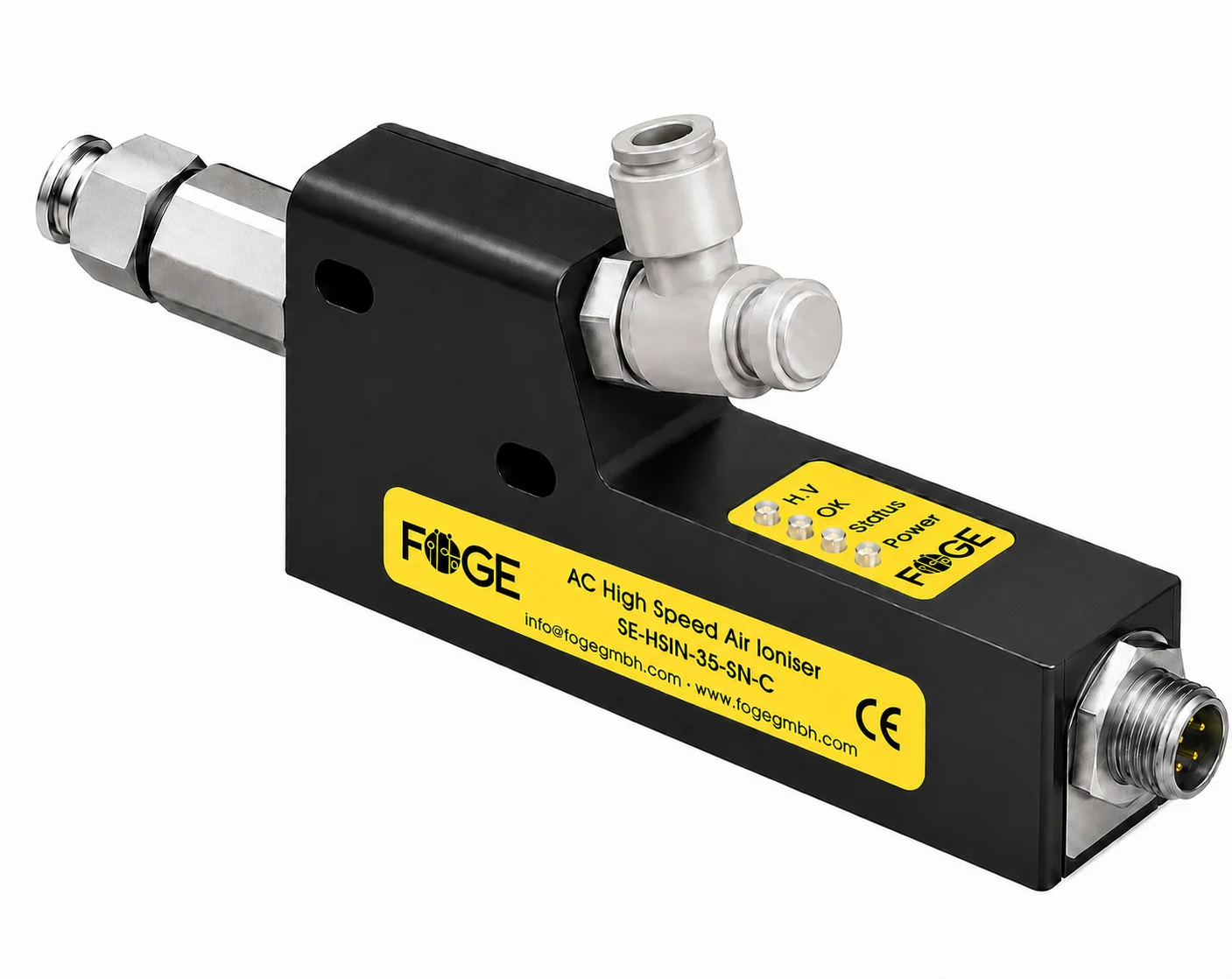
A high speed inline nozzle is mounted on the outside of the pipe; its perforated lance reaches through a hole into the pipe and blows ionized air in the direction of the granule flow. The charge is neutralised directly inside the pipe, so the granules no longer adhere and the flow stays smooth.

Application

Static neutralisation of plastic granules inside pneumatic transfer pipes to prevent build-up and blockages.

Products used: SE-HSIN

Open the 3D application

Granule Hopper above the Injection Moulding Machine

The problem

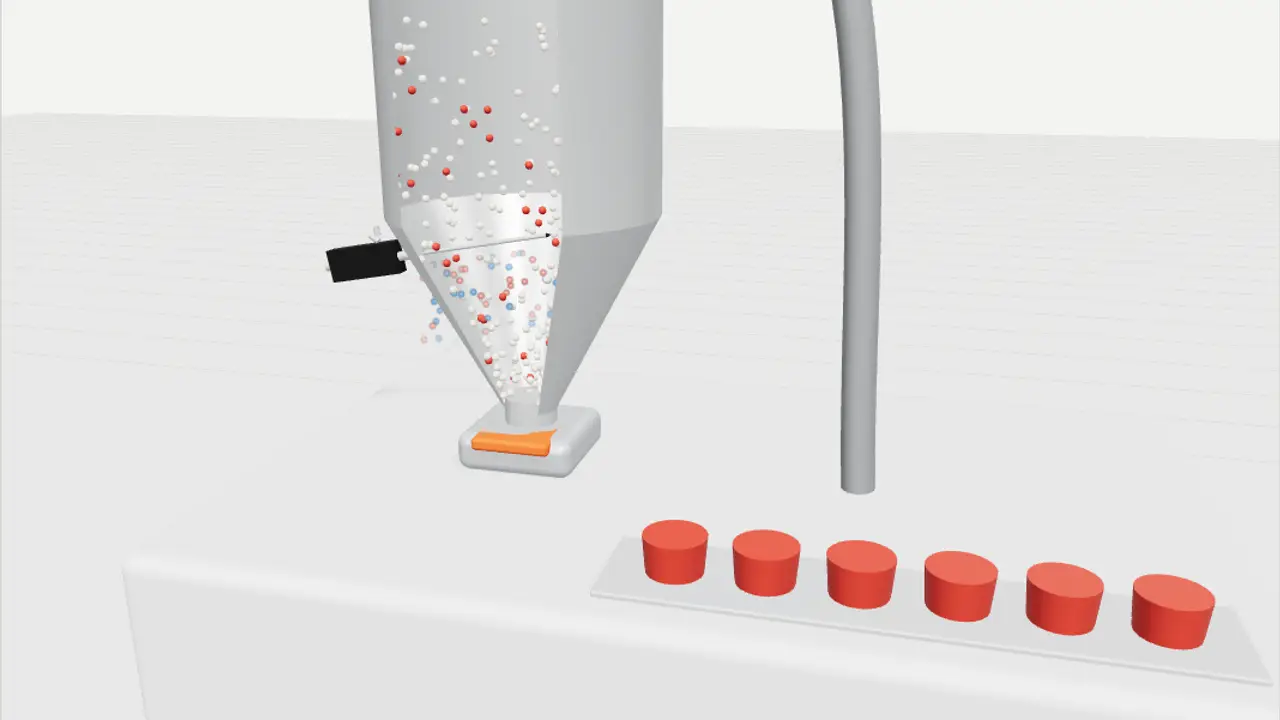
In the hopper above the injection moulding machine, charged granules and colour pigment (masterbatch) stick to the hopper walls. Pigment that stays on the wall never reaches the machine, so the parts come out in a different colour — quality defects and scrap.

The solution

A high speed inline nozzle is mounted on the outside of the hopper; through a drilled hole its lance reaches inside and blows ionized air along the wall zone. Granules and pigment no longer stick to the walls and flow into the machine in the right mix.

Application

Static neutralisation in granule hoppers to keep granules and colour pigment off the walls and the colour of moulded parts consistent.

Products used: SE-HSIN

Open the 3D application

Suitable FÖGE products

Discuss your application

Describe your process — we select the static control product and mounting position with you, and visit you on site when needed.

Contact