Electronics

Electrostatic discharge damages components; charged boards and housings attract particles before soldering and inspection.

Applications

Automotive Headlight Electronics Assembly & Handling

The problem

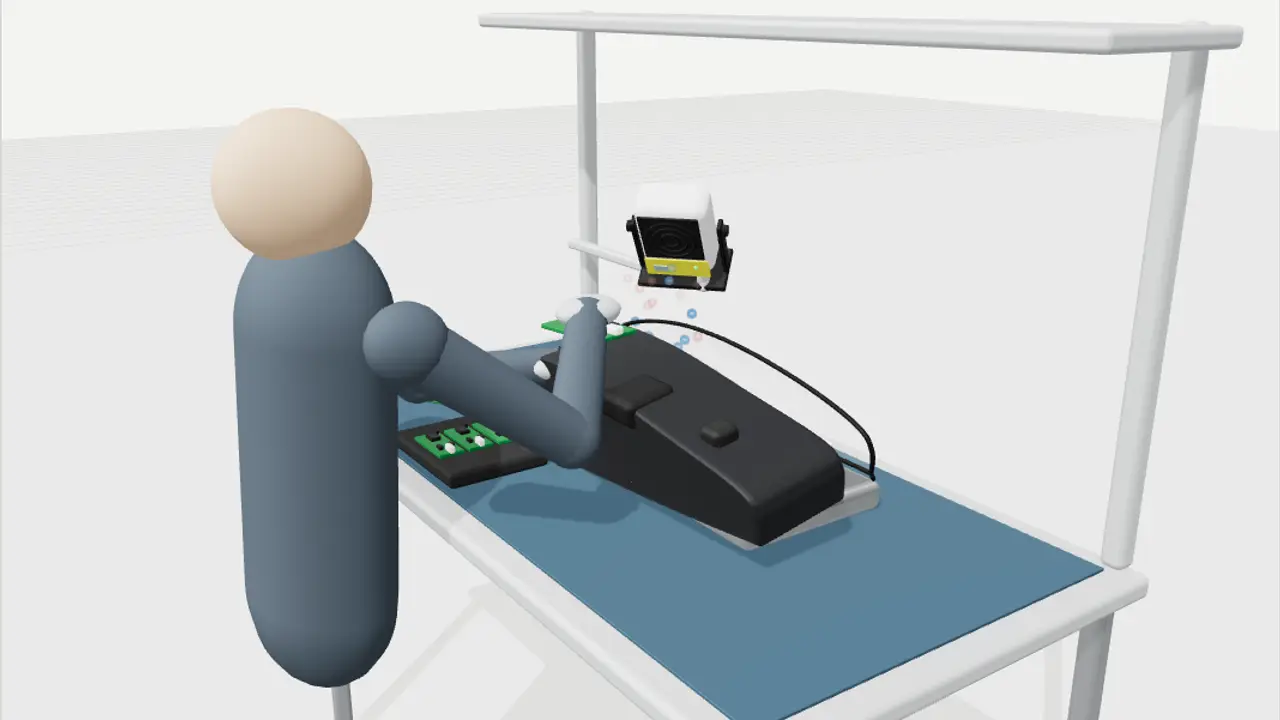
Modern headlights integrate complex and delicate electronic driver circuits for LEDs, precise leveling and aiming motors, and sensitive sensors, all of which are highly susceptible to Electrostatic Discharge (ESD). Friction from handling plastic components, machine operation, and movement of partially assembled units during manufacturing can easily build up large static charges on parts, tools, and operators. Even a small ESD event, too small to be felt, can permanently damage or degrade these sensitive components, leading to headlight failure, malfunctions (such as incorrect aiming), and significant warranty costs.

The solution

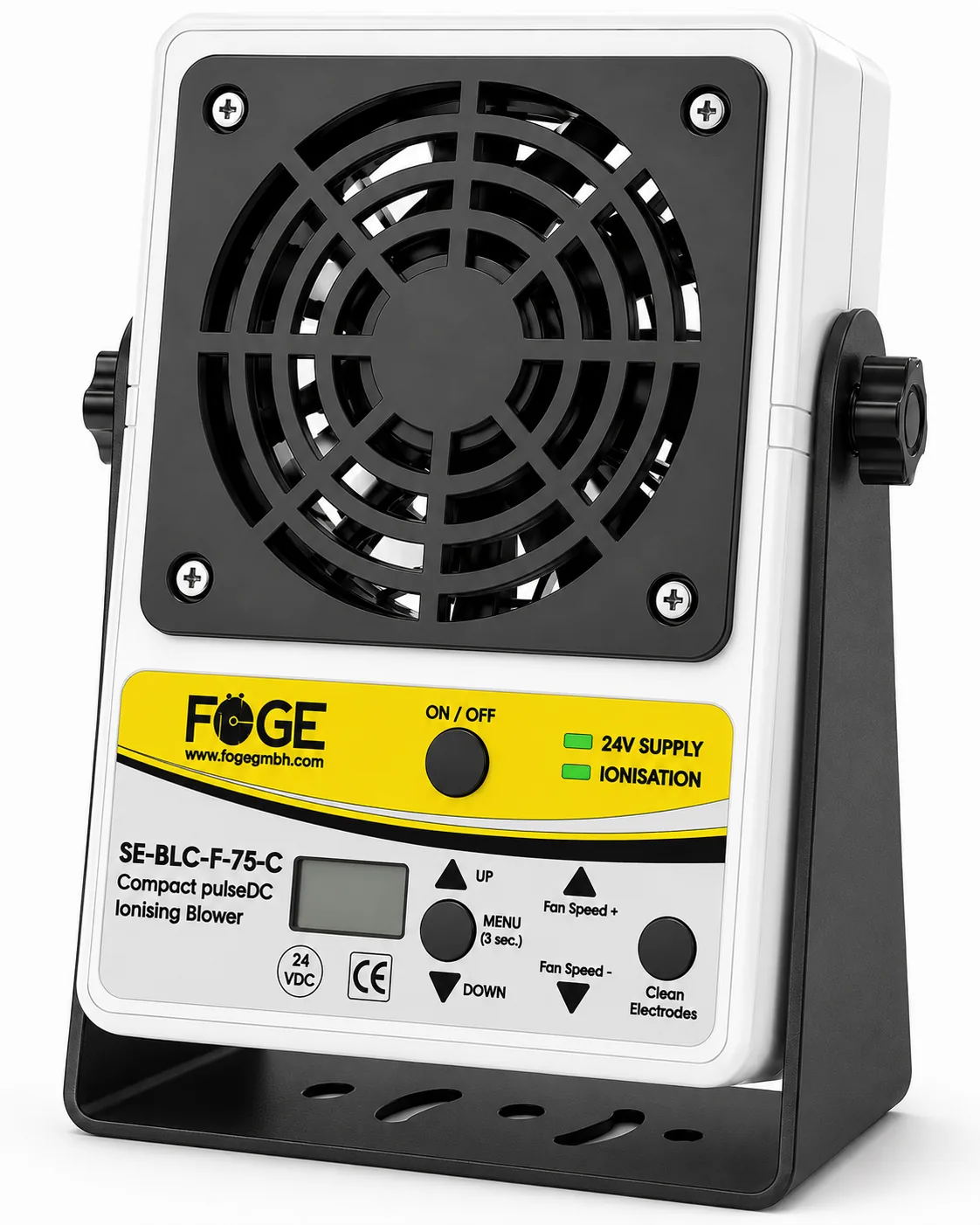
Integrated static control is crucial throughout the headlight manufacturing and assembly process. Extensive measures are implemented, including: widespread grounding of workstations, equipment, and personnel (via wrist straps, static dissipative flooring/mats); strategic placement of ionizing devices, such as localized ionizing air blowers over delicate electronic component handling areas and overhead ionizing bars across workstations, to neutralize charges on plastic parts, operators, and tools; and specific ESD-safe packaging and handling procedures for sensitive electronic modules.

Application

Ensuring the functionality and reliability of automotive headlight assemblies by controlling static electricity throughout the component handling and assembly stages in a manufacturing environment.

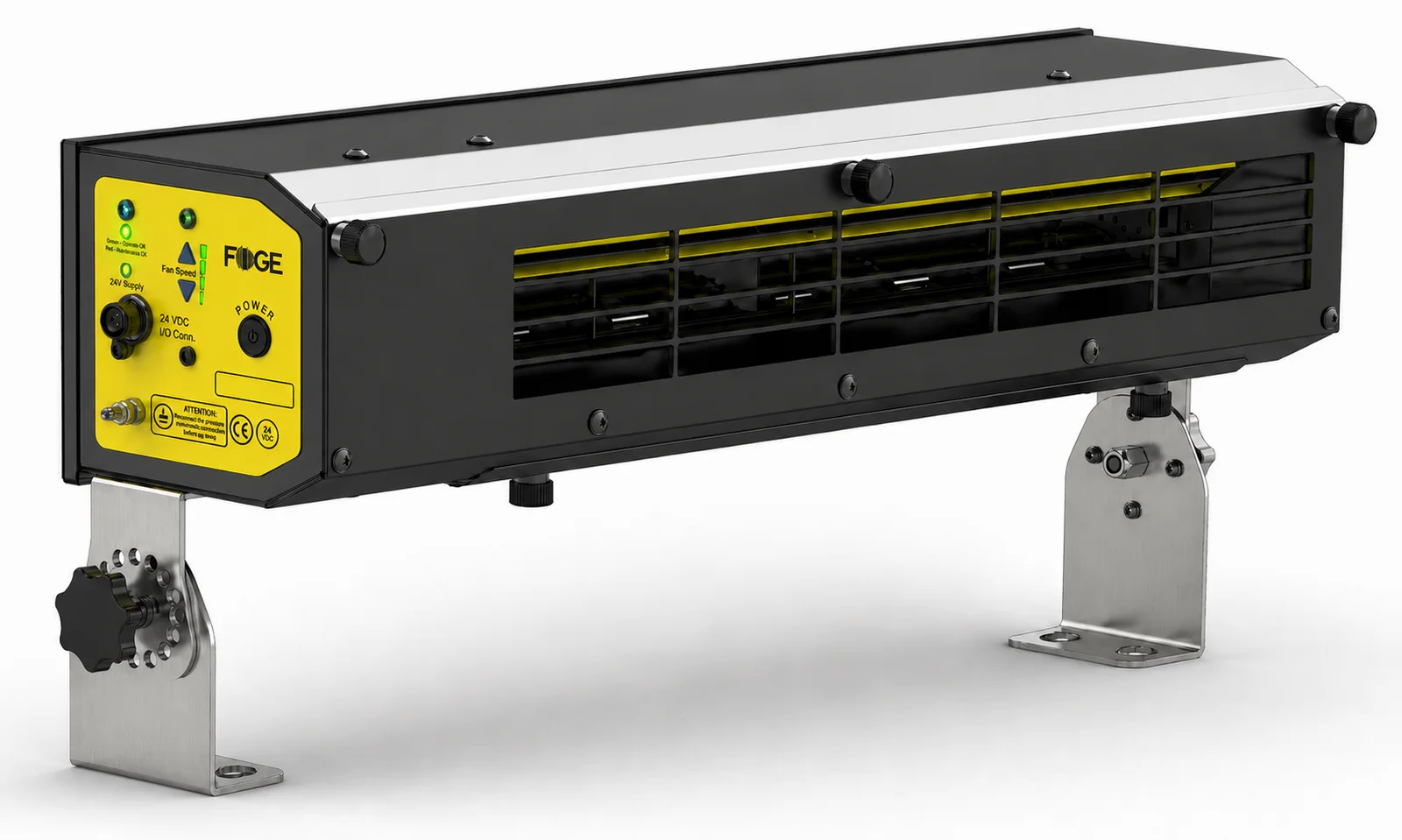
Products used: SE-BLC-F-75-C
Open the 3D application▶ Watch video

Flat Panel TV / Monitor Assembly Station

The problem

During the assembly of flat-panel displays, peeling protective liners or simply handling the large glass and plastic polarizing layers generates immense static electricity. This static acts like a powerful magnet, instantly attracting airborne dust, lint, and micro-particles to the screen's surface. If these contaminants are not completely removed before the final frame or outer screen is sealed, they become permanently trapped inside. This results in highly visible optical defects (often looking like "dead pixels"), expensive rejected units, and poor overall picture quality. Standard compressed air alone is ineffective because it cannot break the strong electrostatic bond holding the dust to the screen.

The solution

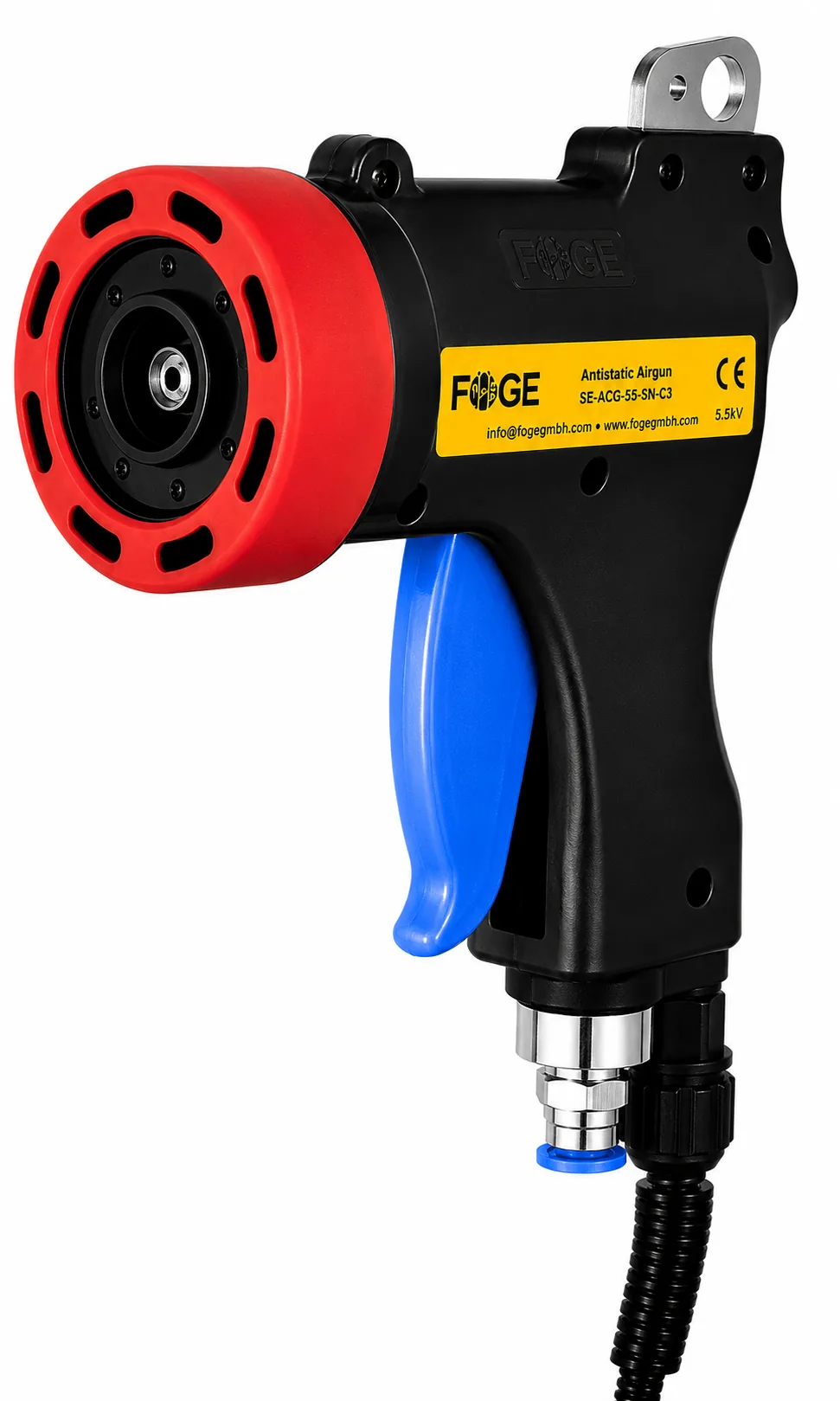
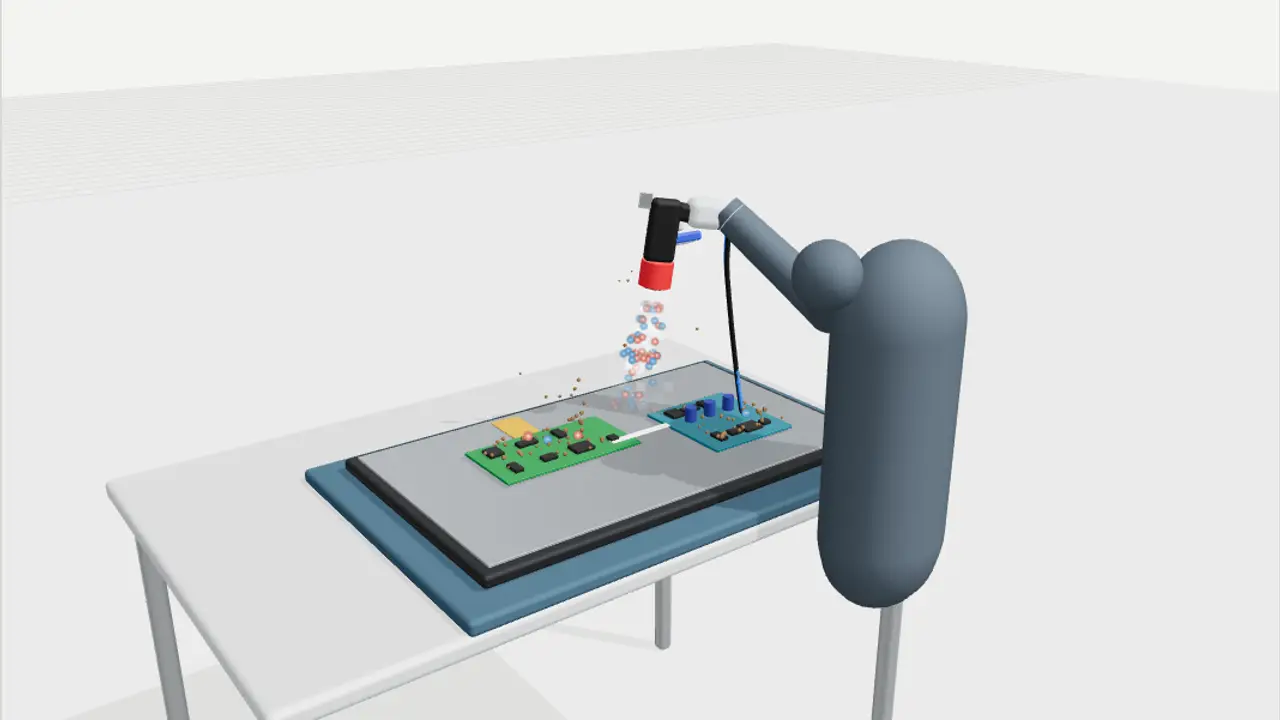
The operator uses a handheld ionizing air gun. This precision tool delivers a targeted stream of high-pressure compressed air infused with positive and negative ions. The ions immediately break the stubborn static bond holding the dust to the sensitive screen, while the air blast safely and forcefully sweeps the unbonded contaminants away. This leaves the display surface perfectly clean and statically neutral for the next stage of assembly.

Application

Precision manual cleaning, dust removal, and static neutralization of large, sensitive flat panel displays (televisions, monitors, touchscreens) during critical assembly, inspection, and sealing phases.

Products used: SE-ACG

Open the 3D application▶ Watch video

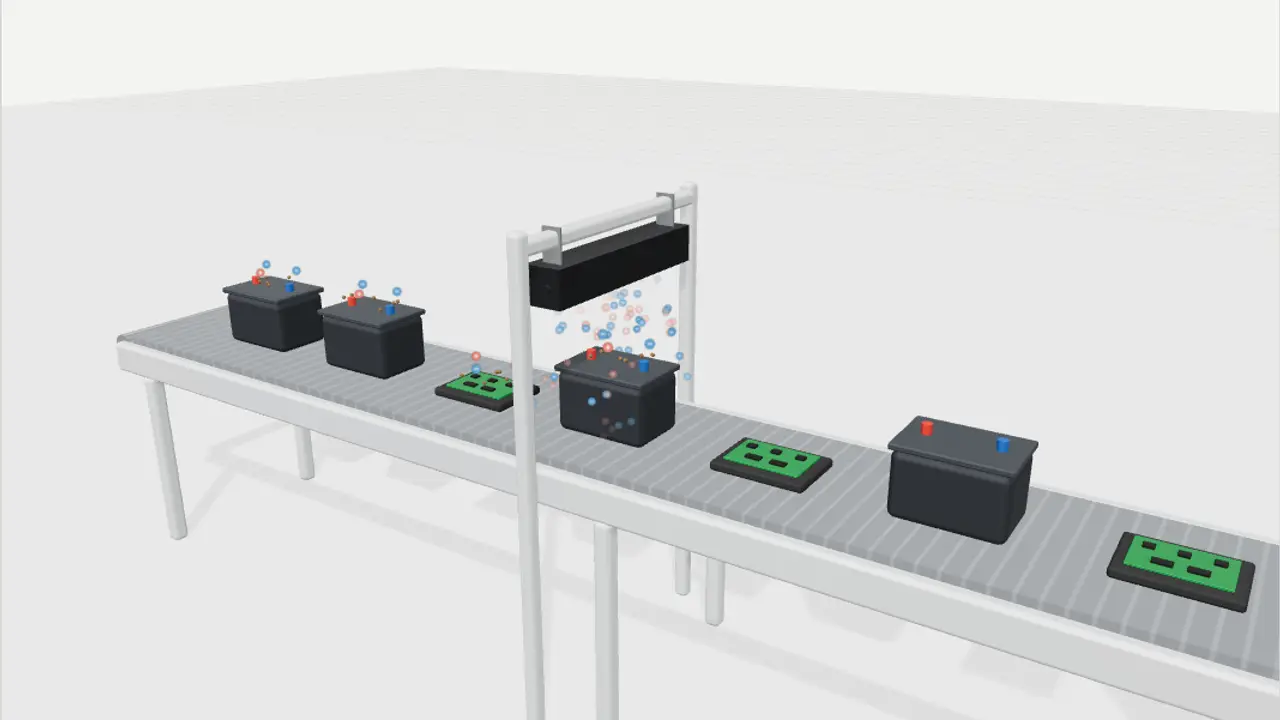
Battery & Electronic Component Assembly Conveyor

The problem

As components like plastic battery casings (for EV cells or standard 12V batteries) and sensitive electronic assemblies move along conveyor belts, friction generates significant static electricity. This static creates two major risks: First, it aggressively attracts airborne dust and microscopic debris, which can compromise critical battery seals or cause internal short circuits. Second, the static buildup can result in a sudden Electrostatic Discharge (ESD) that instantly destroys or latently damages sensitive electronic components and control boards.

The solution

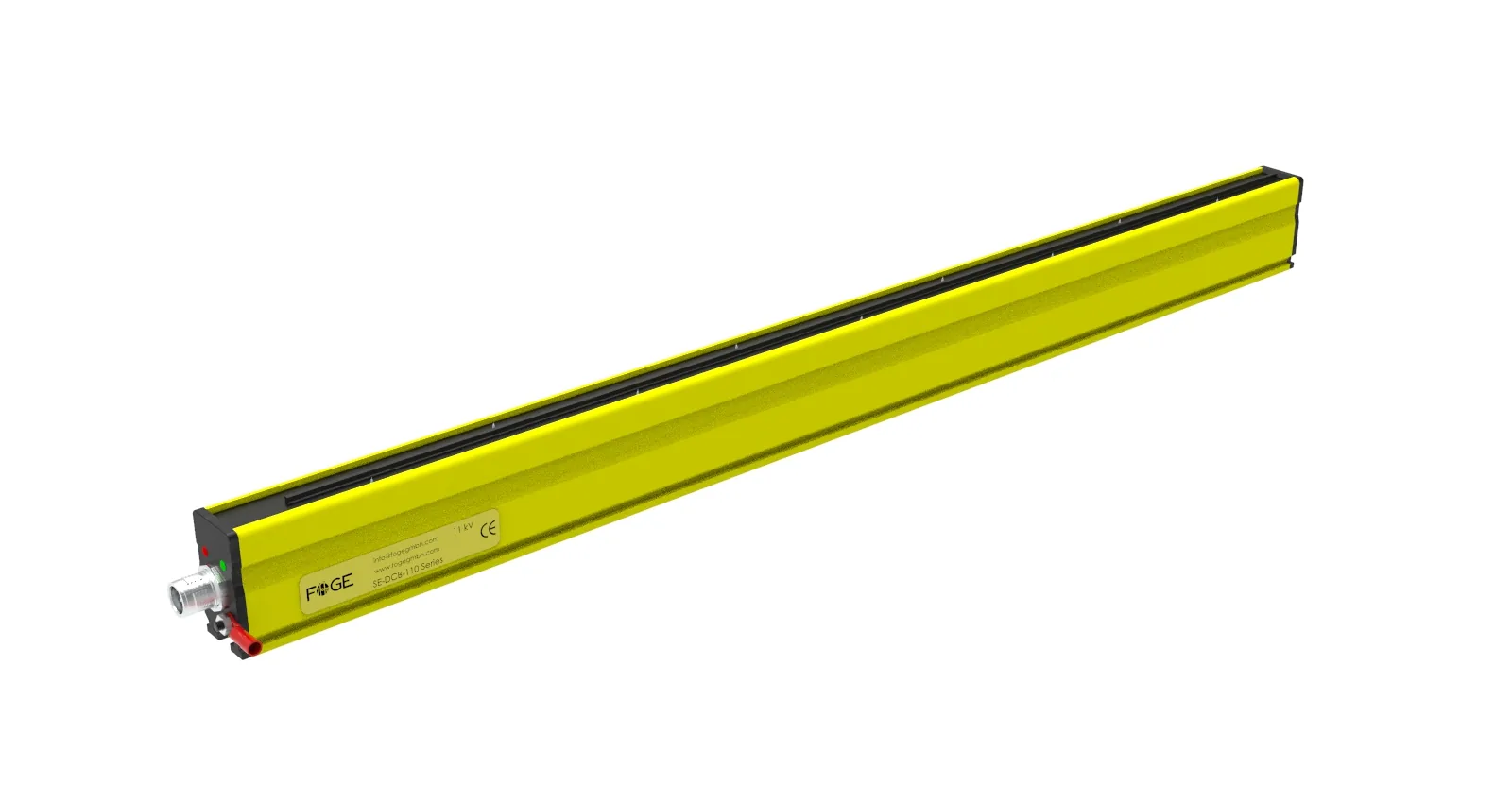
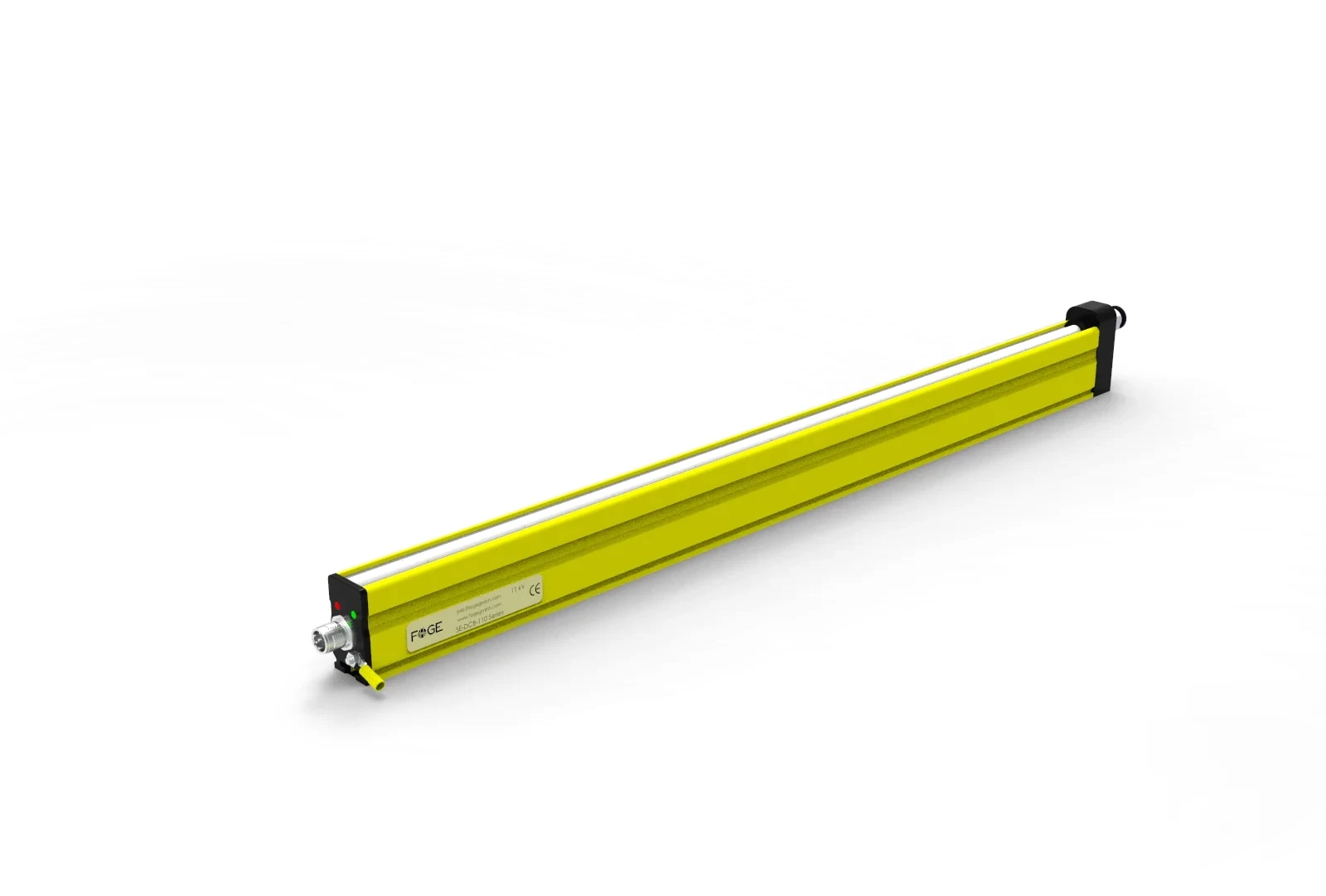
An overhead active ionizing bar is mounted across the conveyor line. It continuously showers the moving components and the belt with a balanced cloud of positive and negative ions. This completely neutralizes the static charge on the parts as they travel, preventing hazardous particulate contamination and creating a safe, static-free zone that protects delicate electronics from ESD damage.

Application

Static neutralization, critical contamination control, and ESD protection during the automated conveyance and assembly of electric vehicle (EV) batteries, standard automotive batteries, and general sensitive electronic devices.

Products used: SE-BLL

Open the 3D application▶ Watch video

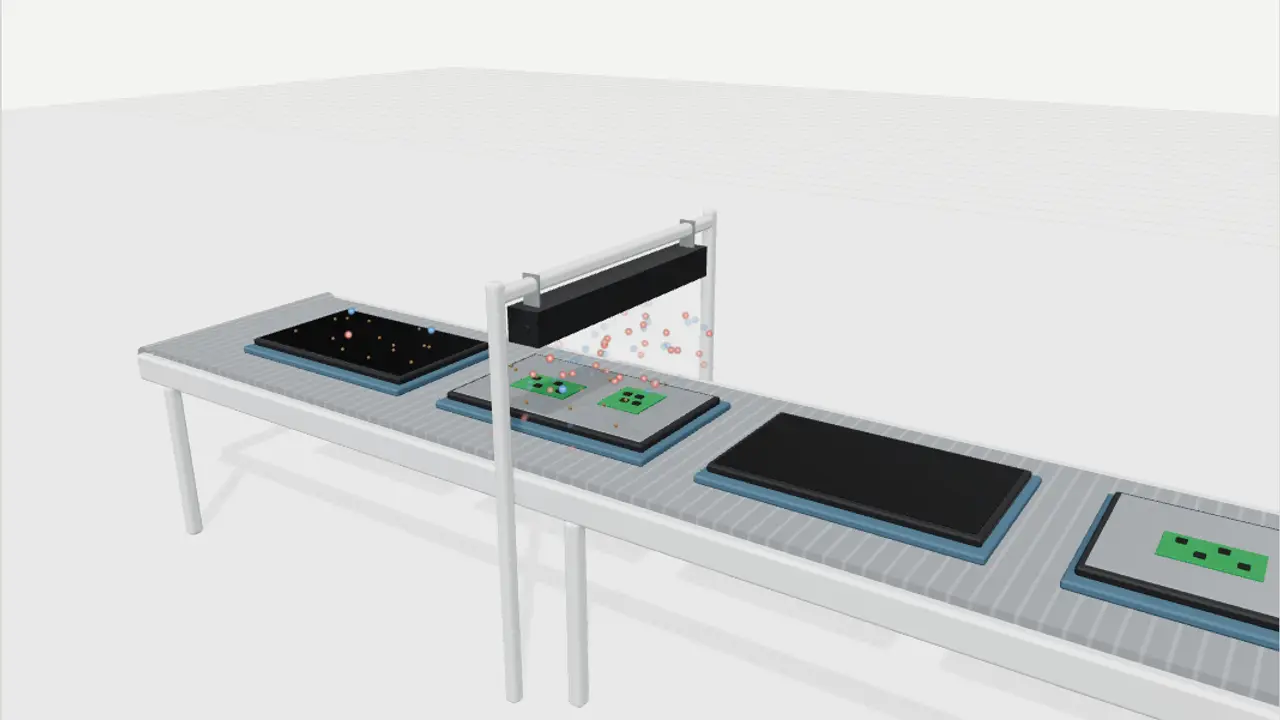
TV Panel & Electronics Assembly Conveyor

The problem

Large-screen TV panels and their plastic housings act as massive insulators that build up high static charges as they move along the conveyor. This static creates two critical issues in the assembly environment: First, it turns the entire TV screen into a "dust magnet," attracting microscopic particles that become trapped behind the glass, causing permanent visual defects. Second, the static discharge (ESD) can instantly fry the delicate circuit boards and sensitive LED/OLED drivers as they are being handled or connected.

The solution

An overhead active ionizing bar is mounted across the conveyor line. It blankets the TV units with a continuous, balanced cloud of positive and negative ions. This neutralizes the static charge on the large surface areas of the screen and housing, ensuring a clean, dust-free environment and providing essential ESD protection for the internal electronics during the assembly process.

Application

Static neutralization, contamination control, and ESD protection during the automated conveyance and multi-stage assembly of flat-panel televisions and monitors.

Products used: SE-BLL

Open the 3D application▶ Watch video

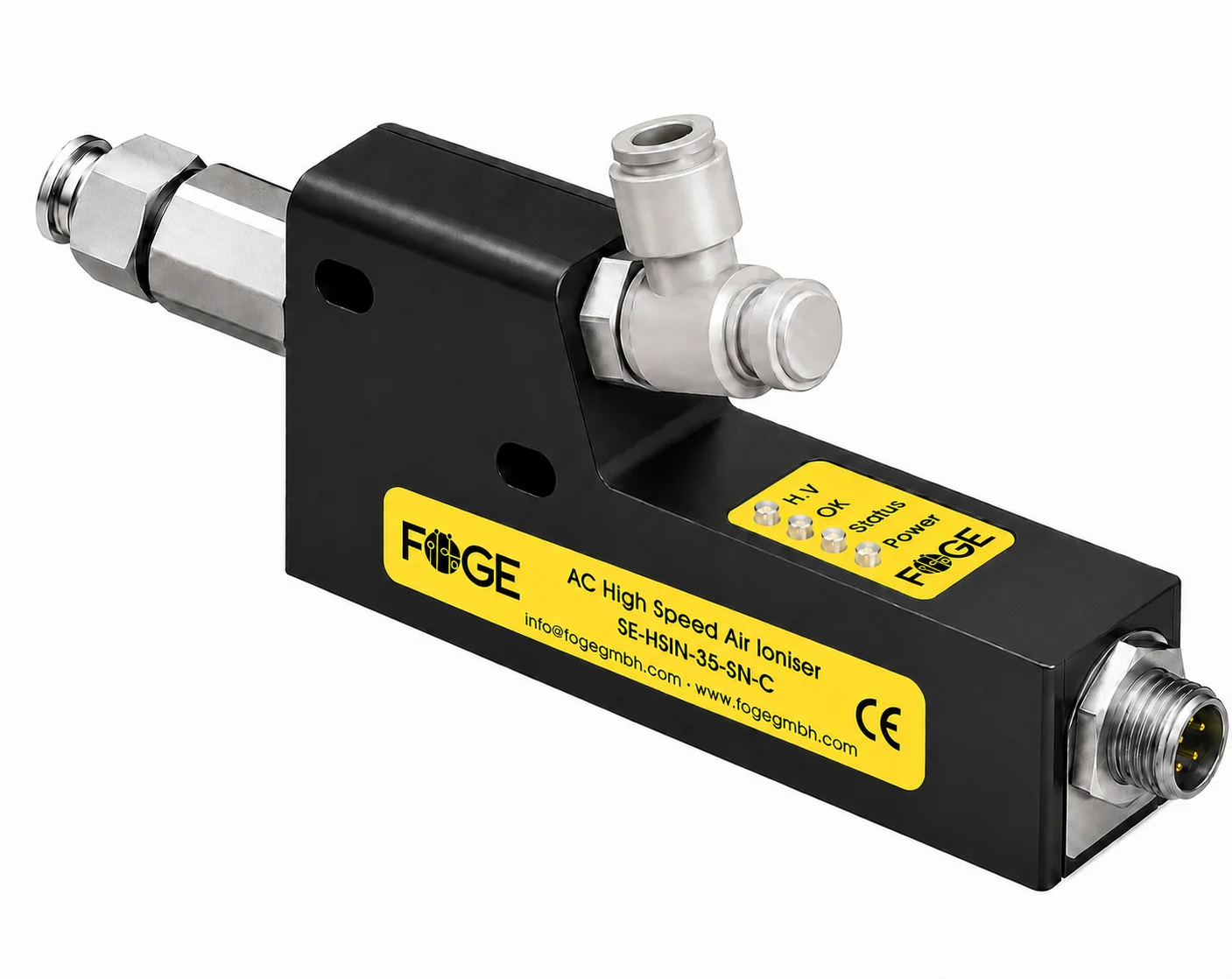
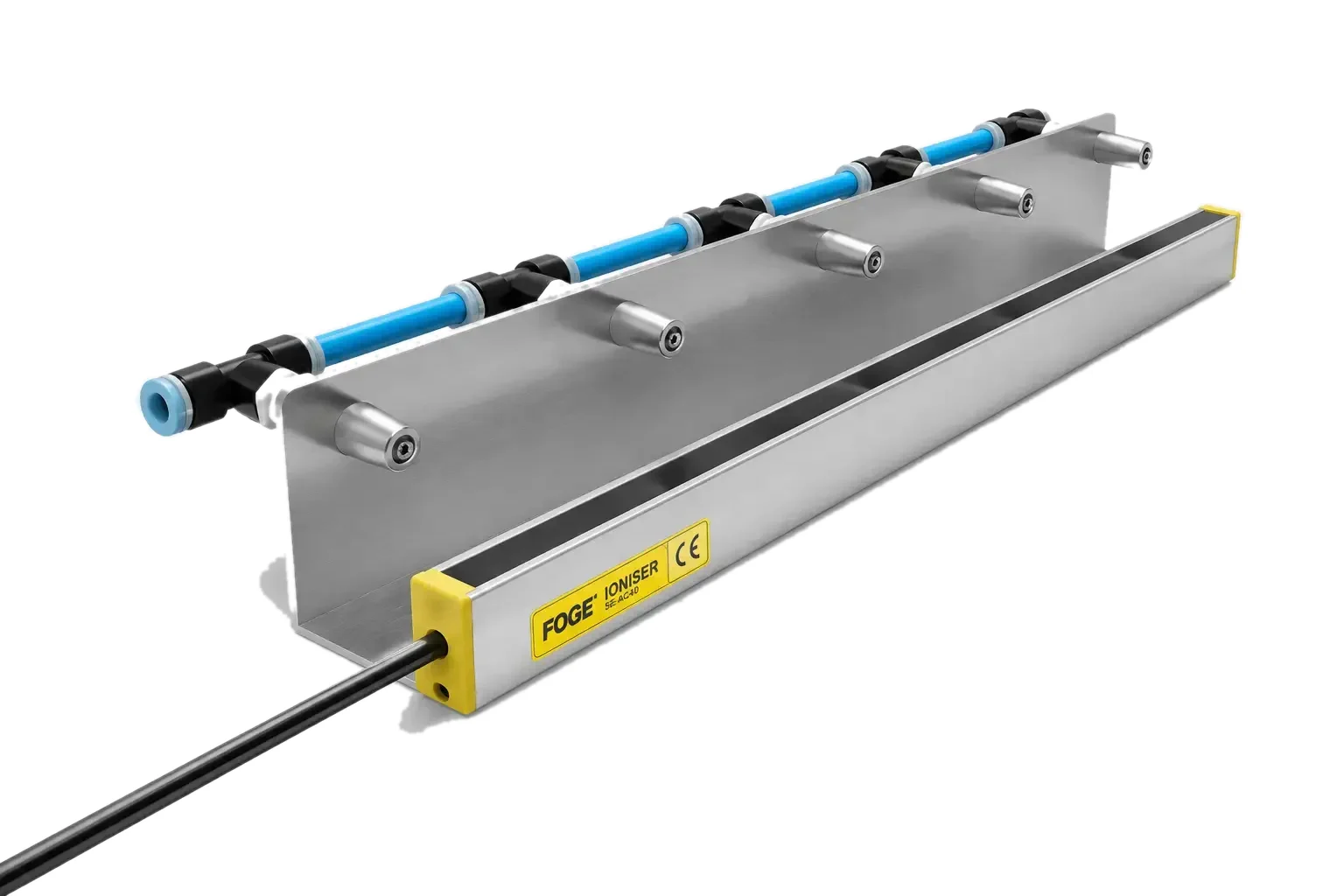
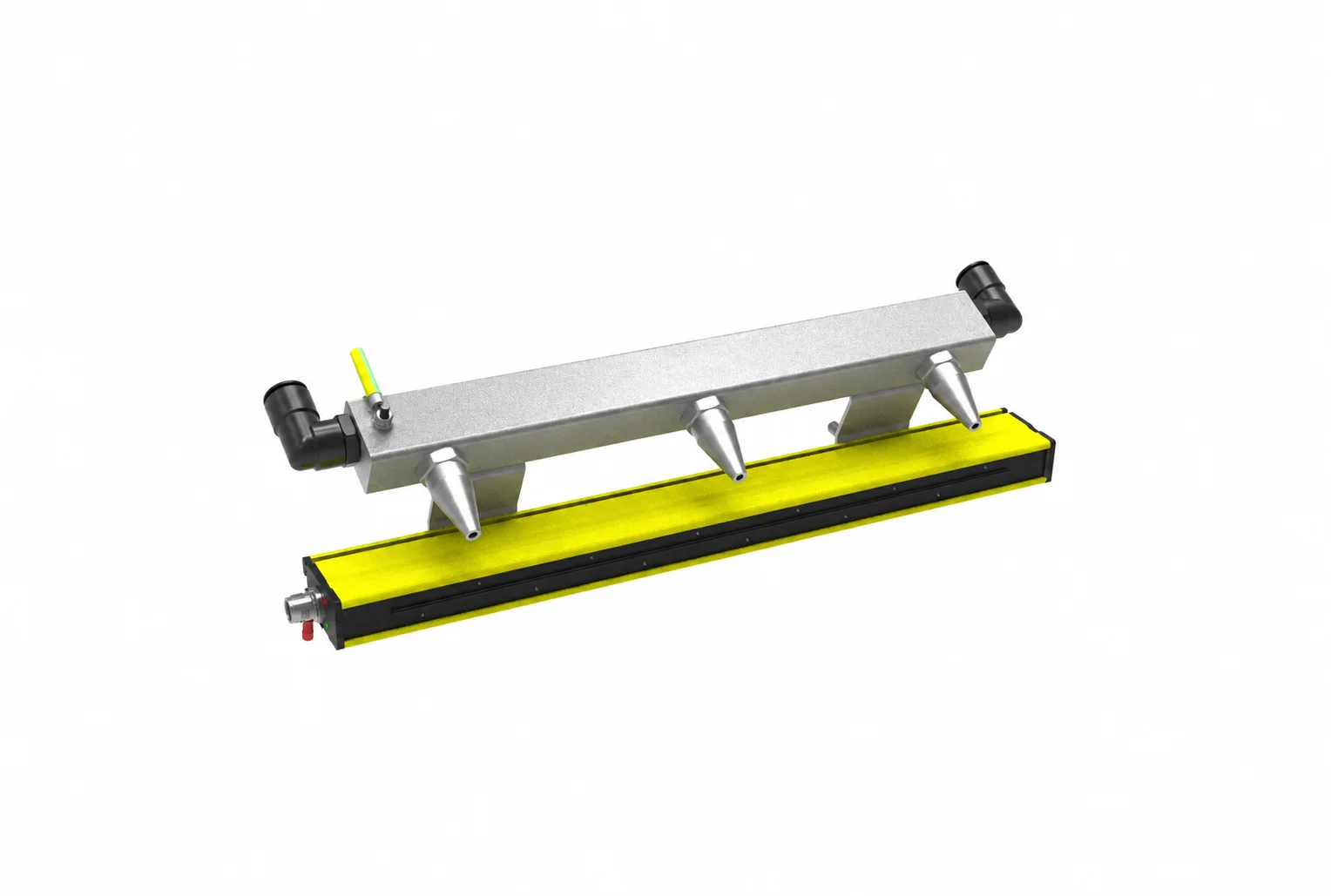
Suitable FÖGE products

Discuss your application

Describe your process — we select the static control product and mounting position with you, and visit you on site when needed.

Contact