Pharmaceutical & medical

Vials, packaging and cleanroom-adjacent workstations require particle-free, static-free surfaces.

Applications

Injection Molding (Ejection and Mold Protection)

The problem

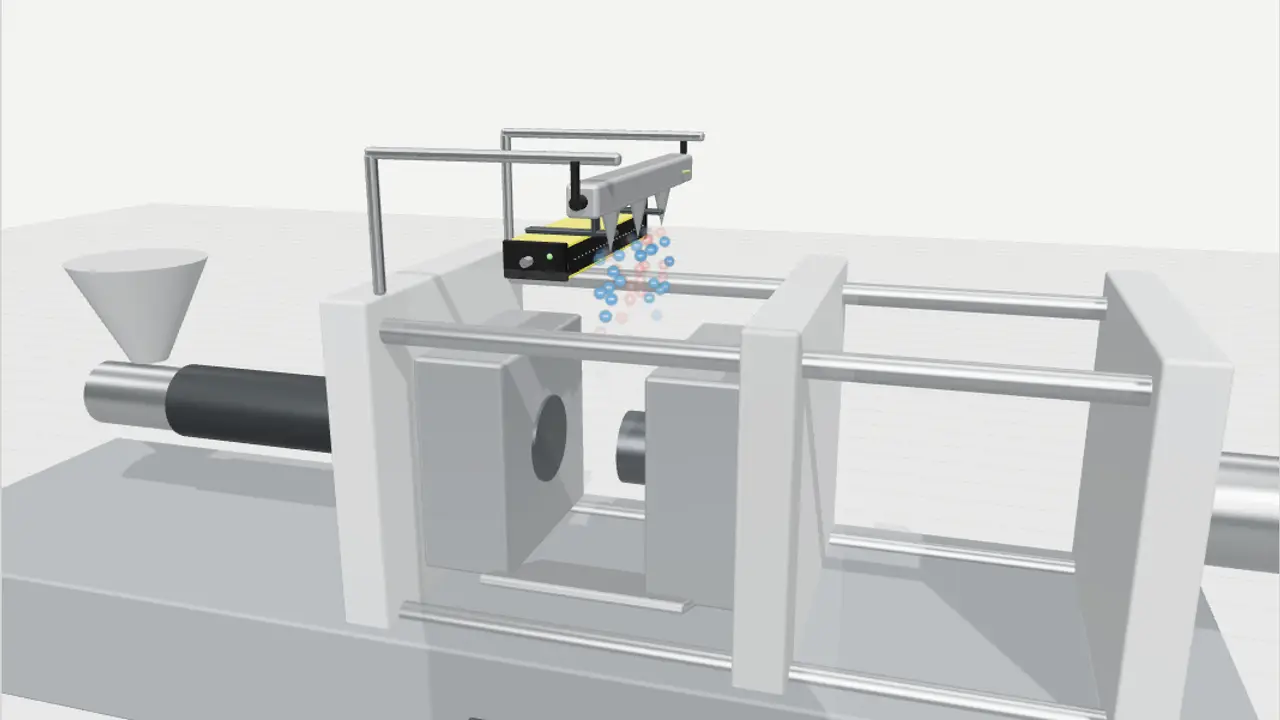
High-speed injection molding of precision parts—whether for medical devices, pharmaceutical packaging, or chemical-resistant labware—creates intense friction and heat. This leads to massive static buildup on both the plastic part and the metallic mold surfaces. The resulting electrostatic attraction causes parts to stick to the mold cavity or core instead of ejecting cleanly. When the mold cycles for the next shot with a stuck part still inside, it causes severe mechanical damage to the expensive mold faces, creates crushed "short shots," and results in costly machine downtime.

The solution

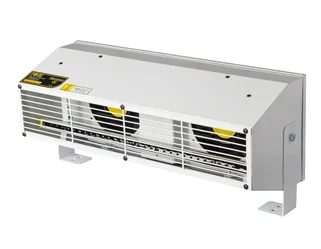
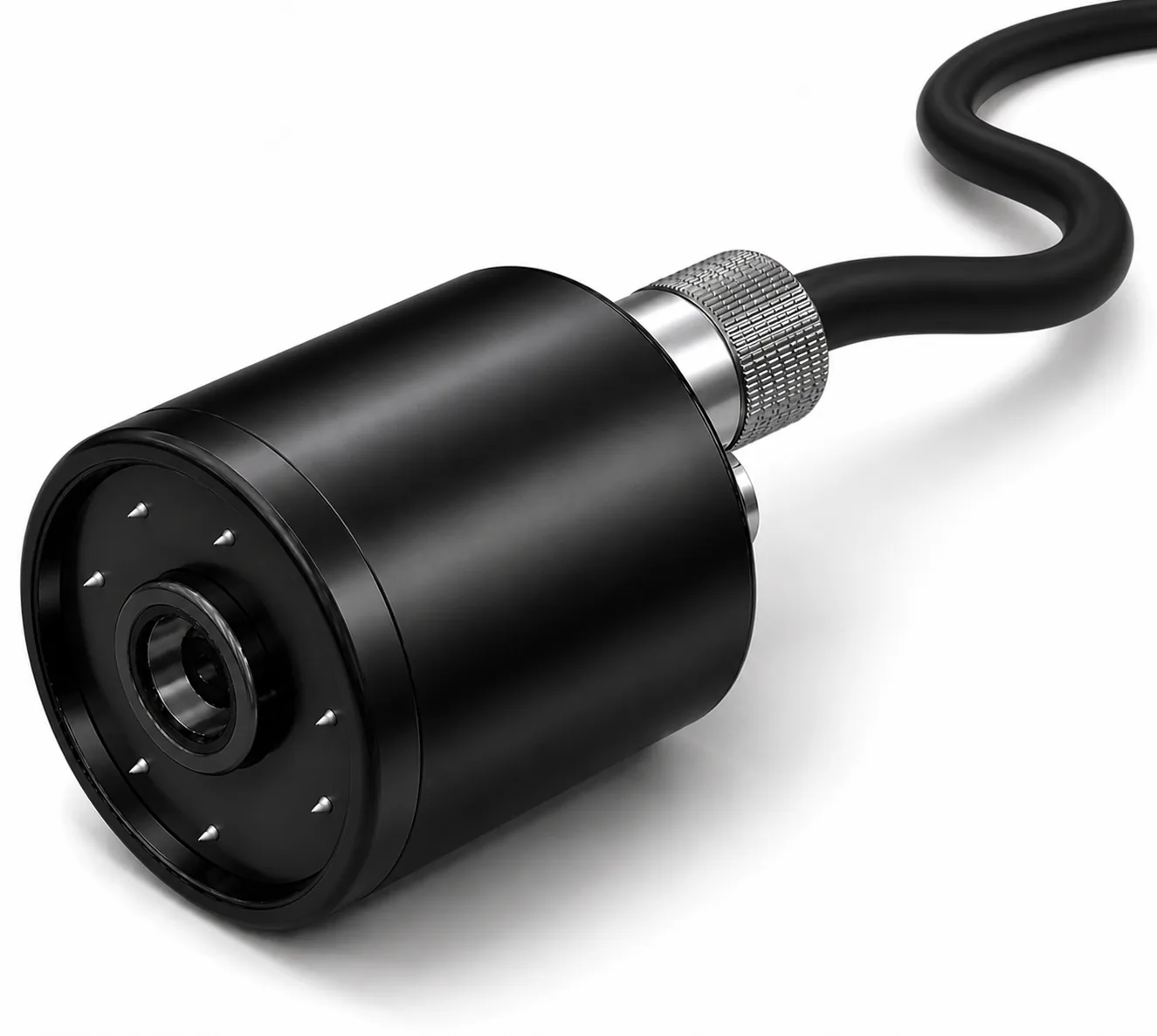
High-output ionizing air blowers or specialized ionizing nozzles are positioned to target the open mold face during the ejection cycle. By flooding the mold cavity with a balanced stream of positive and negative ions, the static bond is instantly neutralized. This allows the parts to release effortlessly and fall away cleanly, ensuring the mold is clear for the next cycle and preventing any physical damage to the tooling.

Application

Automatic part release and mold protection for high-volume injection molding of plastic components, chemical containers, medical syringes, and pharmaceutical vials.

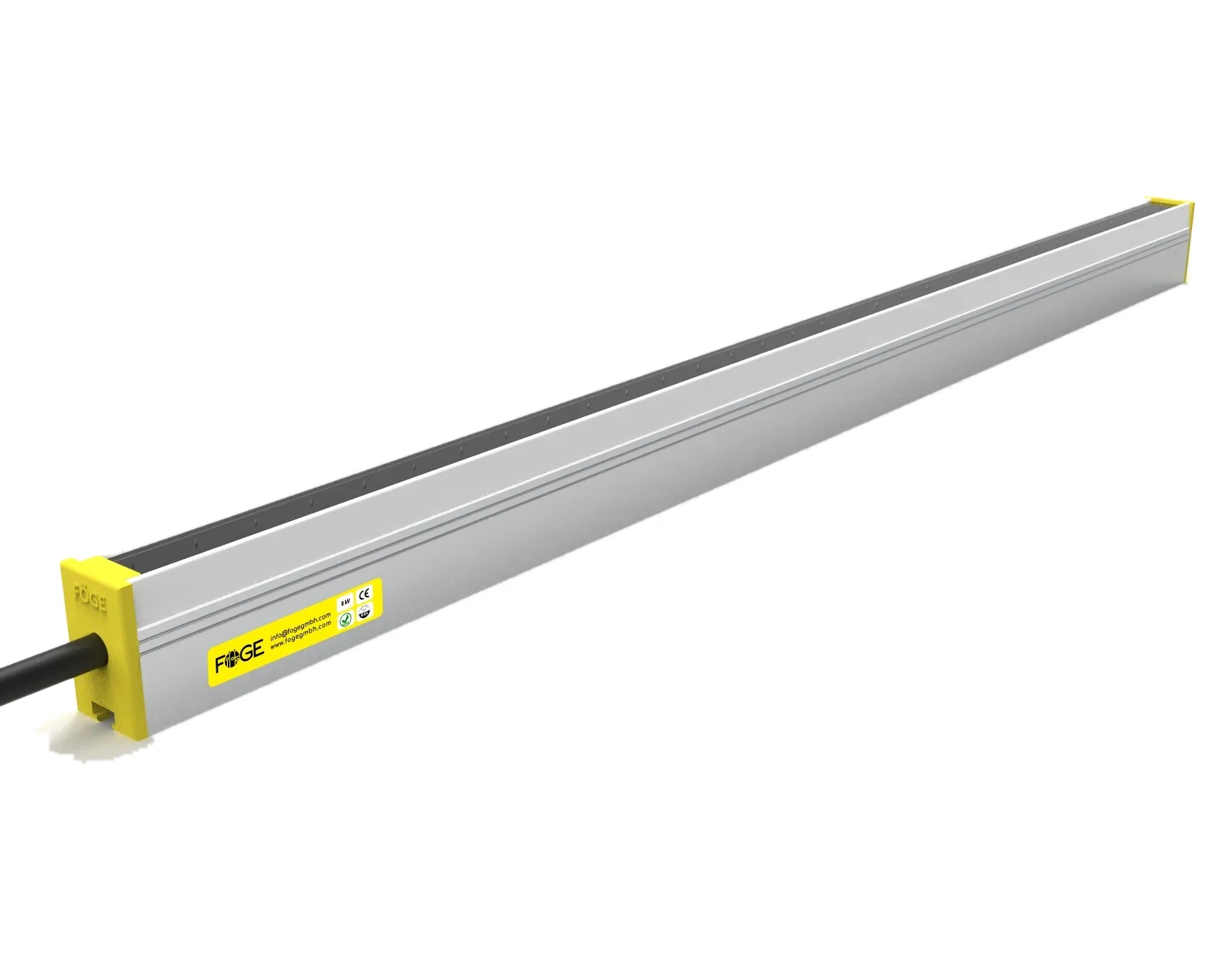
Products used: SE-DCN
Open the 3D application▶ Watch video

Inkjet Coding / Marking Conveyor Line

The problem

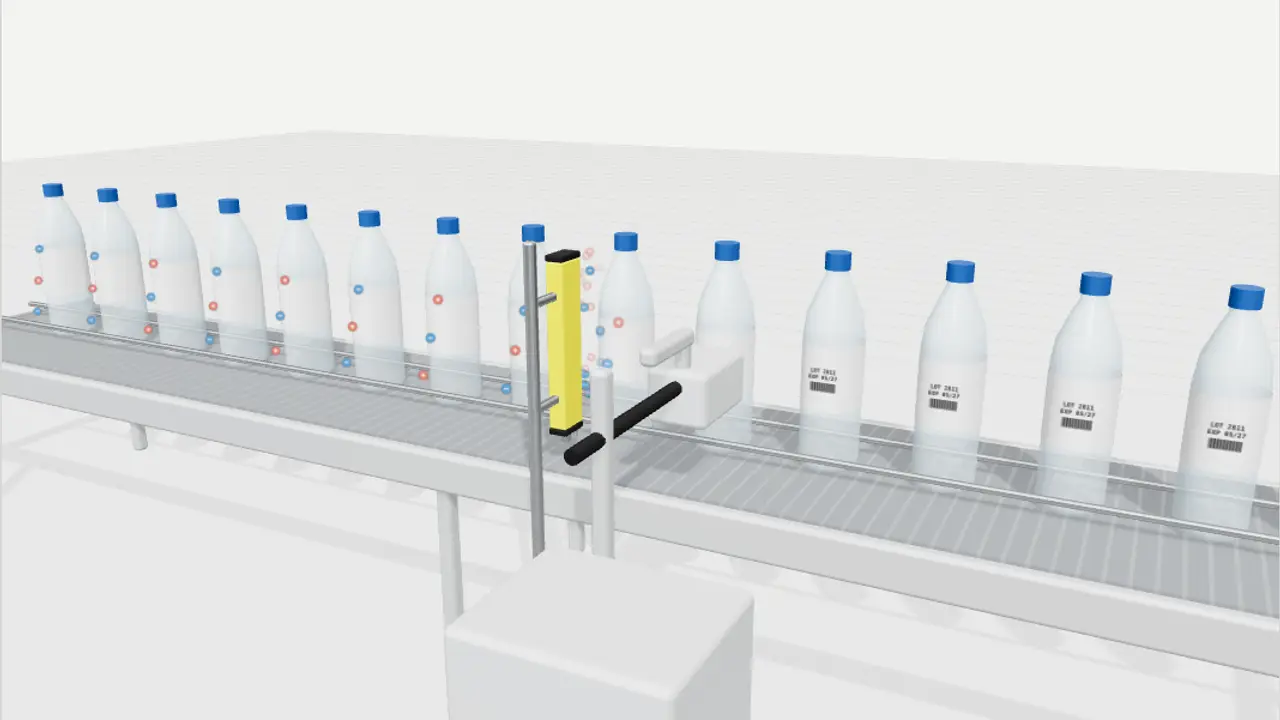
Plastic parts or packaging often accumulate high static charges from previous manufacturing steps (like molding) or simply from friction as they move along the conveyor belt. When a charged object passes under an inkjet print head, the static field repels or scatters the microscopically small ink droplets. This causes "spider-webbing" (ink spray), blurry text, distorted barcodes, and ultimately, unreadable product codes.

The solution

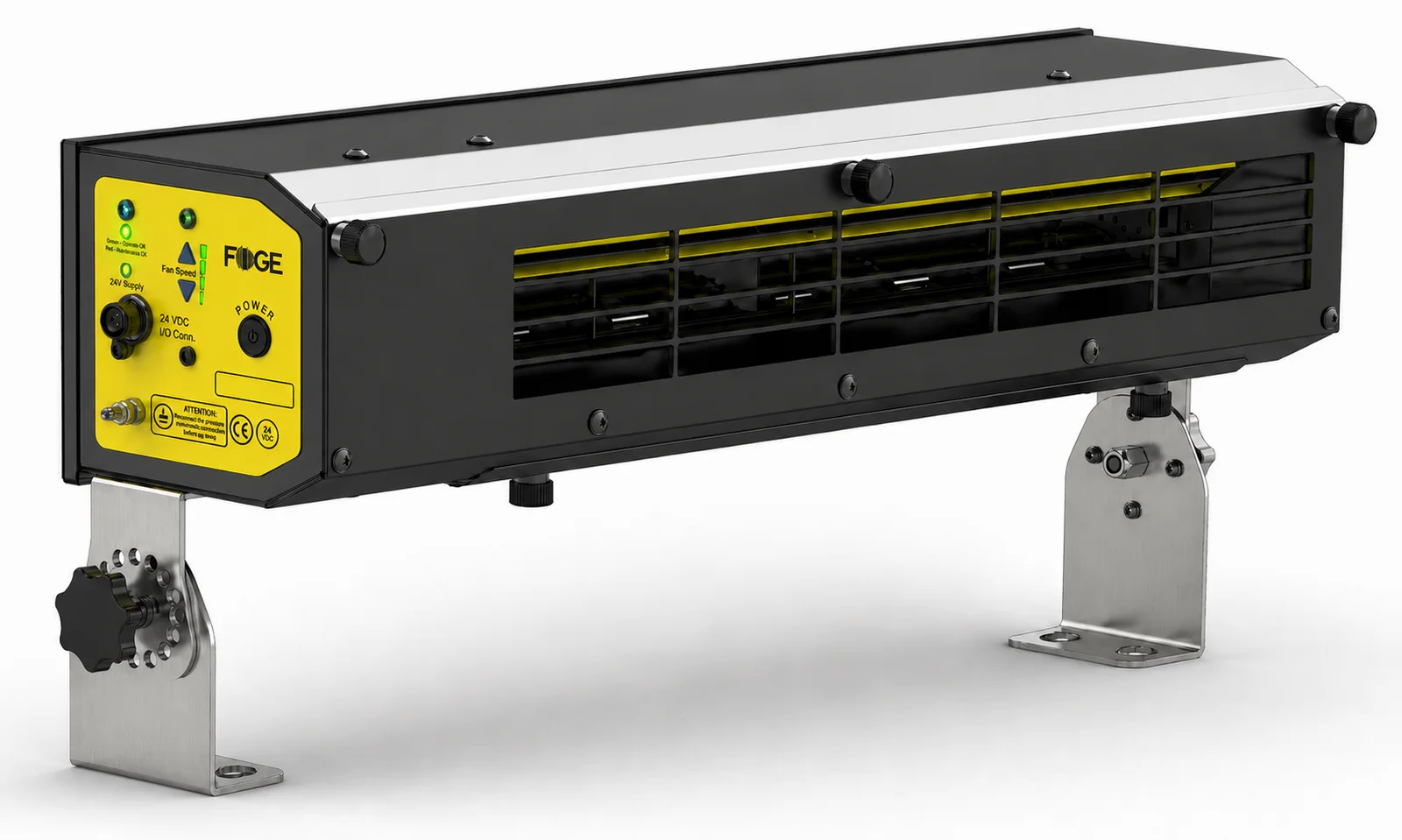
An active ionizing bar is mounted immediately upstream of the print head. It floods the surface of the product with a neutralizing ion cloud, eliminating the static field just before printing. This ensures the ink droplets travel in a straight, precise line to the target, resulting in sharp, high-quality prints.

Application

High-speed inkjet printing of barcodes, QR codes, expiration dates, or lot numbers onto individual products, lids, or packaging.

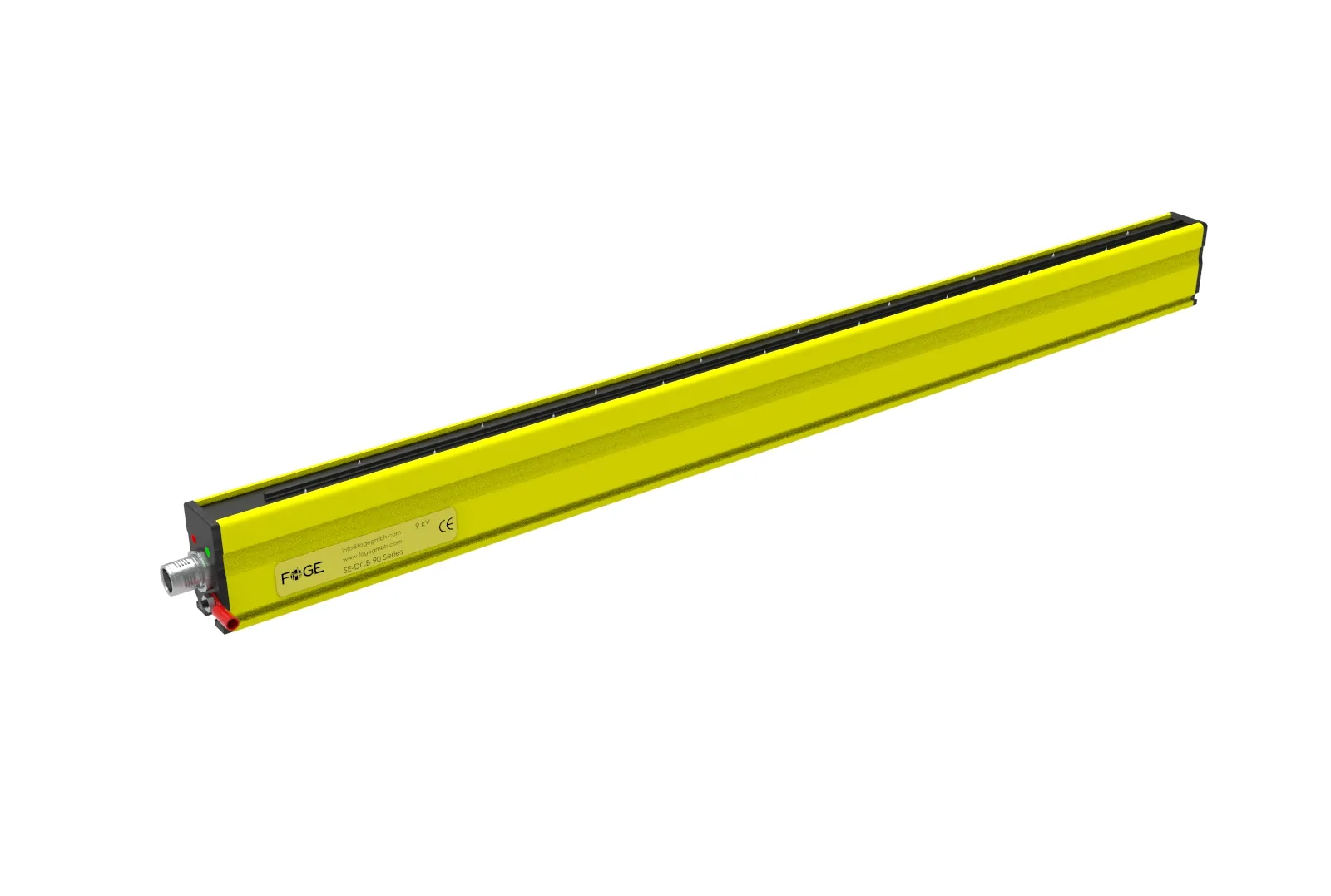
Products used: SE-DCB-90

Open the 3D application▶ Watch video

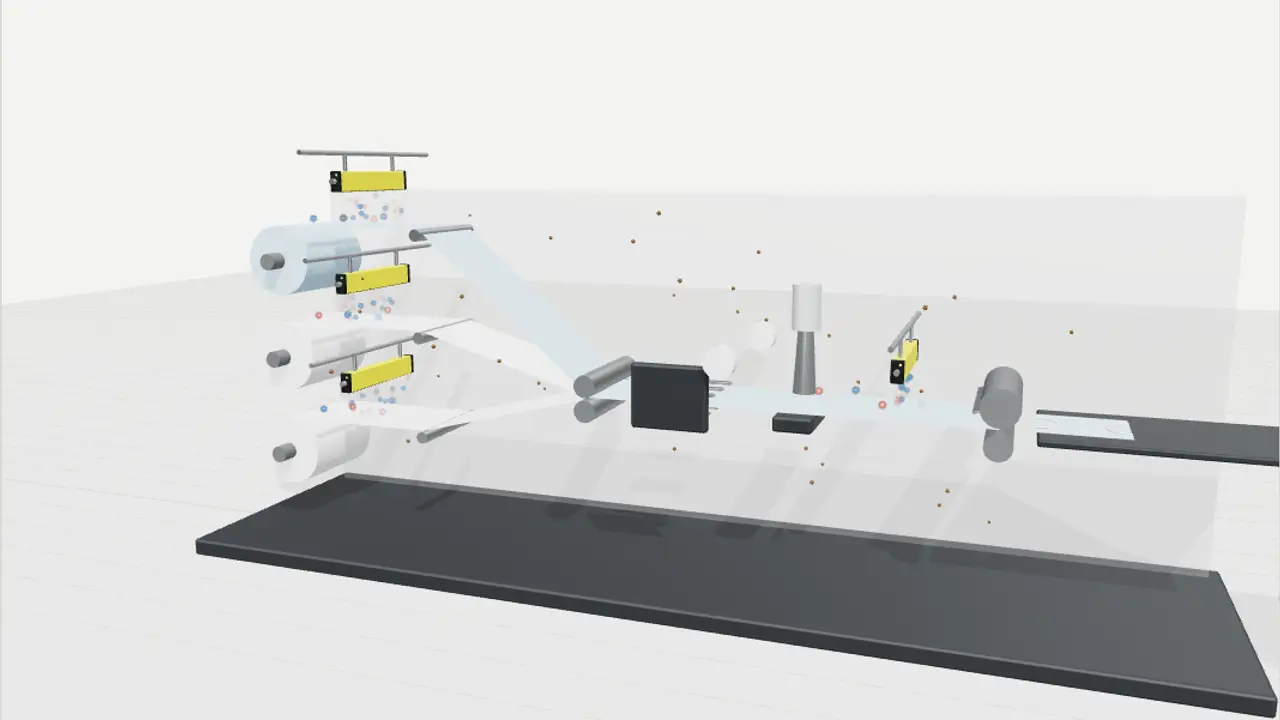
Automated Face Mask Production (Medical Industry)

The problem

Face masks are manufactured using layers of non-woven synthetic fabrics (like polypropylene) that are highly prone to static buildup during high-speed unwinding, folding, and ultrasonic welding. This static causes the light fabric layers to misalign, stick to machine rollers, or repel each other, leading to production jams and uneven folds. Most critically, for medical-grade masks, static attracts airborne particulates and microorganisms, compromising the hygiene standards of the final product.

The solution

Active ionizing bars are strategically placed at multiple points: during the initial unwinding of the fabric layers and at the final folding/cutting stage. These bars neutralize the static charge, ensuring the material remains flat and controllable throughout the process. This leads to precise folding, consistent welding, and a contaminate-free environment essential for medical manufacturing.

Application

High-speed automated production of surgical masks, N95 respirators, and medical-grade protective apparel.

Products used: SE-DCB-90

Open the 3D application▶ Watch video

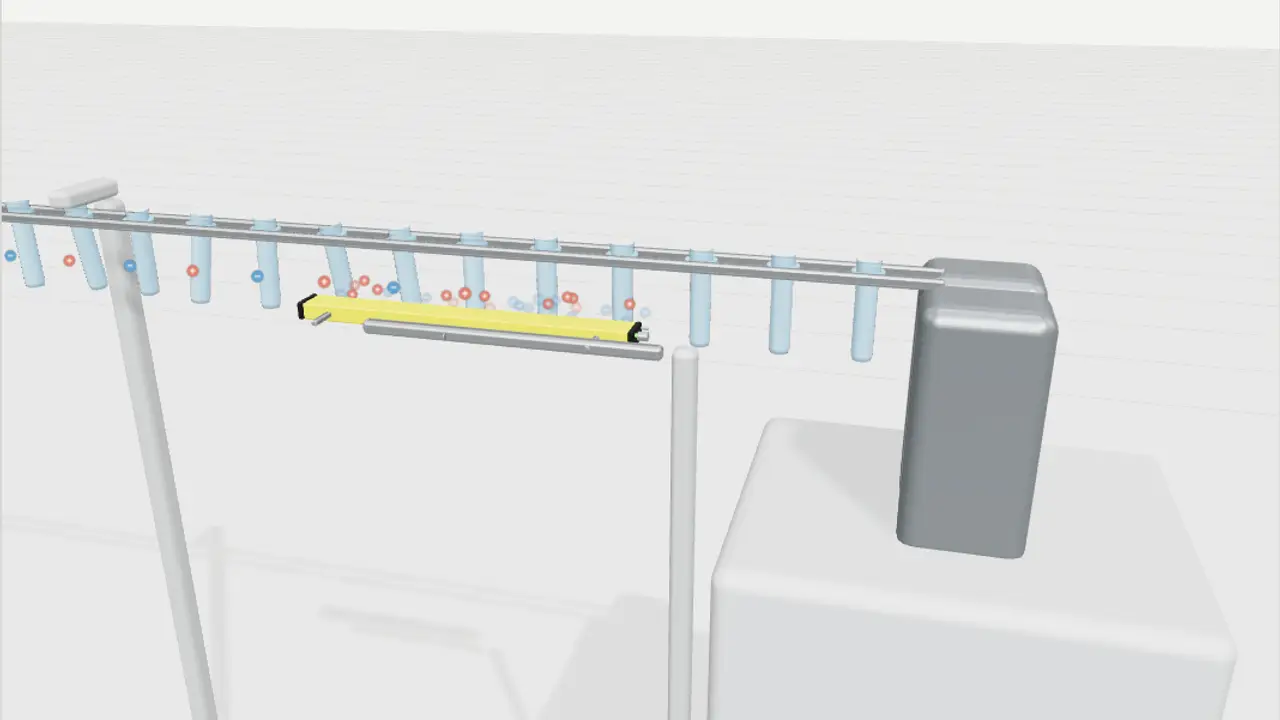
Stretch Blow Molding (SBM) / Injection Blow Molding

The problem

In blow molding—frequently used in the plastics industry to produce bottles and containers—the "parison" or "preform" (the raw plastic material) is heated and moved into the mold. High static charges cause these preforms to move, swing, or misalign as they are transferred. If the raw material is not perfectly aligned when the heavy metal mold halves close, it results in a "crushed" or defective product. Worse, this misalignment can cause the mold to close onto the solid plastic, leading to catastrophic physical damage to the expensive mold faces and core pins.

The solution

Targeted ionizing air nozzles or specialized ionizing bars are installed at the preform loading station. By neutralizing the static charge on the raw material immediately before it enters the mold, the electrostatic forces that cause movement are eliminated. This ensures the preforms stay perfectly oriented and stationary as the mold closes, preventing product defects and protecting the machinery from collision damage.

Application

Ensuring precise alignment and mold protection during the high-speed production of plastic bottles, containers, and chemical carboys.

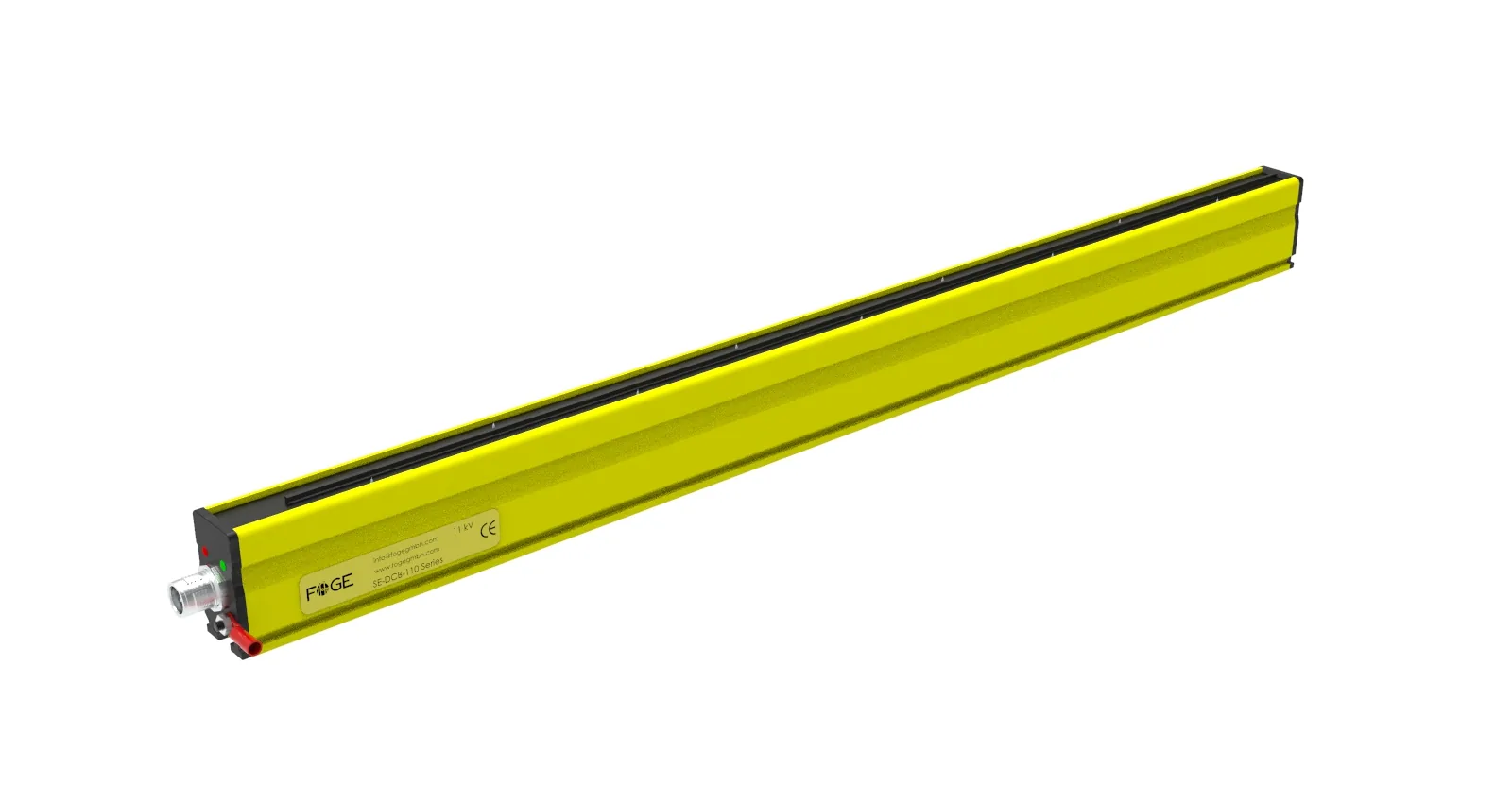
Products used: SE-DCB-110

Open the 3D application▶ Watch video

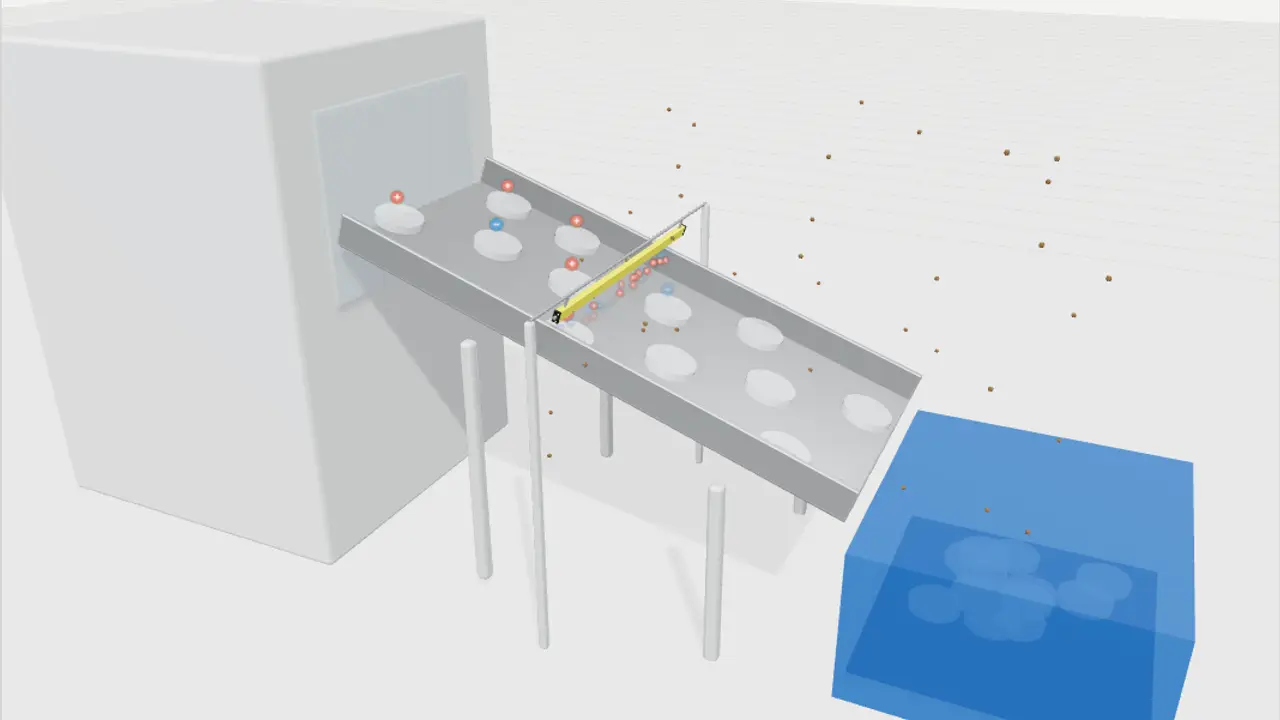
Medical Injection Molding (Collection & Sorting)

The problem

As medical-grade plastic parts are ejected from the mold and slide down collection chutes into bins, the intense friction generates high levels of static electricity. This creates three critical issues: - Contamination: The charged parts act as "magnets" for airborne dust and fibers, which is unacceptable in sterile medical environments. - Handling Issues: Parts cling to the metal chutes or stick to each other in the bins, preventing automated counting or sorting. - Operator Safety: Operators touching the collection bins or the parts themselves receive painful electrostatic shocks throughout the day.

The solution

An active ionizing bar is mounted directly over the conveyor or discharge chute. By flooding the parts with a balanced stream of positive and negative ions as they exit the machine, the static charge is neutralized instantly. This ensures the parts fall cleanly into the bins, remain free of dust, and are safe for operators to handle without the risk of shocks.

Application

Cleanroom injection molding for medical components such as petri dishes, syringe barrels, test tubes, and IV connectors.

Products used: SE-DCB-110

Open the 3D application▶ Watch video

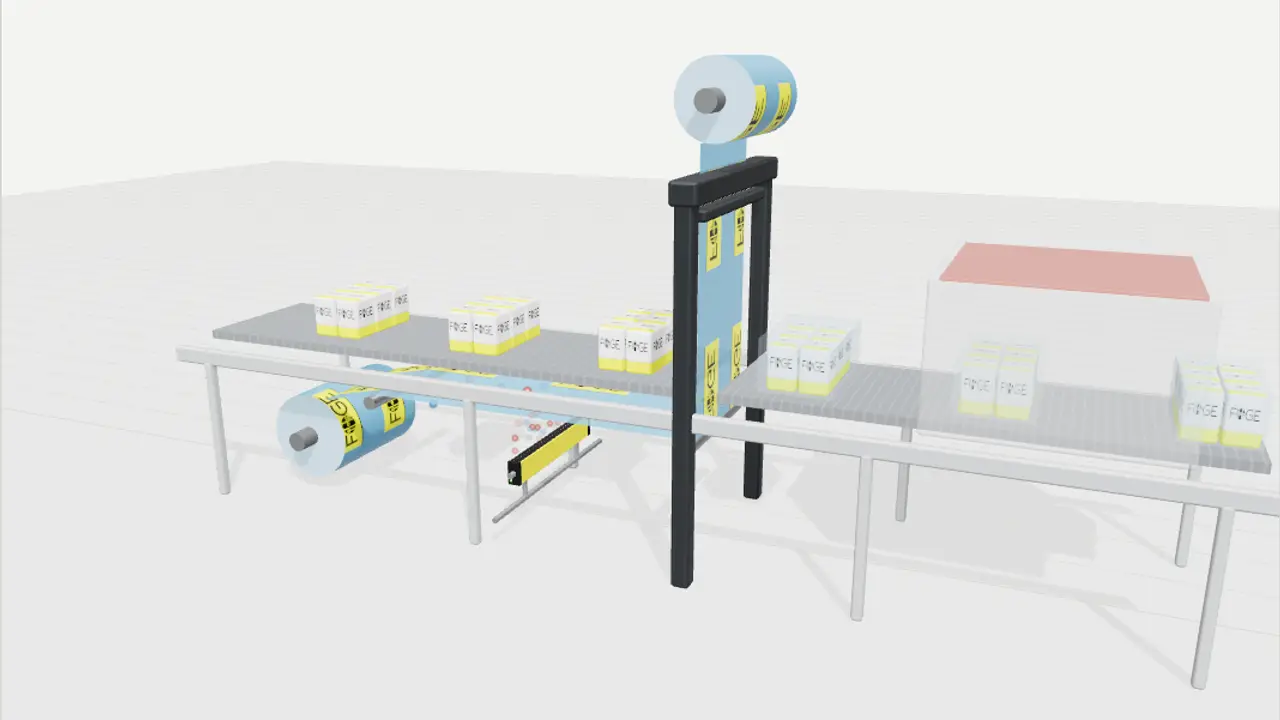
Sleeve Wrapper / Shrink Bundling Machine

The problem

As the continuous web of plastic shrink film unwinds and feeds upward through the machine gap, it generates static electricity. This static charge causes the lightweight film to wrap around machine rollers, cling to itself, or feed unevenly, resulting in machine jams and poorly wrapped products.

The solution

An active ionizing bar is positioned right next to the film web just before it meets the product box. It neutralizes the static charge, allowing the film to feed smoothly and drape accurately around the product without clinging to the machinery.

Application

Automatically wrapping individual boxes, trays, or bundled products in plastic film (often before they pass through a heat shrink tunnel).

Products used: SE-DCB-90

Open the 3D application▶ Watch video

Suitable FÖGE products

Discuss your application

Describe your process — we select the static control product and mounting position with you, and visit you on site when needed.

Contact