The problem
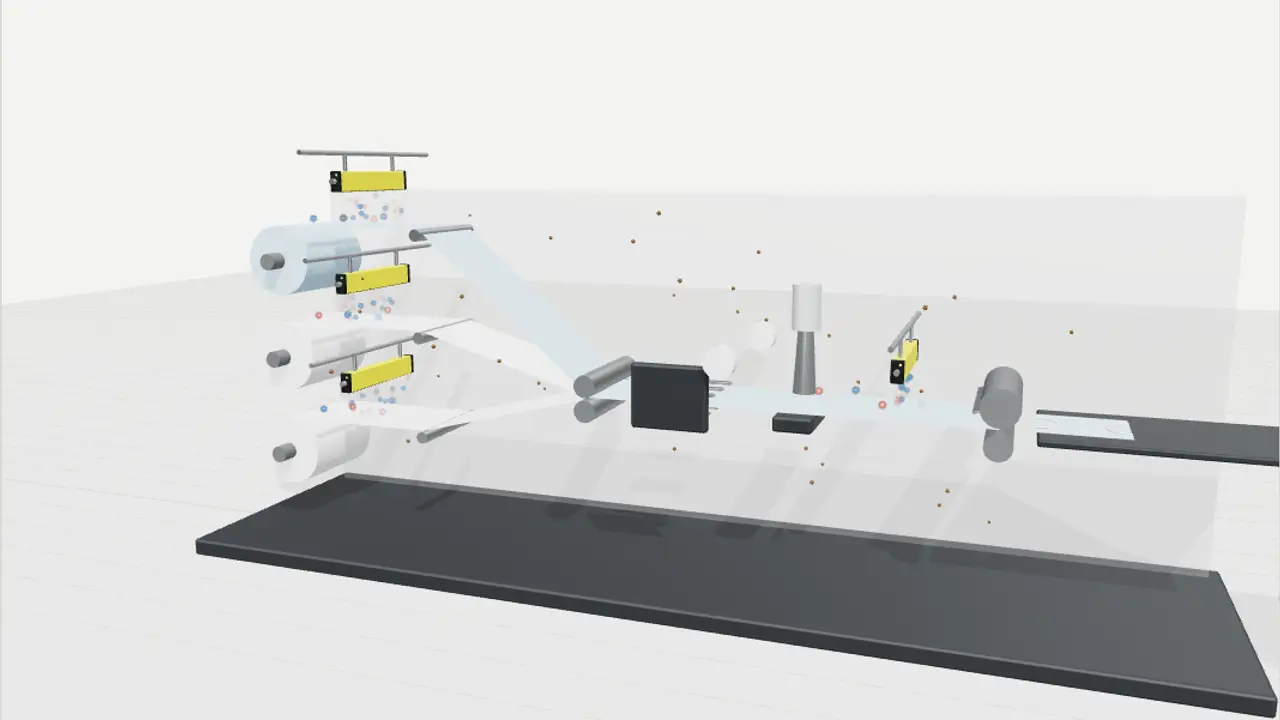
Face masks are manufactured using layers of non-woven synthetic fabrics (like polypropylene) that are highly prone to static buildup during high-speed unwinding, folding, and ultrasonic welding. This static causes the light fabric layers to misalign, stick to machine rollers, or repel each other, leading to production jams and uneven folds. Most critically, for medical-grade masks, static attracts airborne particulates and microorganisms, compromising the hygiene standards of the final product.
The solution
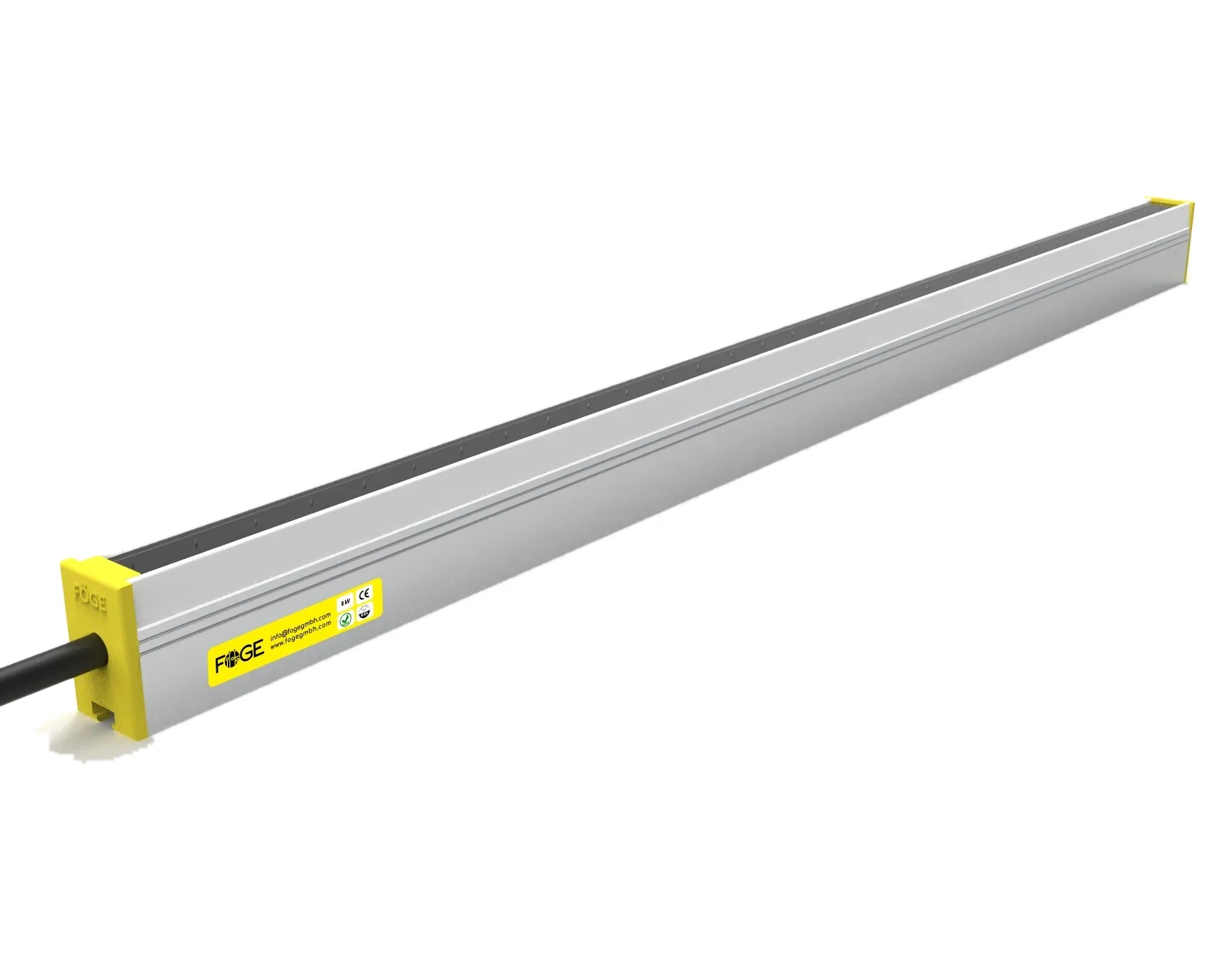
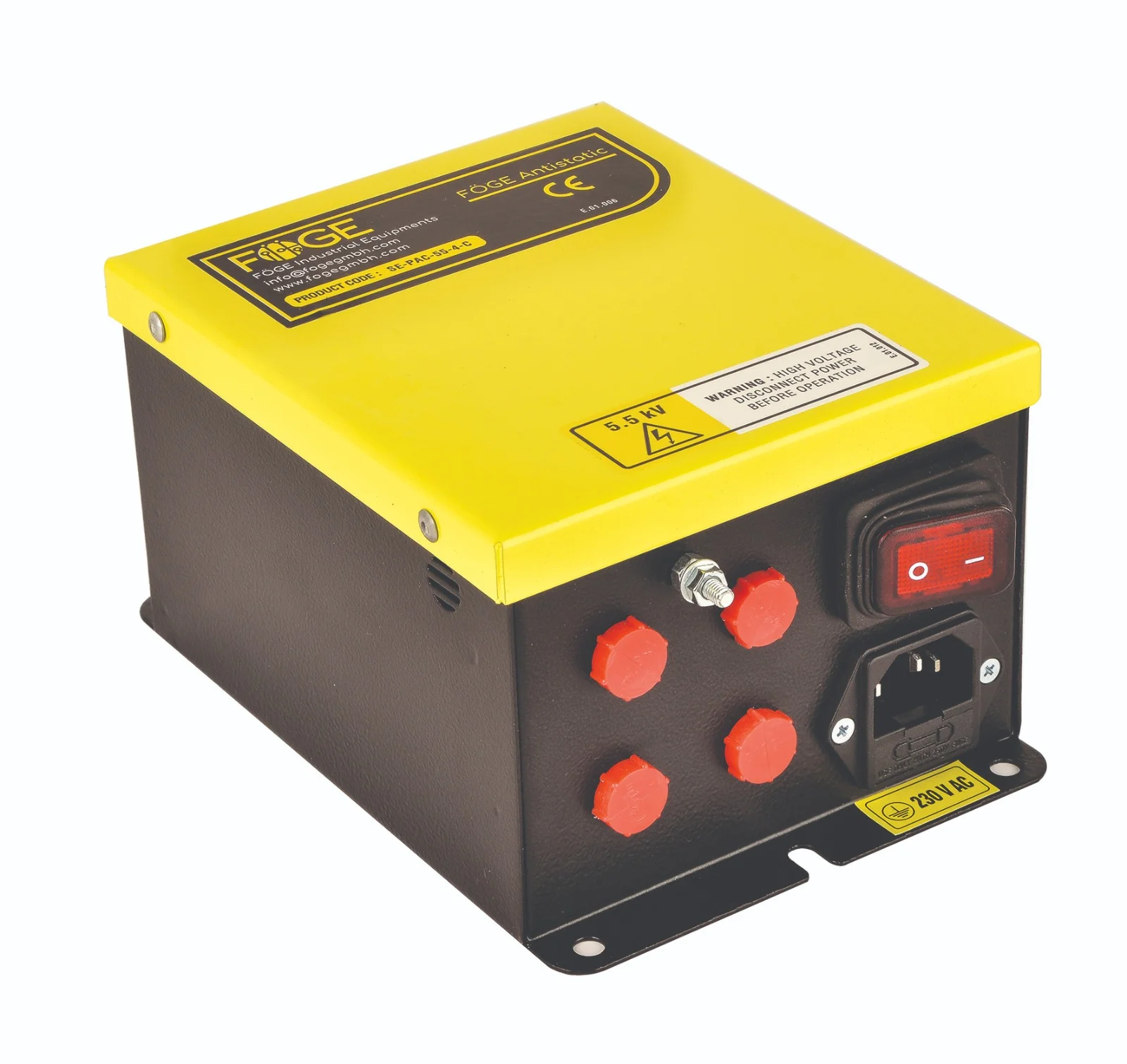
Active ionizing bars are strategically placed at multiple points: during the initial unwinding of the fabric layers and at the final folding/cutting stage. These bars neutralize the static charge, ensuring the material remains flat and controllable throughout the process. This leads to precise folding, consistent welding, and a contaminate-free environment essential for medical manufacturing.
Application
High-speed automated production of surgical masks, N95 respirators, and medical-grade protective apparel.
Products used: SE-DCB-90
Open the 3D application▶ Watch video
The problem
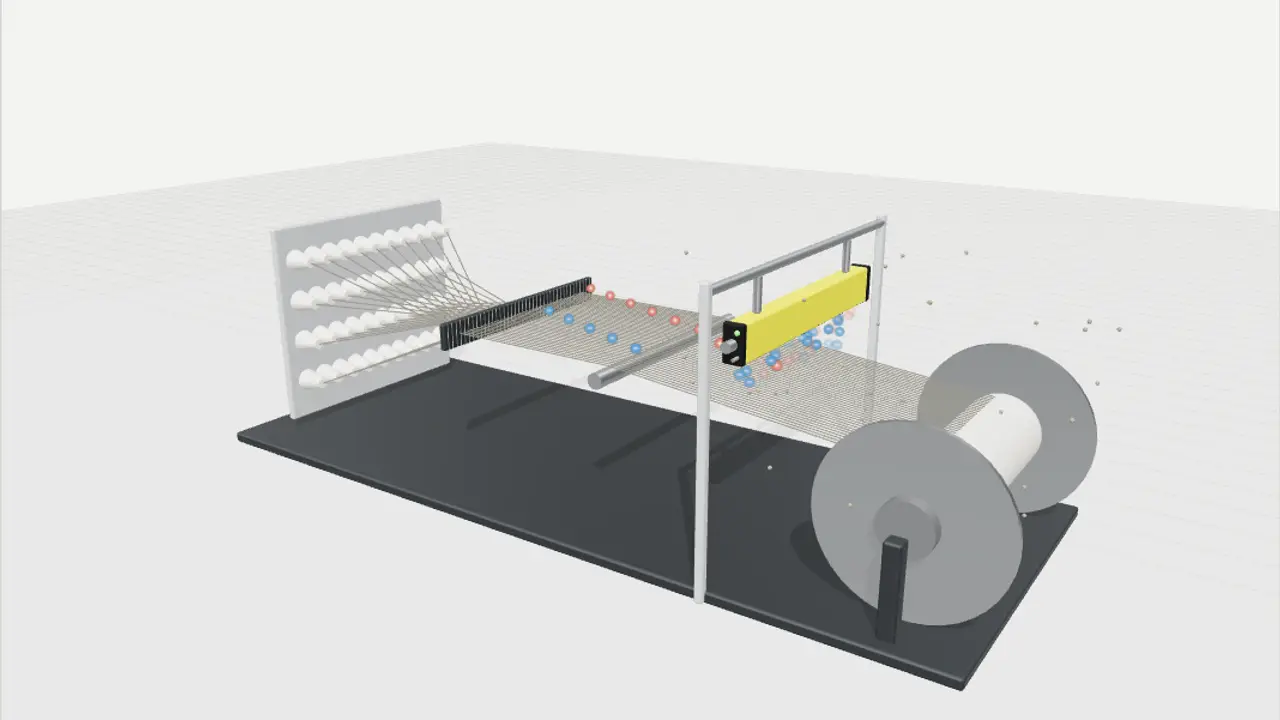
In textile manufacturing, thousands of individual synthetic yarns (polyester, nylon, acrylic) are pulled at very high speeds from a creel to be wound onto a large beam. This rapid movement and friction against thread guides generate intense static electricity. The charged yarns repel each other (causing "ballooning"), stick to machine rollers, or snap. This leads to uneven tension, tangling, and frequent machine stops. Furthermore, the massive static buildup in the finished beam can cause painful shocks to operators and attract significant amounts of dust and lint, degrading fabric quality.
The solution
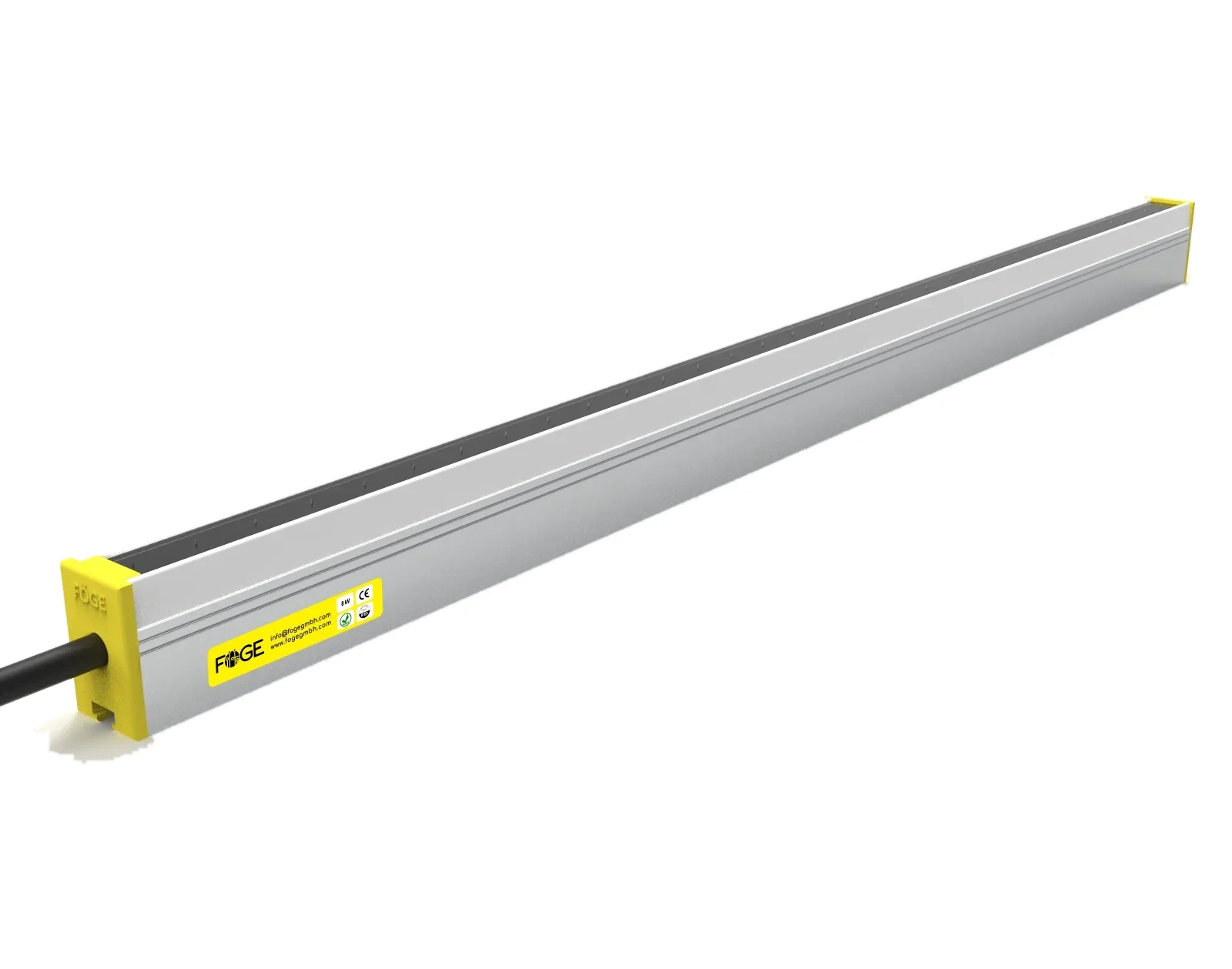
An active ionizing bar is installed across the entire width of the yarn sheet, just before it is wound onto the beam. By flooding the moving threads with positive and negative ions, the static charge is neutralized instantly. This ensures the yarns remain parallel and under uniform tension, allowing for a dense, high-quality beam and preventing operator shocks during handling.
Application
High-speed warping, beaming, and sizing processes in the production of synthetic and blended textiles.
Products used: SE-DCB-110
Open the 3D application▶ Watch video
The problem
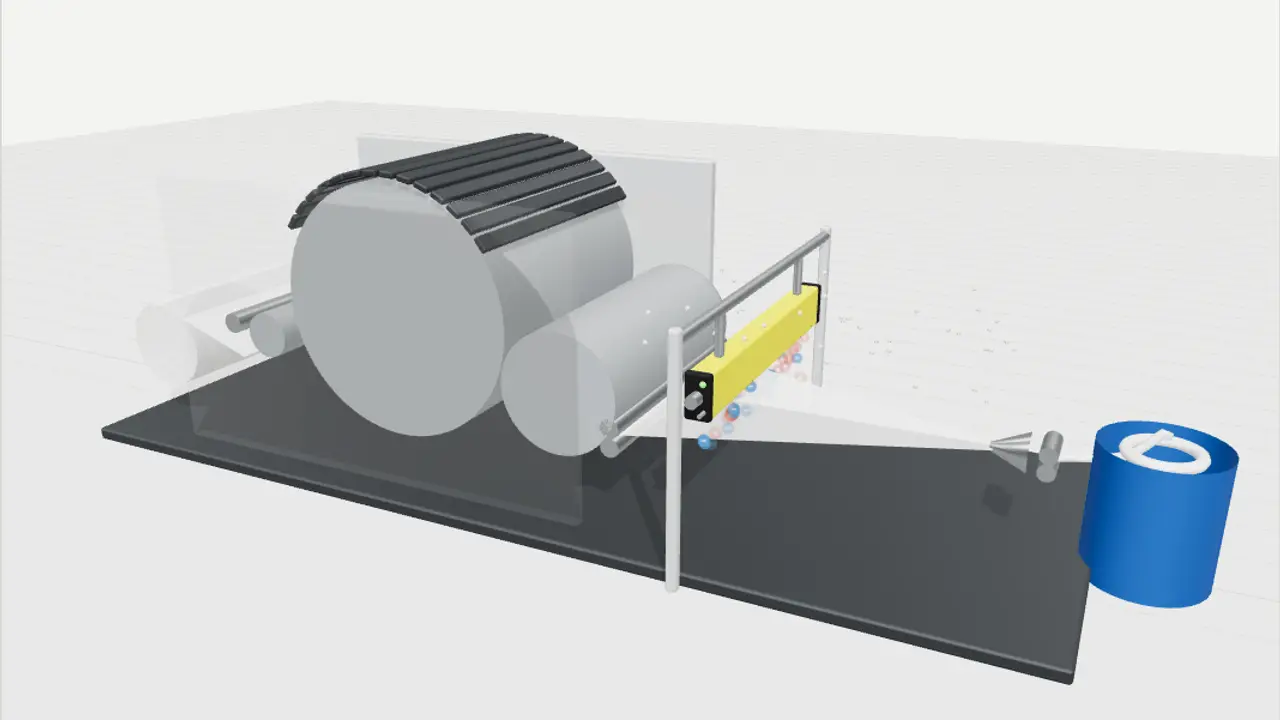
During the carding process, individual synthetic or natural fibers are combed and aligned to form a thin, delicate web. The high-speed mechanical action and friction between the fibers and the metal carding wires generate massive static electricity. This causes the lightweight fiber web to aggressively cling to the rollers or wrap around the doffer, leading to "web wrap" and immediate machine downtime. Additionally, the fibers can repel each other, causing the web to lose its cohesion and become ragged or uneven.
The solution
An active ionizing bar is mounted across the delivery area where the fiber web leaves the carding machine. By neutralizing the static charge at this critical transition point, the bar prevents the web from sticking to the machinery and ensures it remains flat and cohesive as it is drawn into the next stage (such as sliver formation).
Application
Fiber web control and sticking prevention in carding, combing, and non-woven textile manufacturing.
Products used: SE-DCB-110
Open the 3D application▶ Watch video