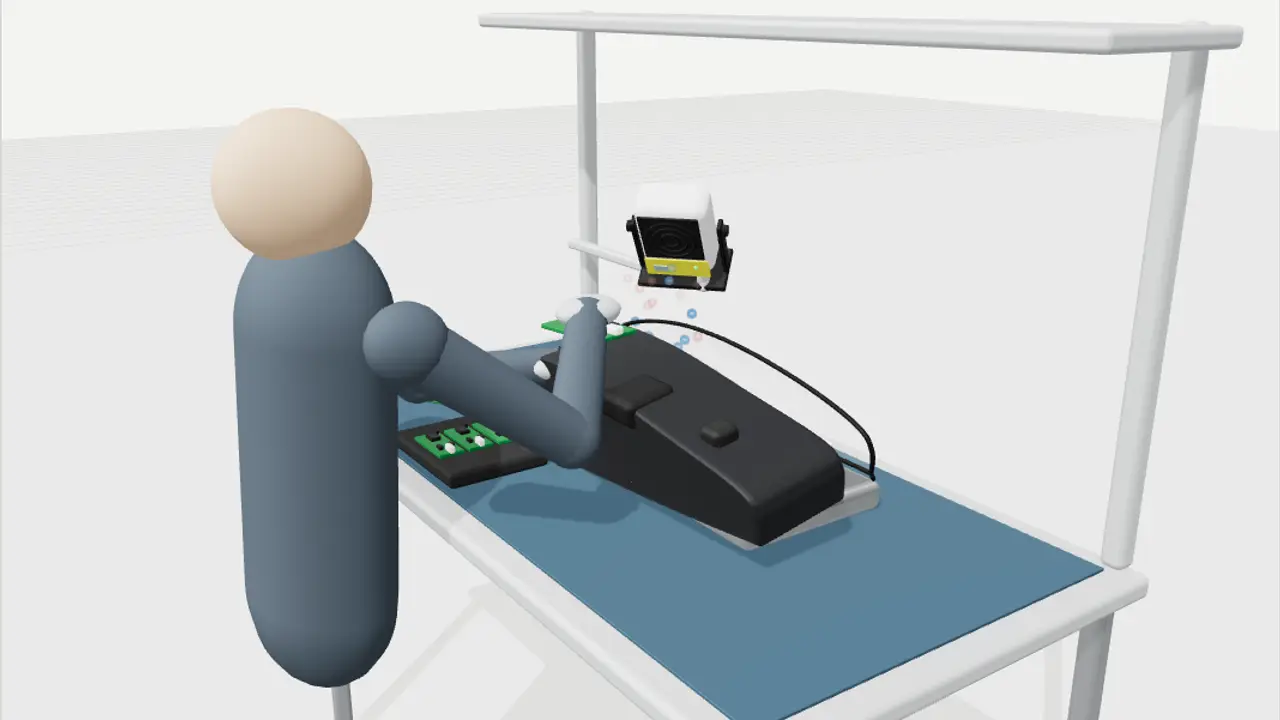
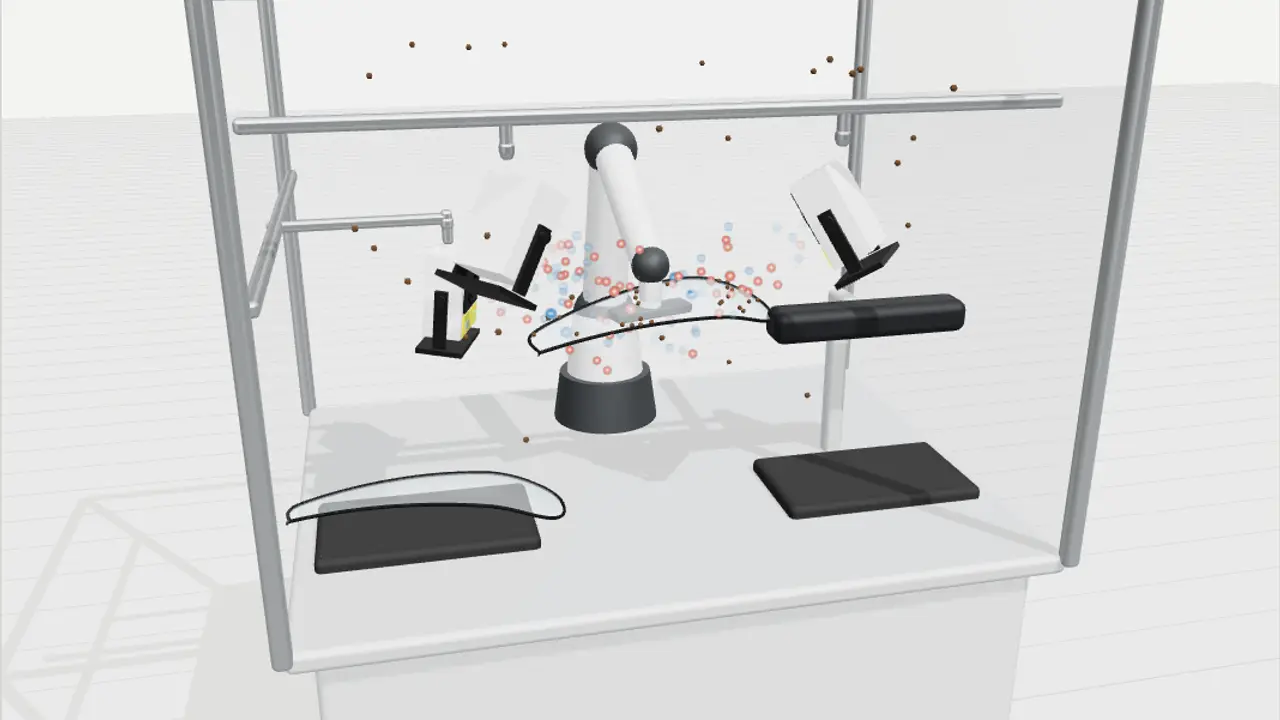
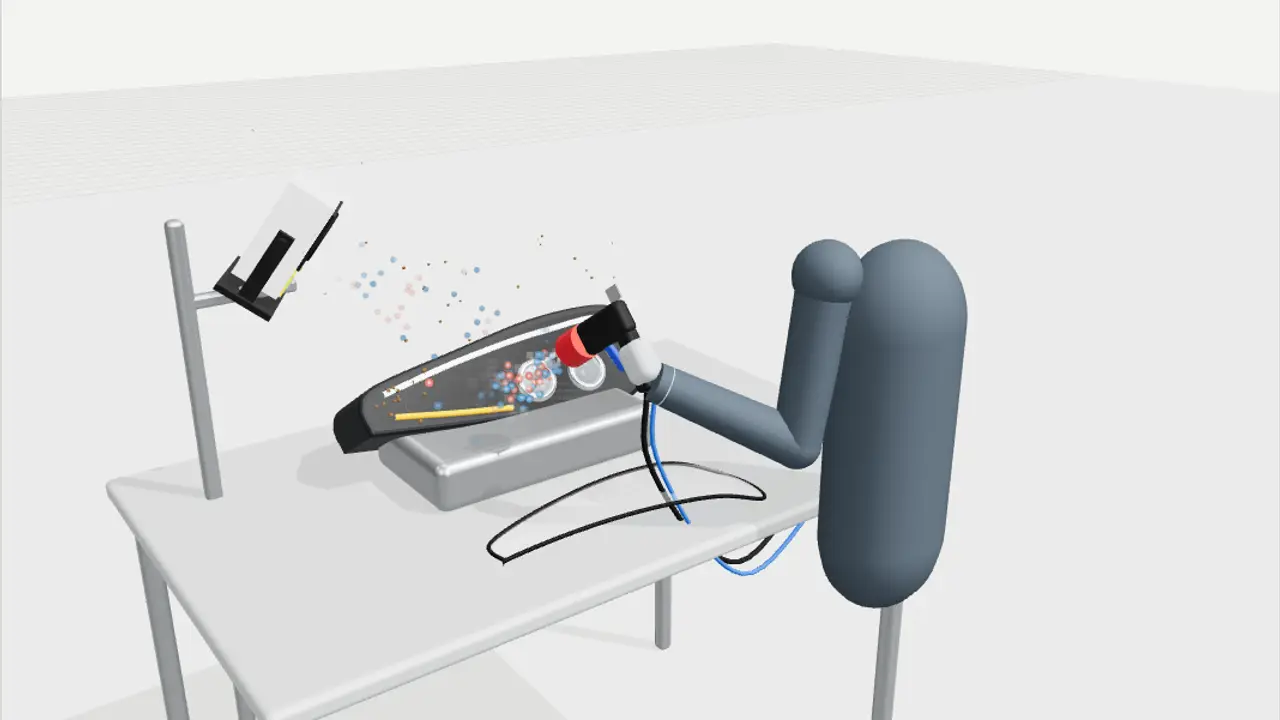
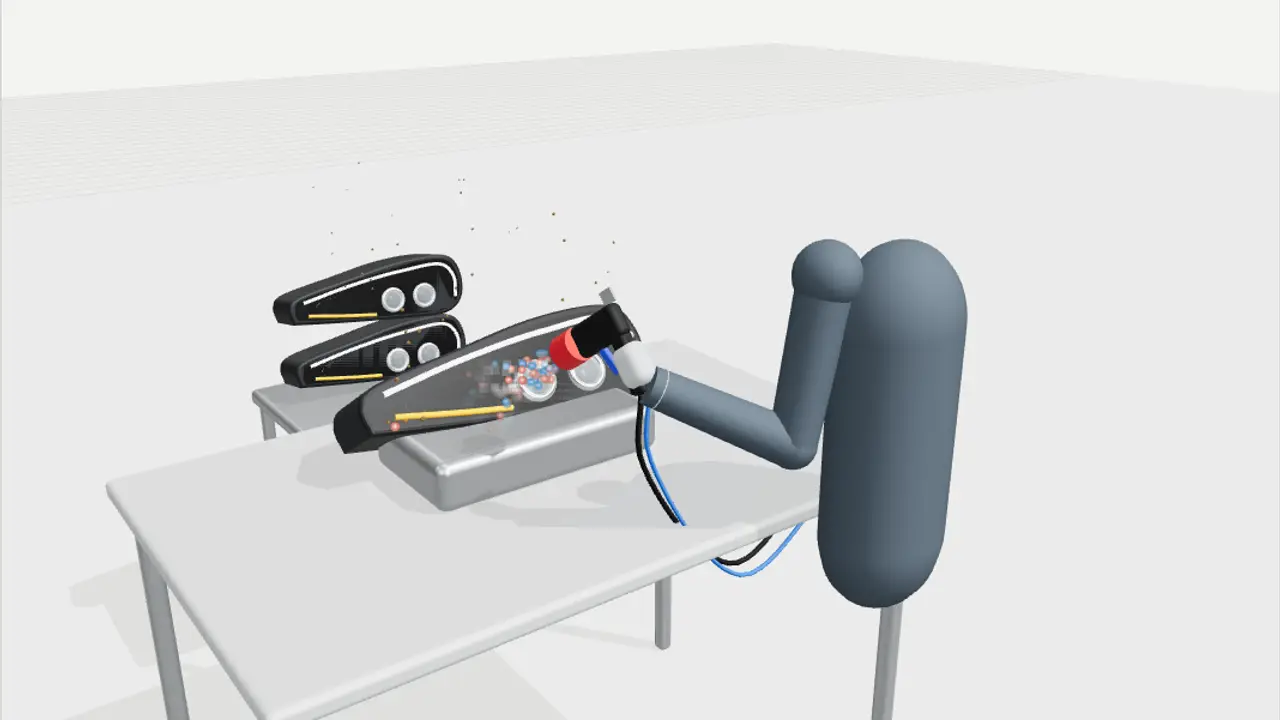
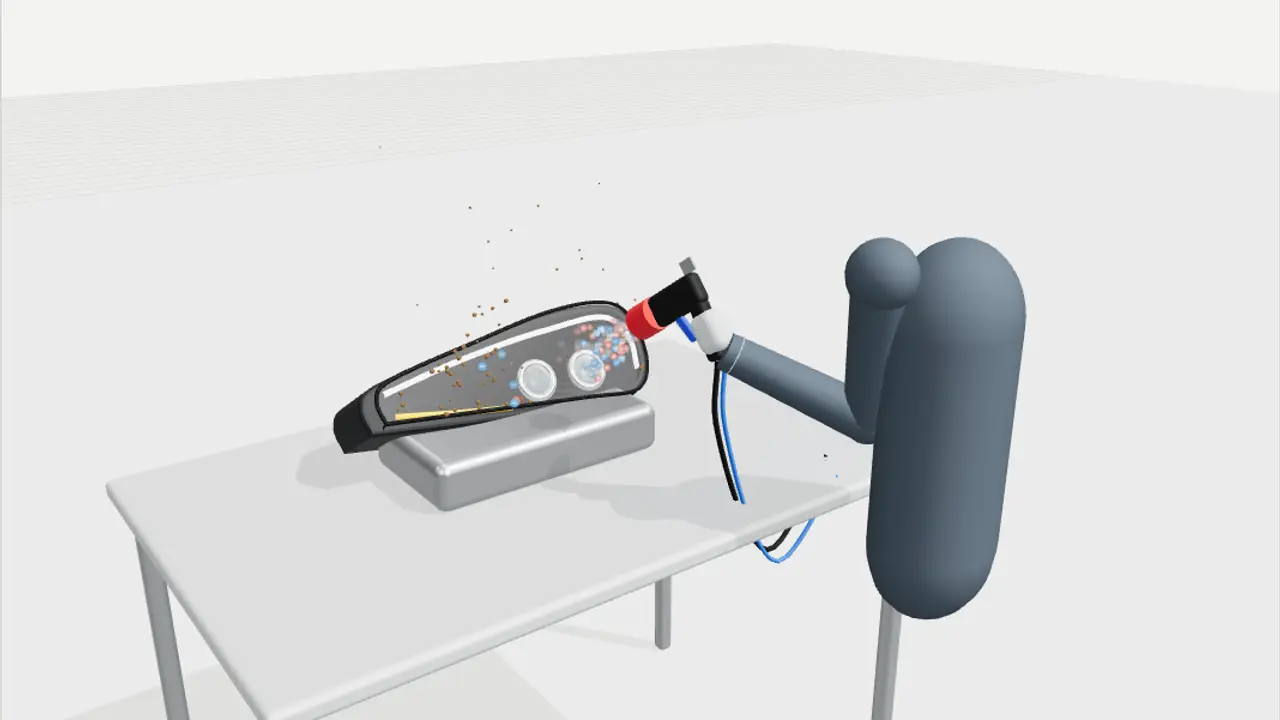
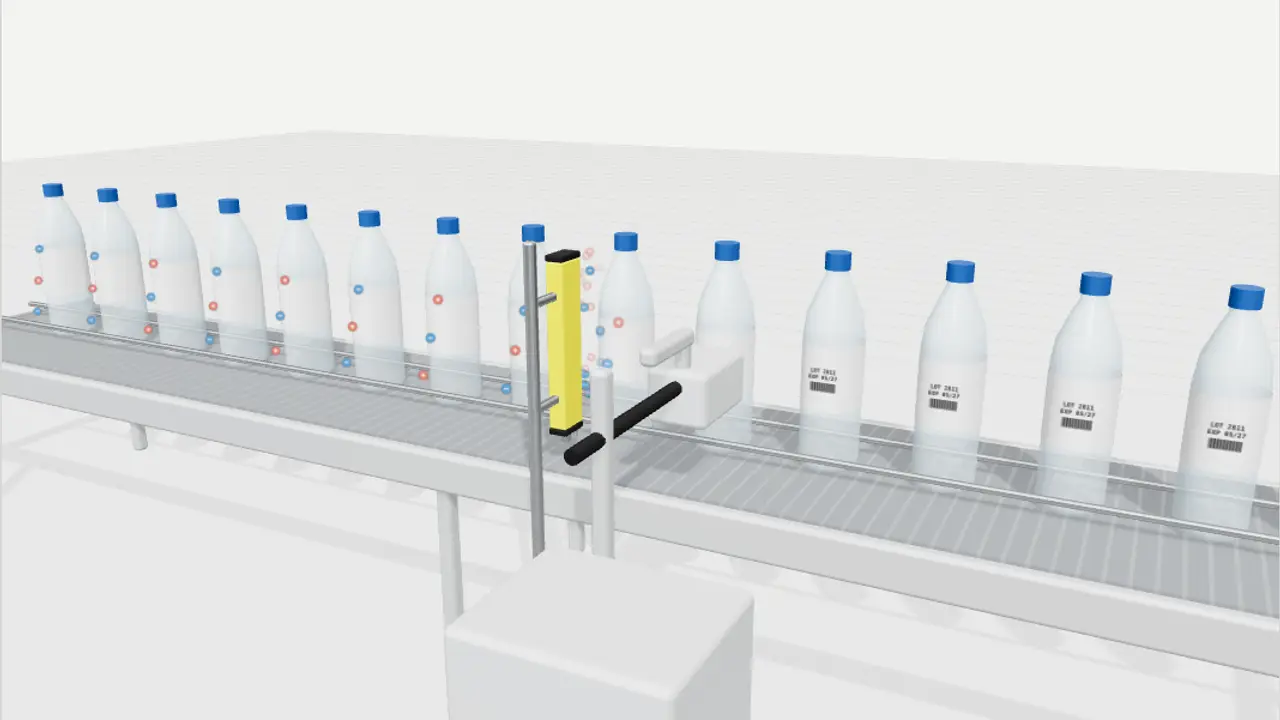
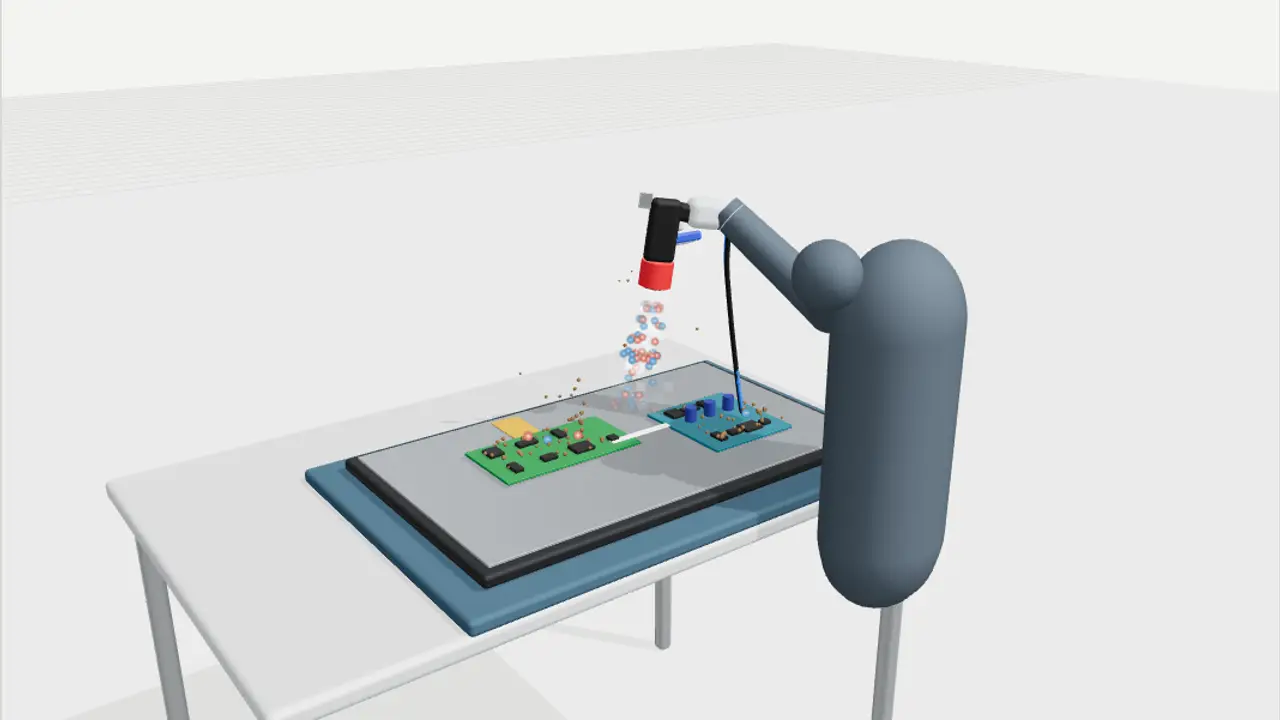
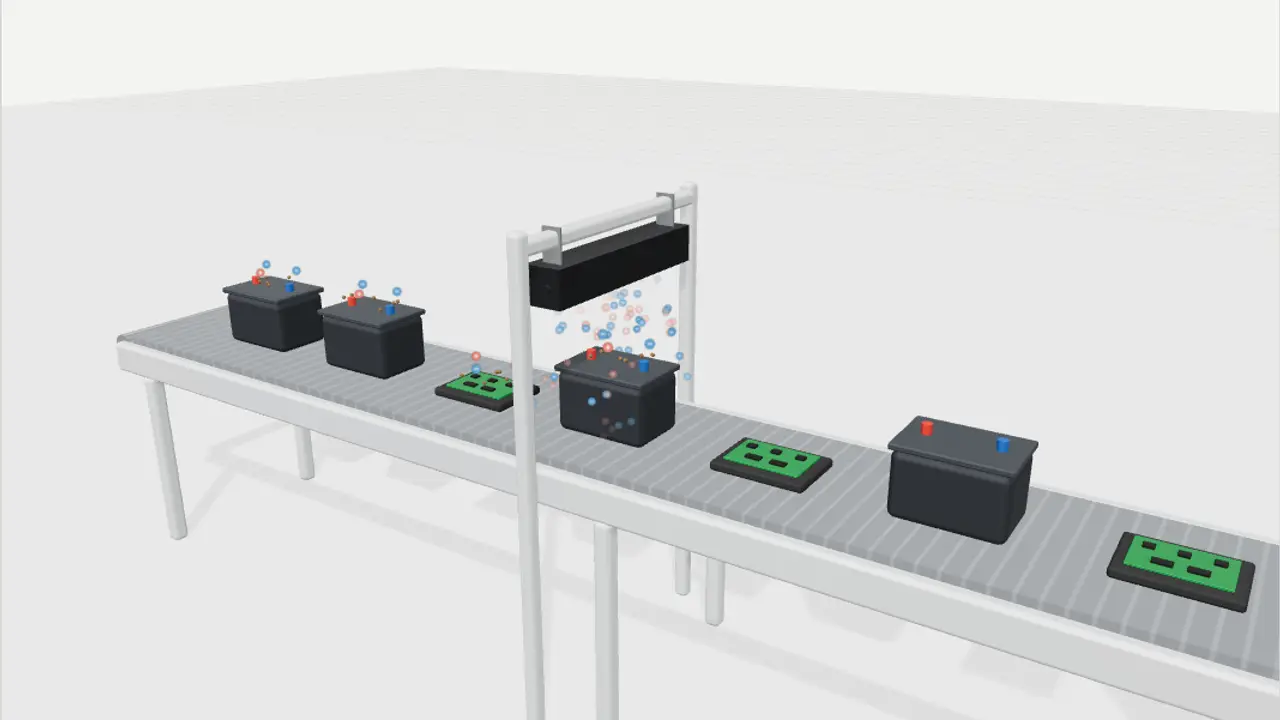
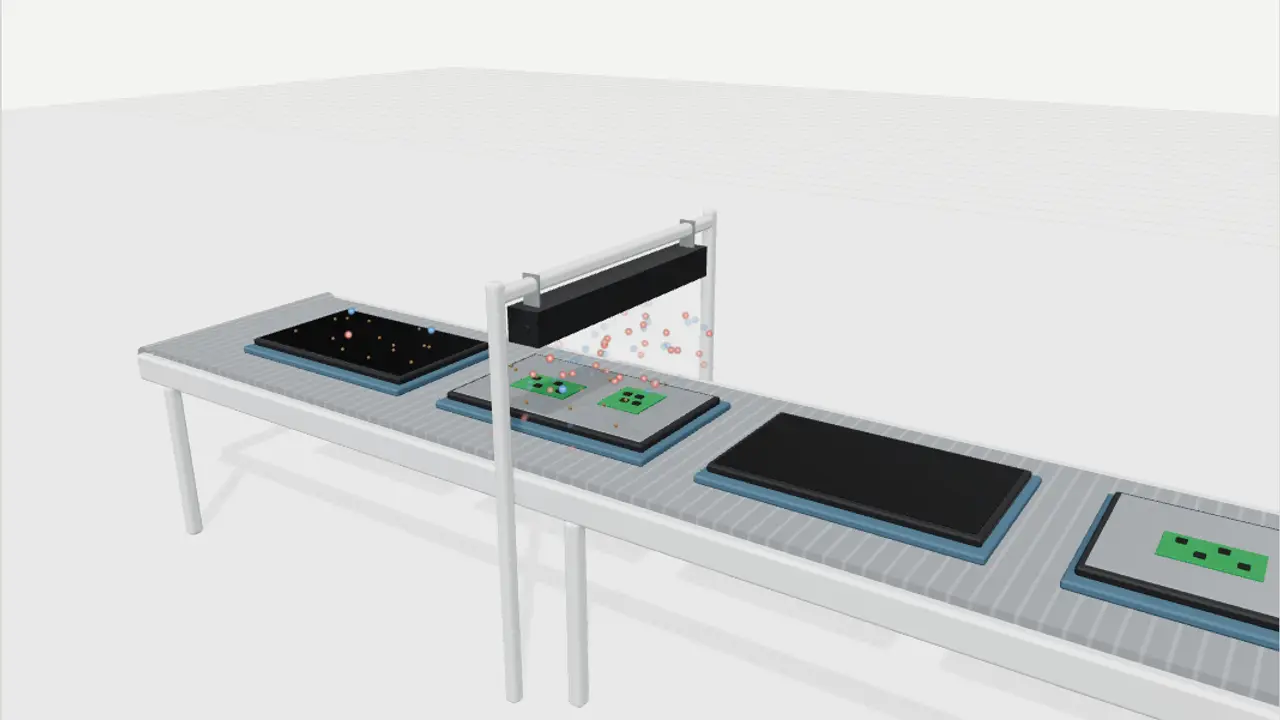
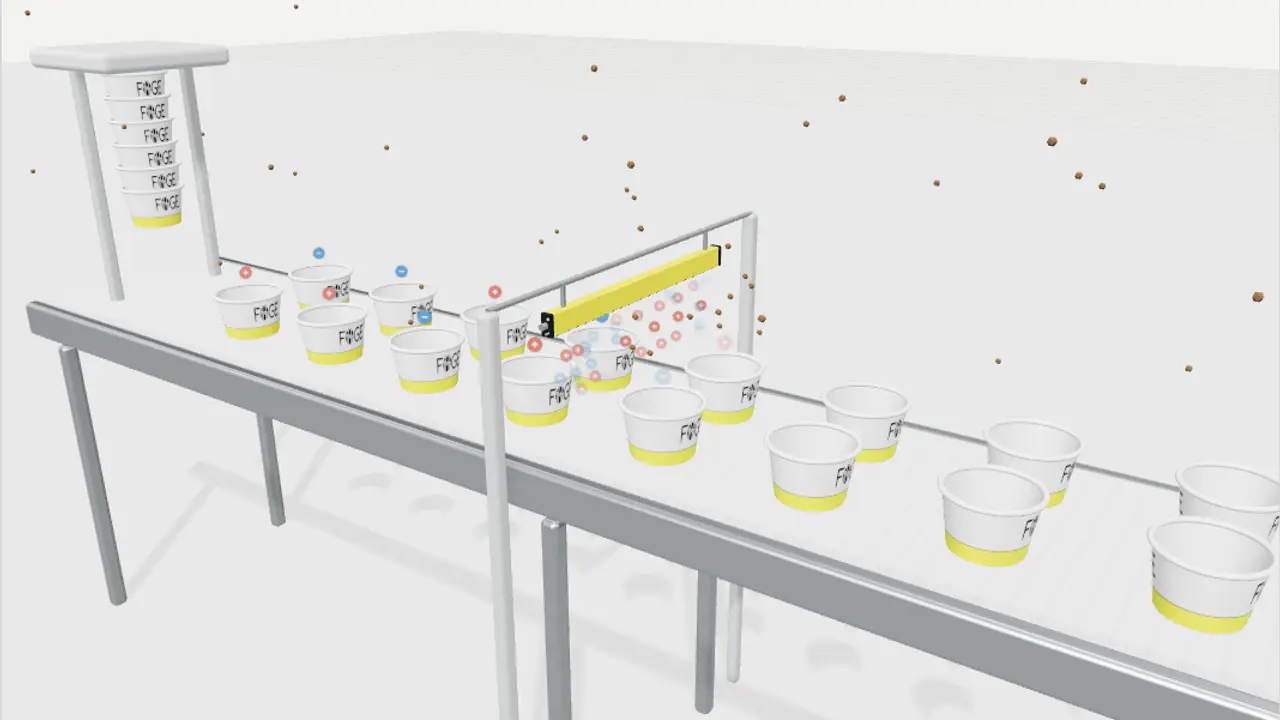
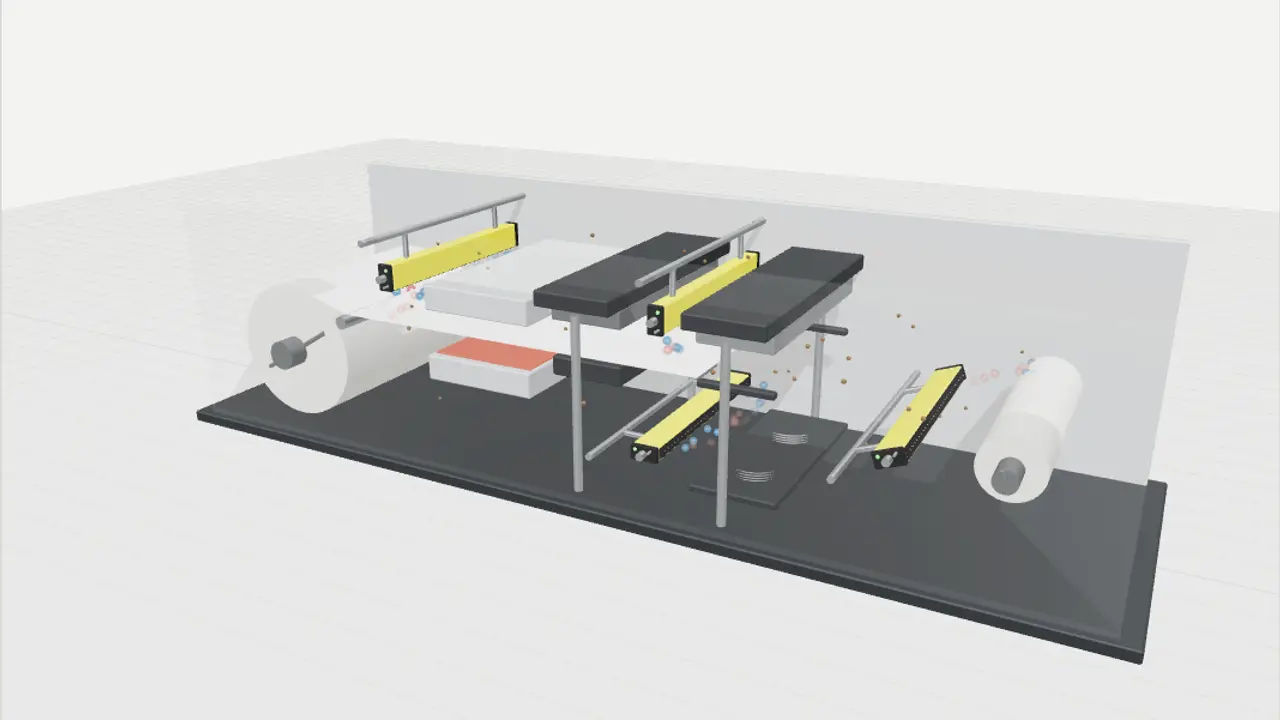
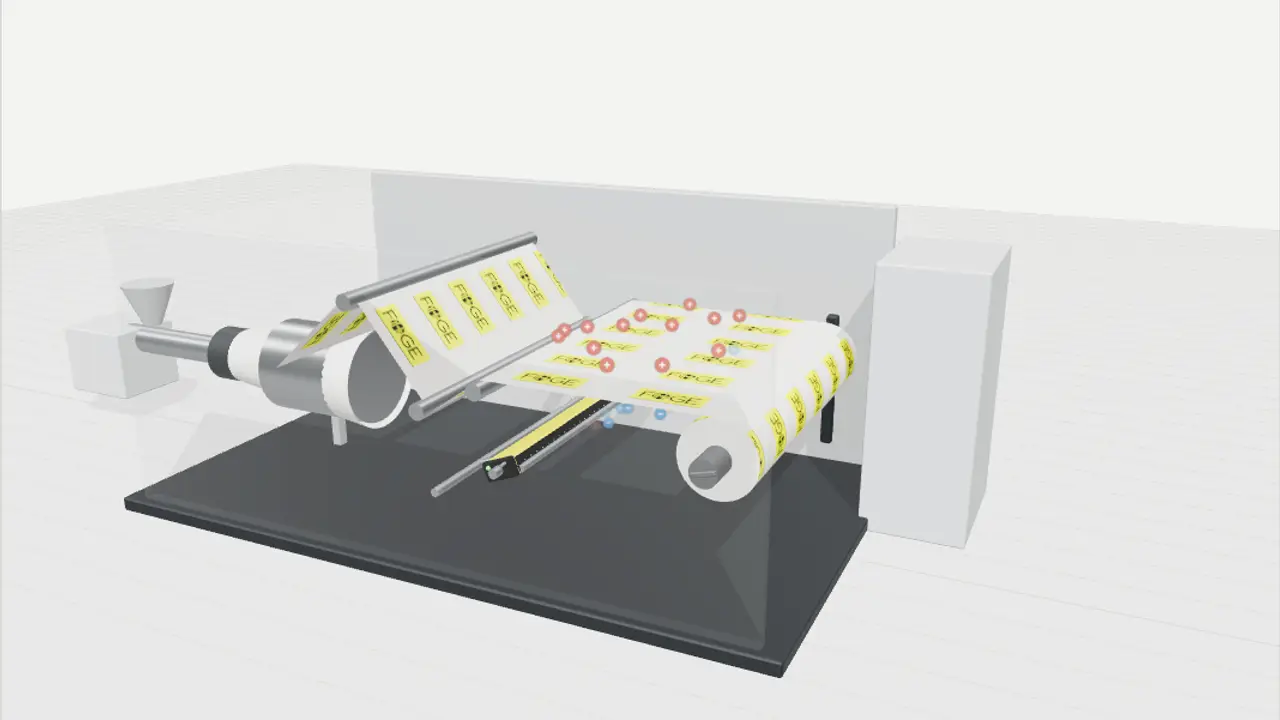
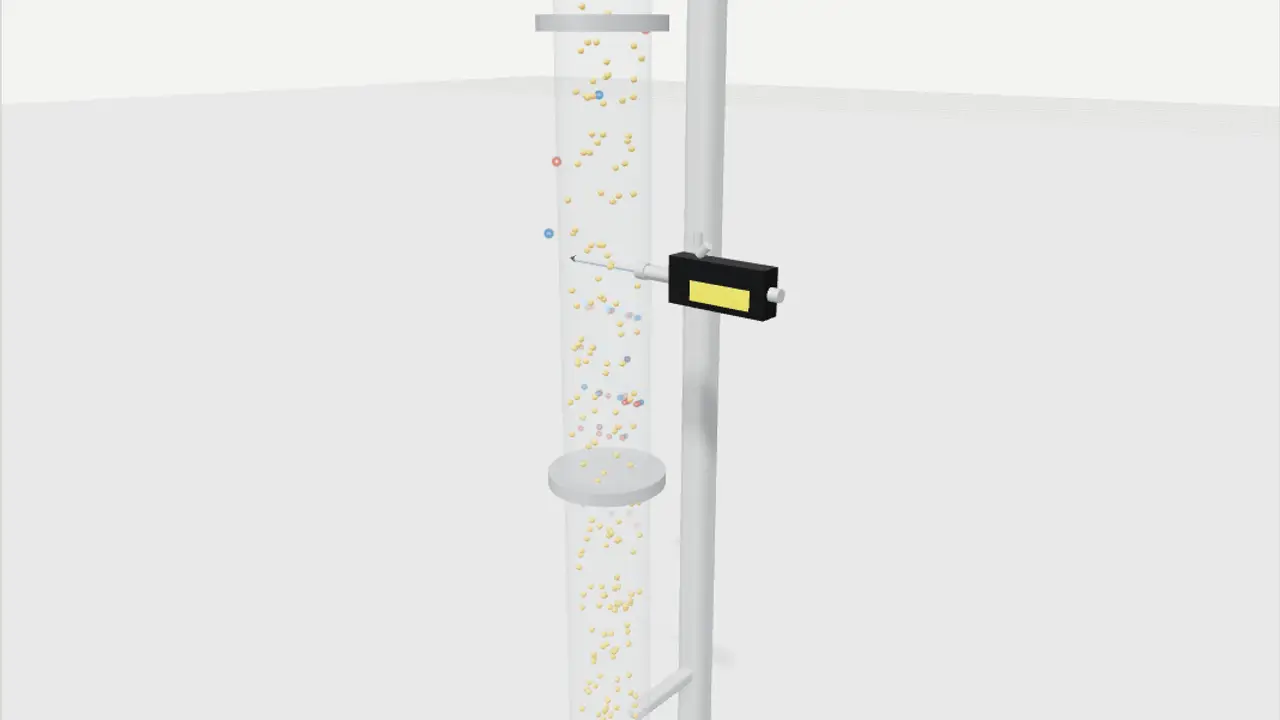
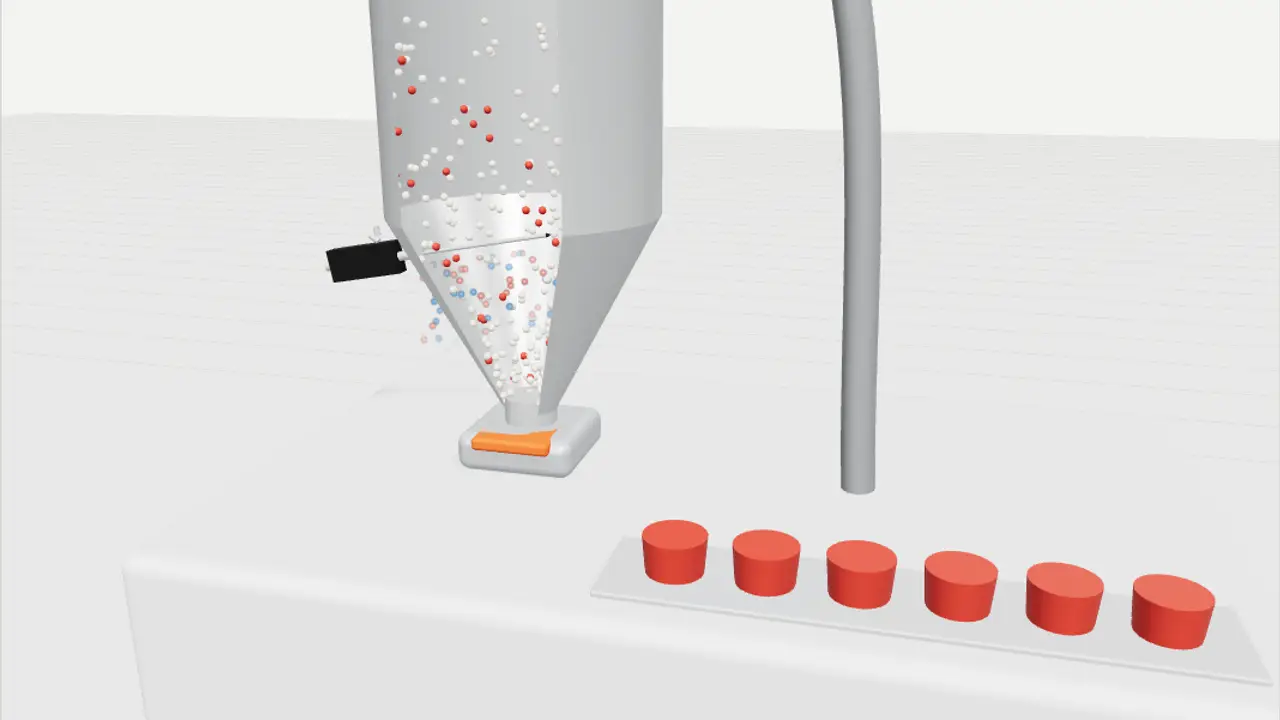
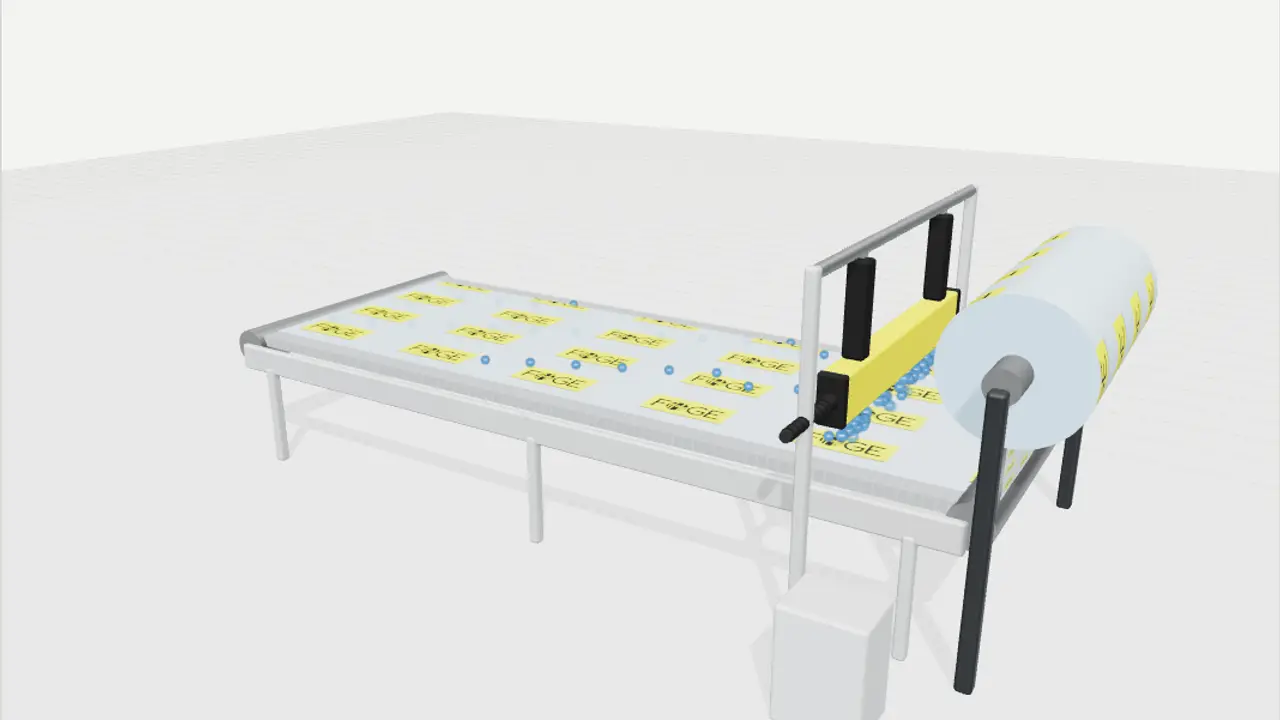
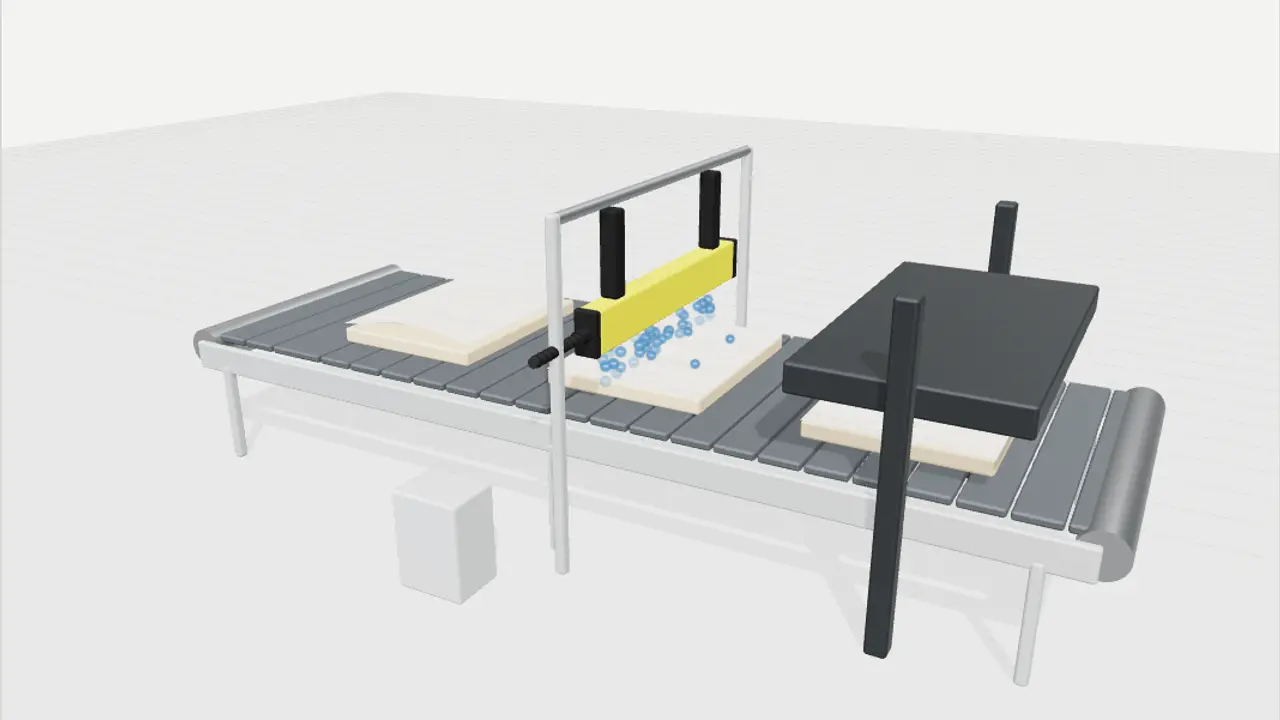
Modern headlights integrate complex and delicate electronic driver circuits for LEDs, precise leveling and aiming motors, and sensitive sensors, all of which are highly susceptible to Electrostatic Discharge (ESD). Friction from handling plastic components, machine operation, and movement of partially assembled units during manufacturing can easily build up large static charges on parts, tools, and operators. Even a small ESD event, too small to be felt, can permanently damage or degrade these sensitive components, leading to headlight failure, malfunctions (such as incorrect aiming), and significant warranty costs.
Products used: SE-BLC-F-75-C
Open the 3D application▶ Watch video
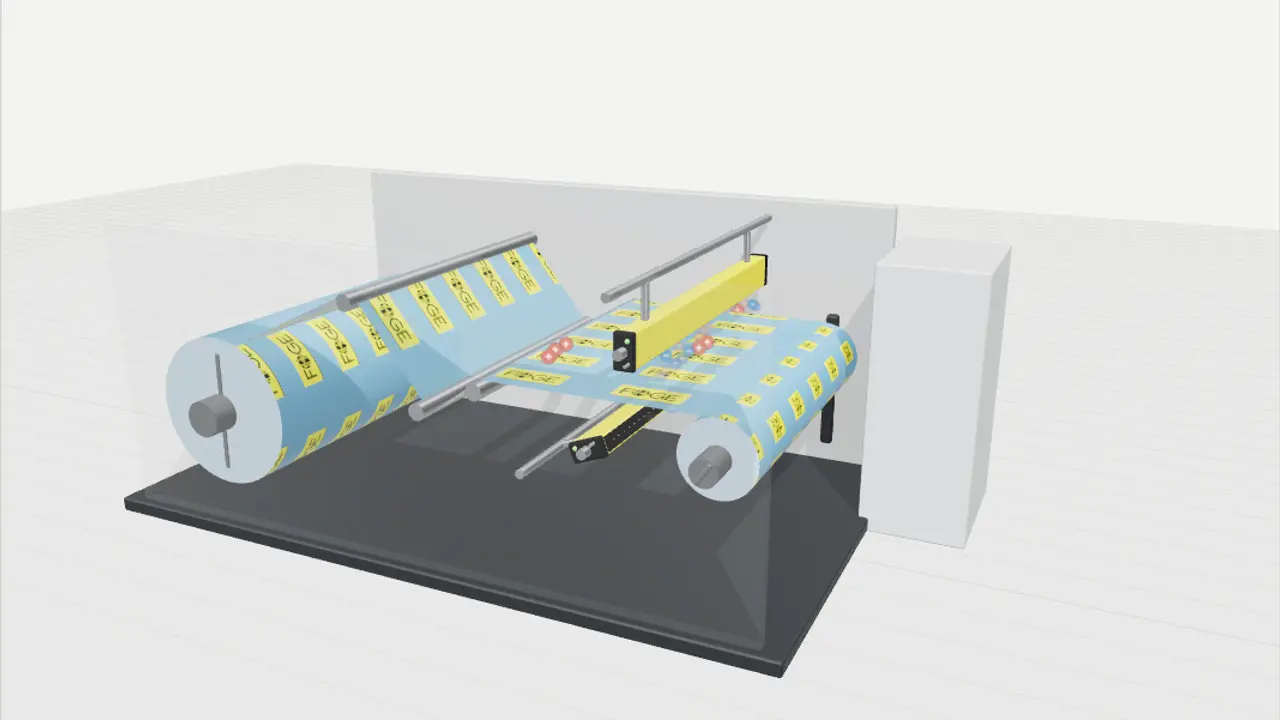
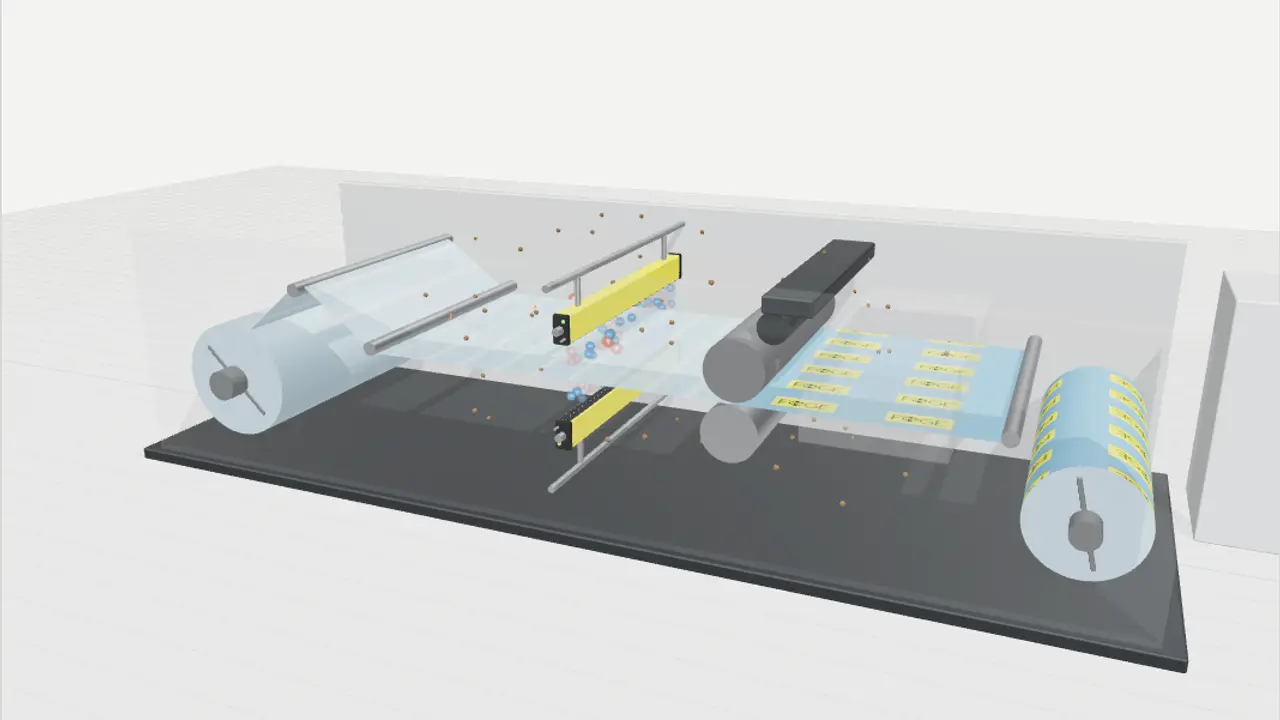
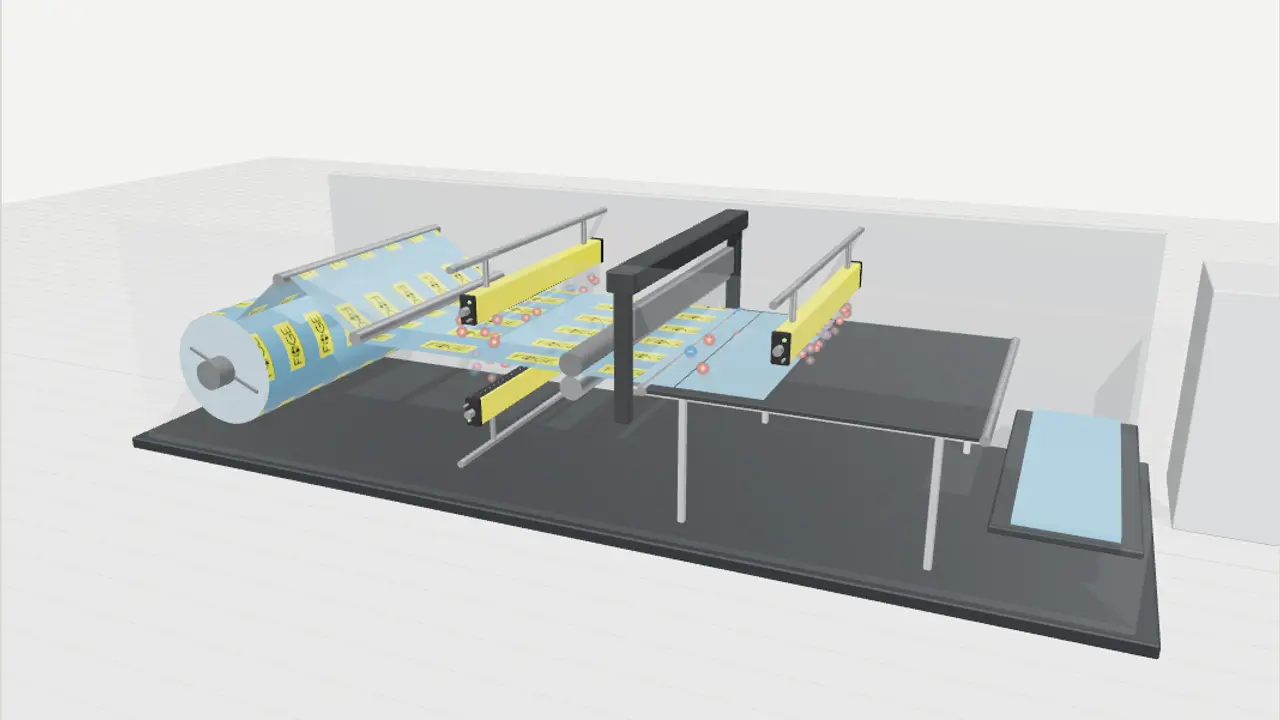
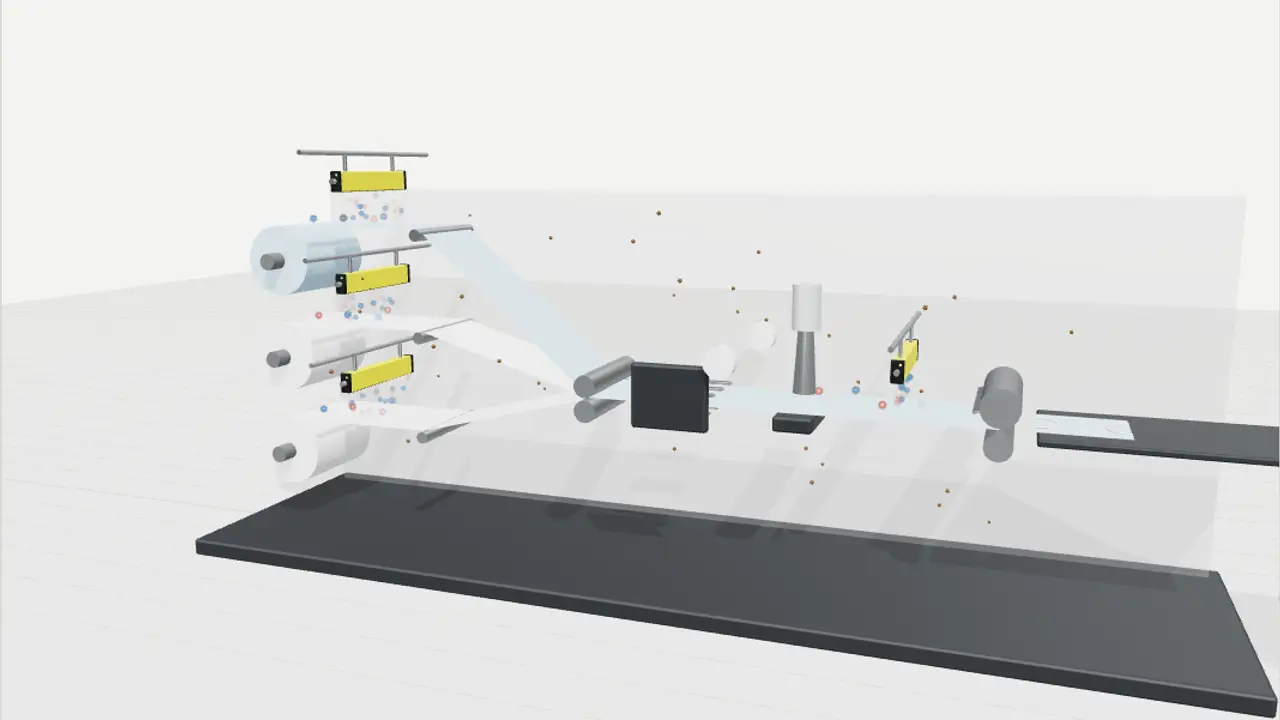
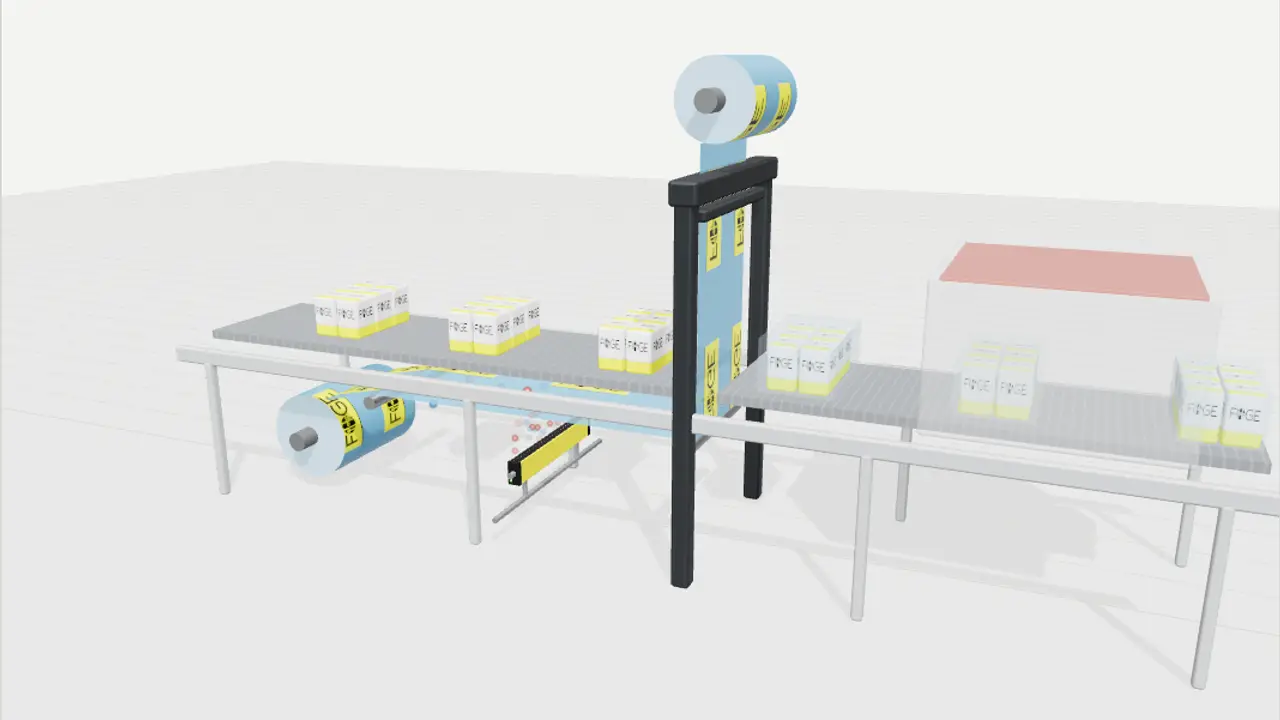
As continuous plastic film travels at high speeds over machine rollers, friction generates a massive triboelectric static charge. If this charged film is wound up, the static electricity is trapped tightly within the layers of the roll. This "battery" effect can lead to severe electrostatic discharges (sparks) that can shock operators, ignite solvent vapors (fire hazard), and cause the film to attract dust or aggressively stick to itself when unwound by the end-user.
Products used: SE-DCB-110
Open the 3D application▶ Watch video
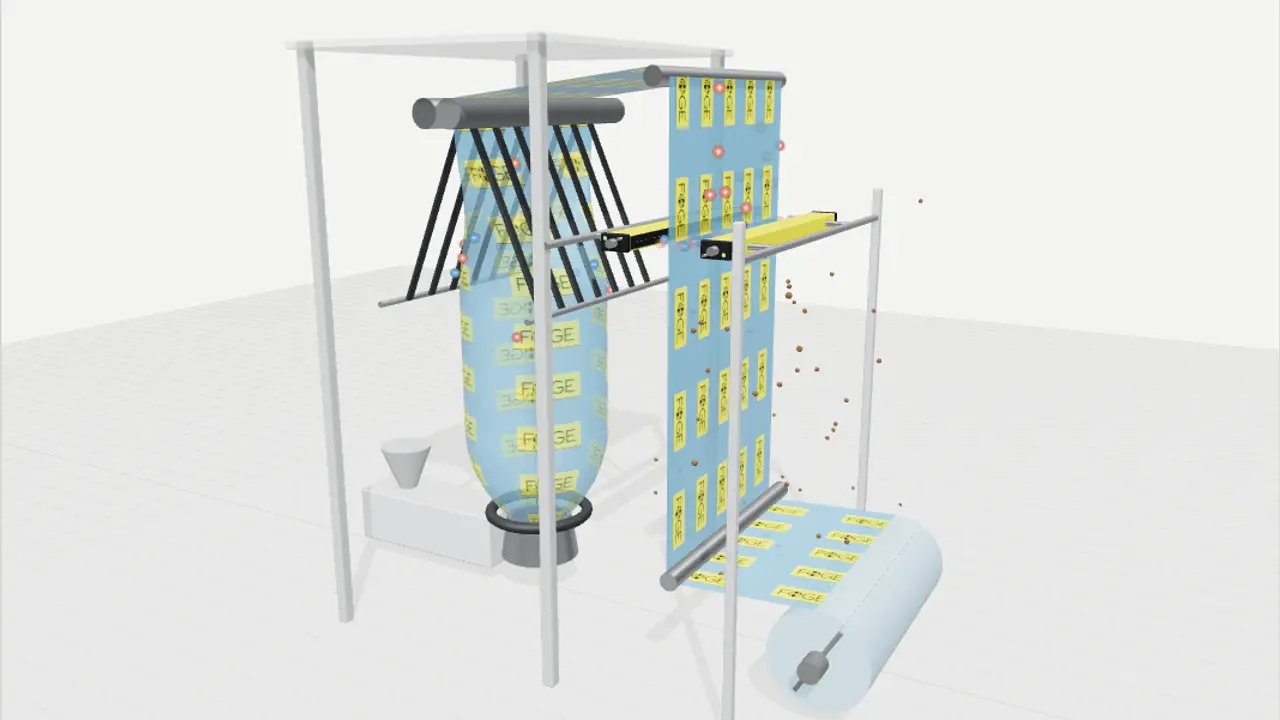
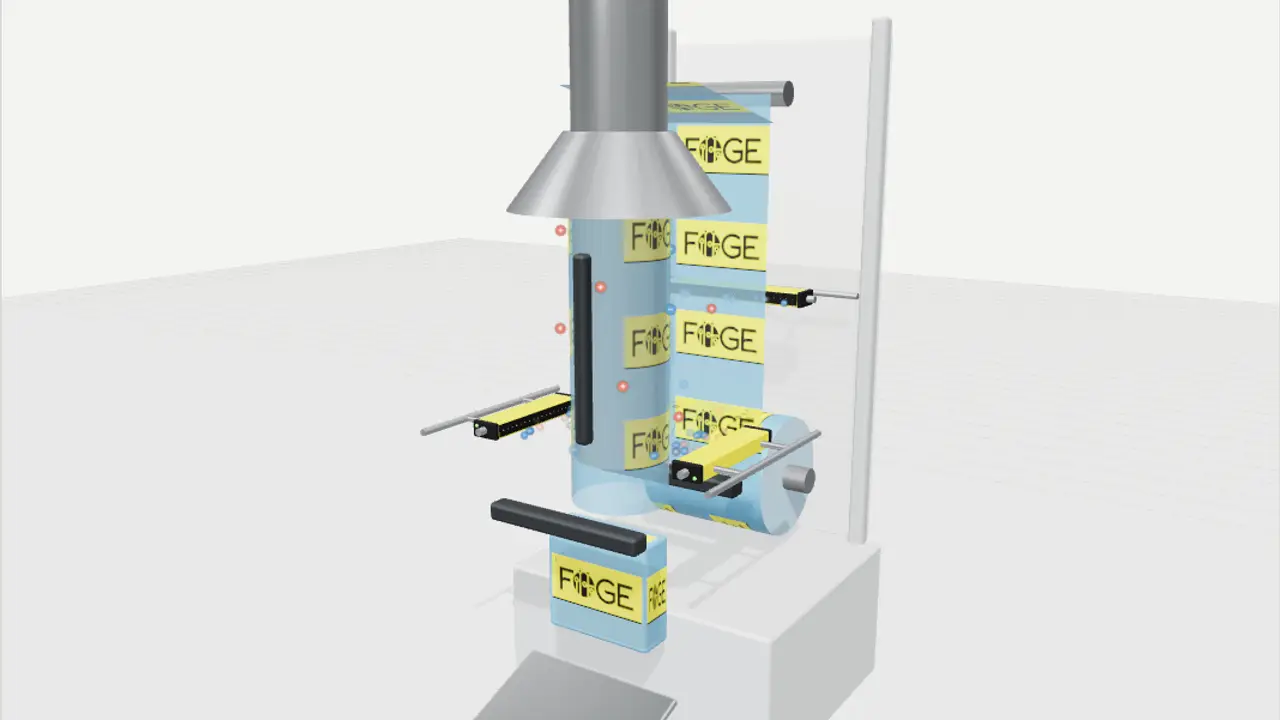
As the plastic film is drawn through the machine, folded, heat-sealed, and cut into individual bags, intense friction and separation processes generate severe triboelectric static charges. When these highly charged bags are ejected into the stacking area, they behave erratically: they cling to machine frames causing jams, repel each other (flying off the stack), or stick tightly together, making them difficult for operators or end-users to open.
Products used: SE-ACB-55
Open the 3D application▶ Watch video
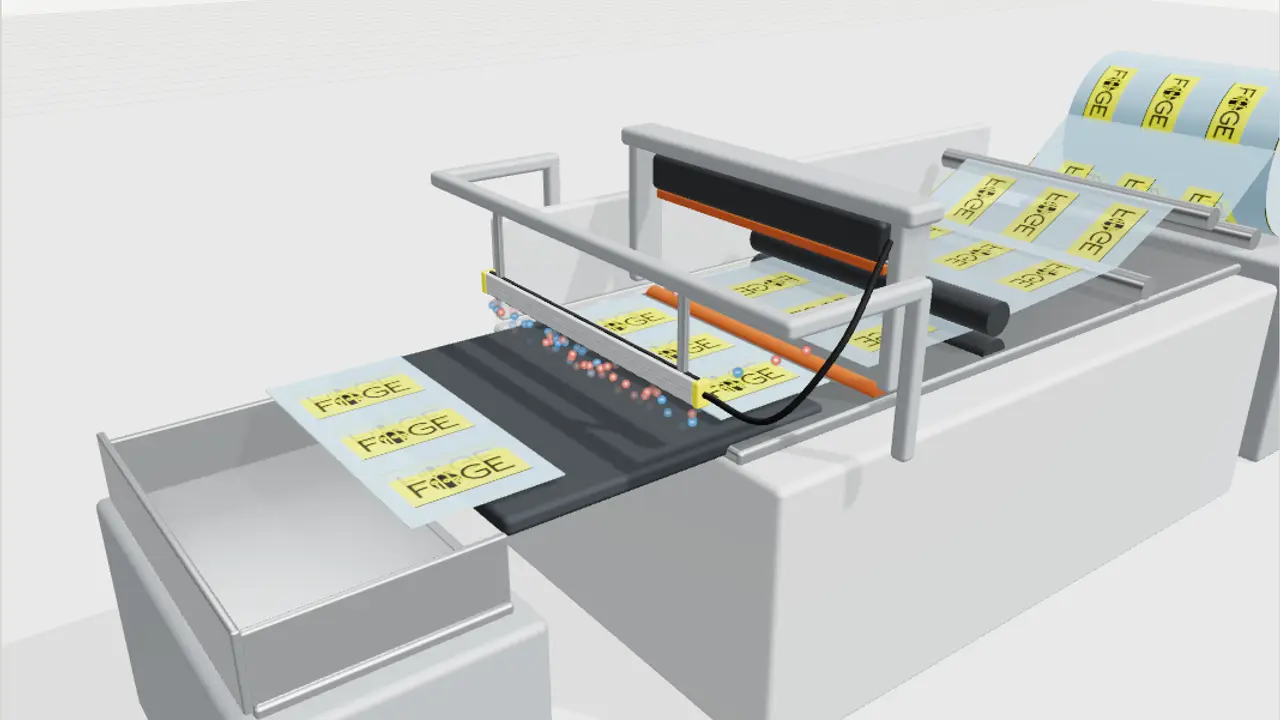
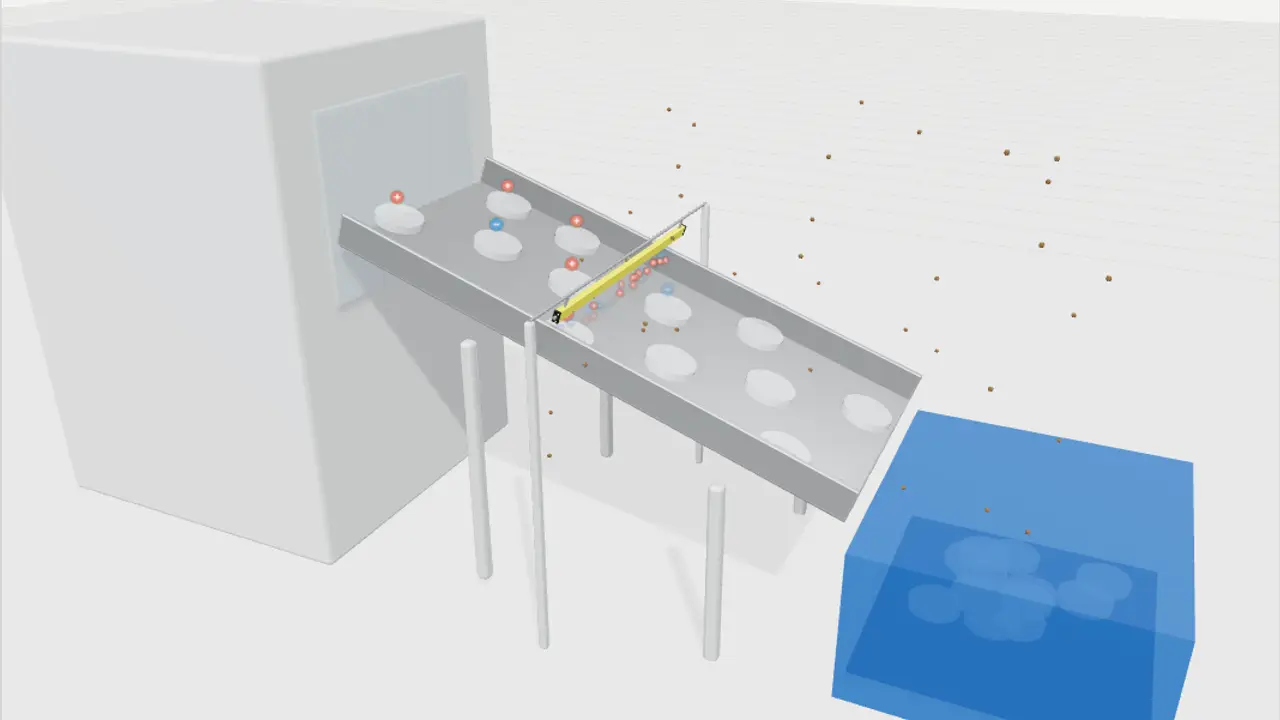
Friction from the feed rollers generates high static charge on the continuous film. This static causes the film to aggressively stick to the feed rolls and the cutting blade itself, leading to severe misfeeds, blade jams, and inaccurate cut lengths. Furthermore, the shearing action of the cut generates additional static, causing the newly separated sheets to cling to the exit conveyor, fly around, or stick together instead of stacking properly.
Products used: SE-DCB-110
Open the 3D application▶ Watch video
During the assembly of flat-panel displays, peeling protective liners or simply handling the large glass and plastic polarizing layers generates immense static electricity. This static acts like a powerful magnet, instantly attracting airborne dust, lint, and micro-particles to the screen's surface. If these contaminants are not completely removed before the final frame or outer screen is sealed, they become permanently trapped inside. This results in highly visible optical defects (often looking like "dead pixels"), expensive rejected units, and poor overall picture quality. Standard compressed air alone is ineffective because it cannot break the strong electrostatic bond holding the dust to the screen.
Products used: SE-ACG
Open the 3D application▶ Watch video
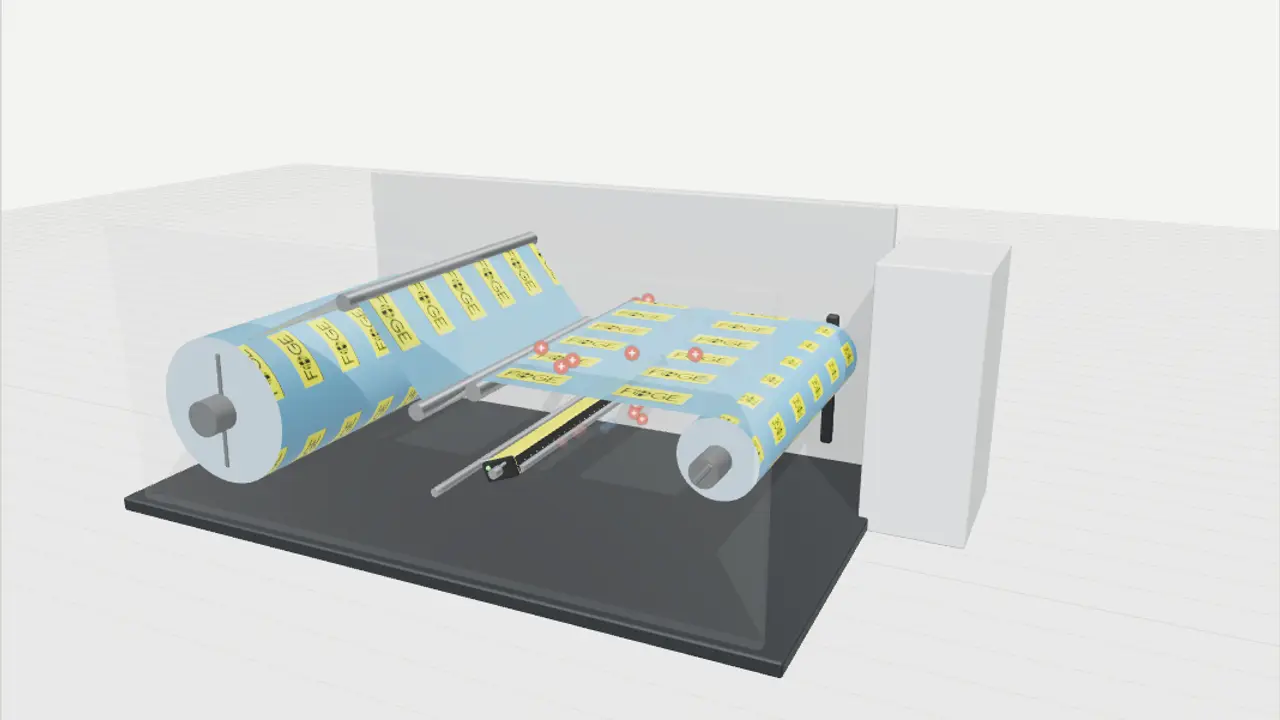
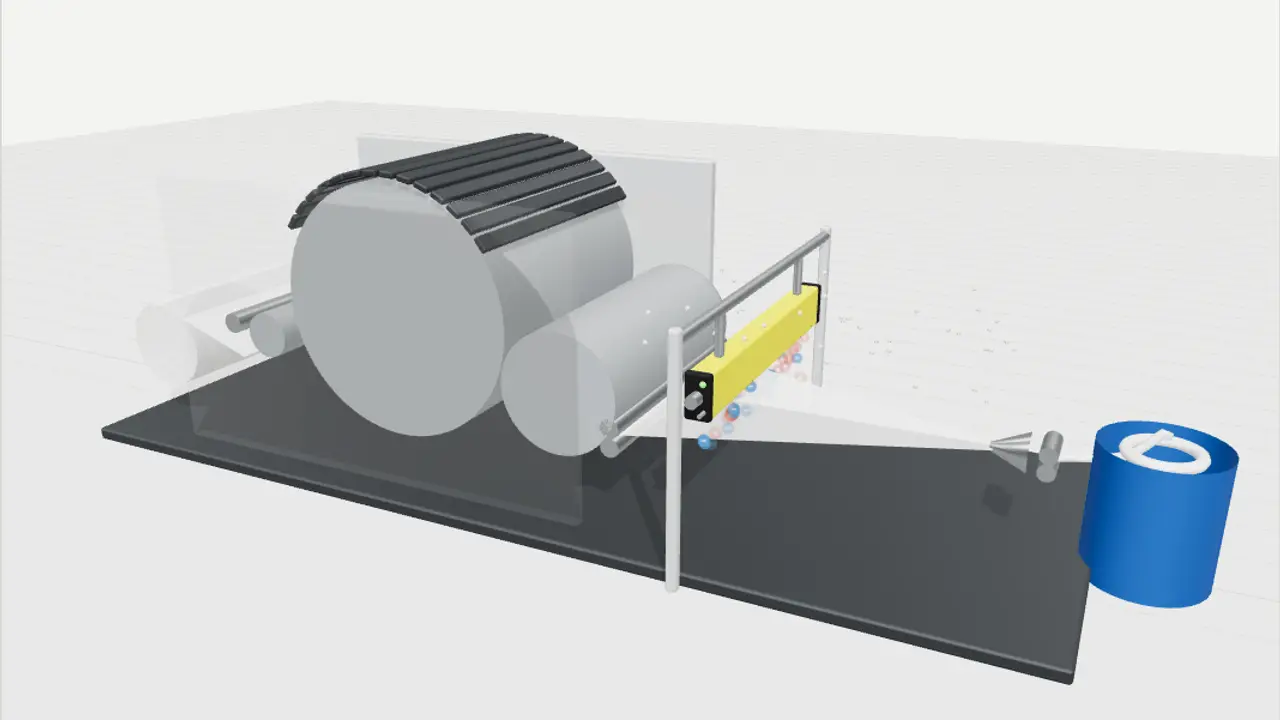
During the extrusion of foam sheets (EPS/EPE), the material moves over several rollers and is wound into large rolls. Because foam is an exceptional insulator, it generates and retains massive static charges—often exceeding 100kV. This creates three severe problems: - Fire & Explosion Hazard: In many foam processes, flammable blowing agents (like butane) are used. A static spark in the winding area can act as an ignition source, leading to high-risk industrial fires. - Operator Safety: The enormous "battery effect" of the large foam roll can deliver high-energy shocks to anyone standing nearby, even without direct contact. - Material Handling: The static charge causes the foam to cling to rollers or misalign during the winding process, leading to "telescoping" rolls or surface damage.
Products used: SE-DCA-110
Open the 3D application▶ Watch video
Face masks are manufactured using layers of non-woven synthetic fabrics (like polypropylene) that are highly prone to static buildup during high-speed unwinding, folding, and ultrasonic welding. This static causes the light fabric layers to misalign, stick to machine rollers, or repel each other, leading to production jams and uneven folds. Most critically, for medical-grade masks, static attracts airborne particulates and microorganisms, compromising the hygiene standards of the final product.
Products used: SE-DCB-90
Open the 3D application▶ Watch video
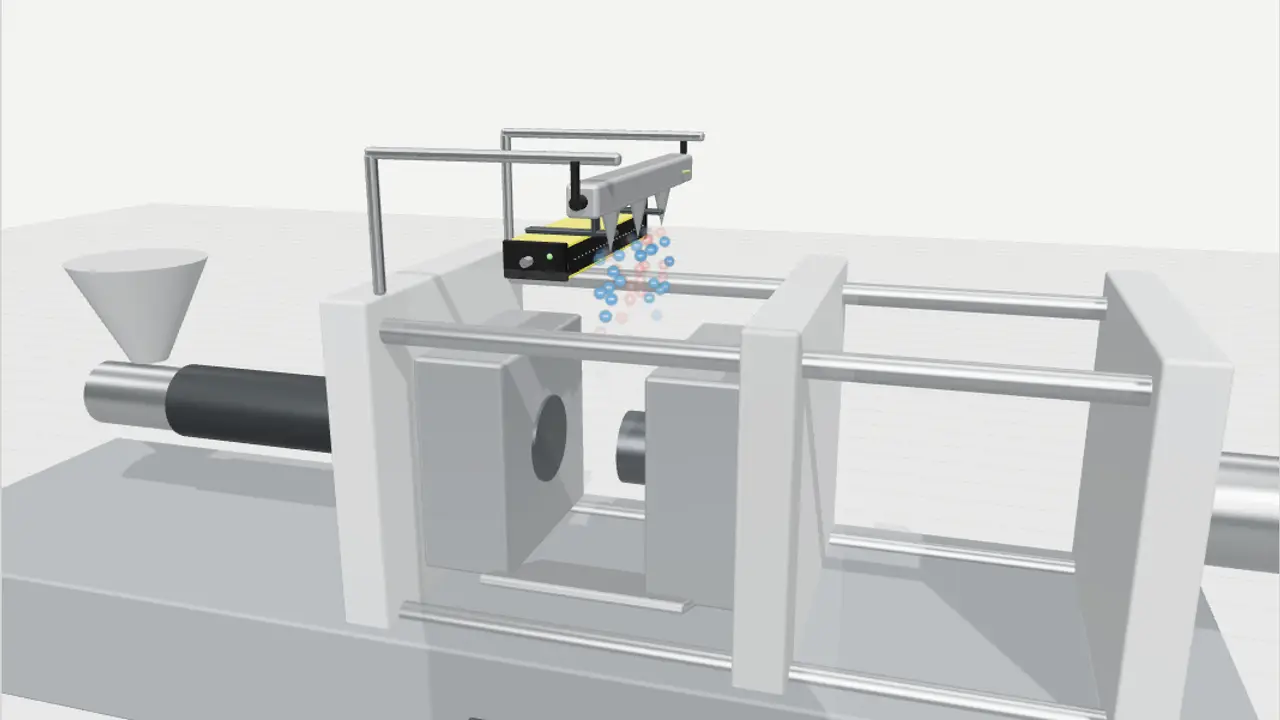
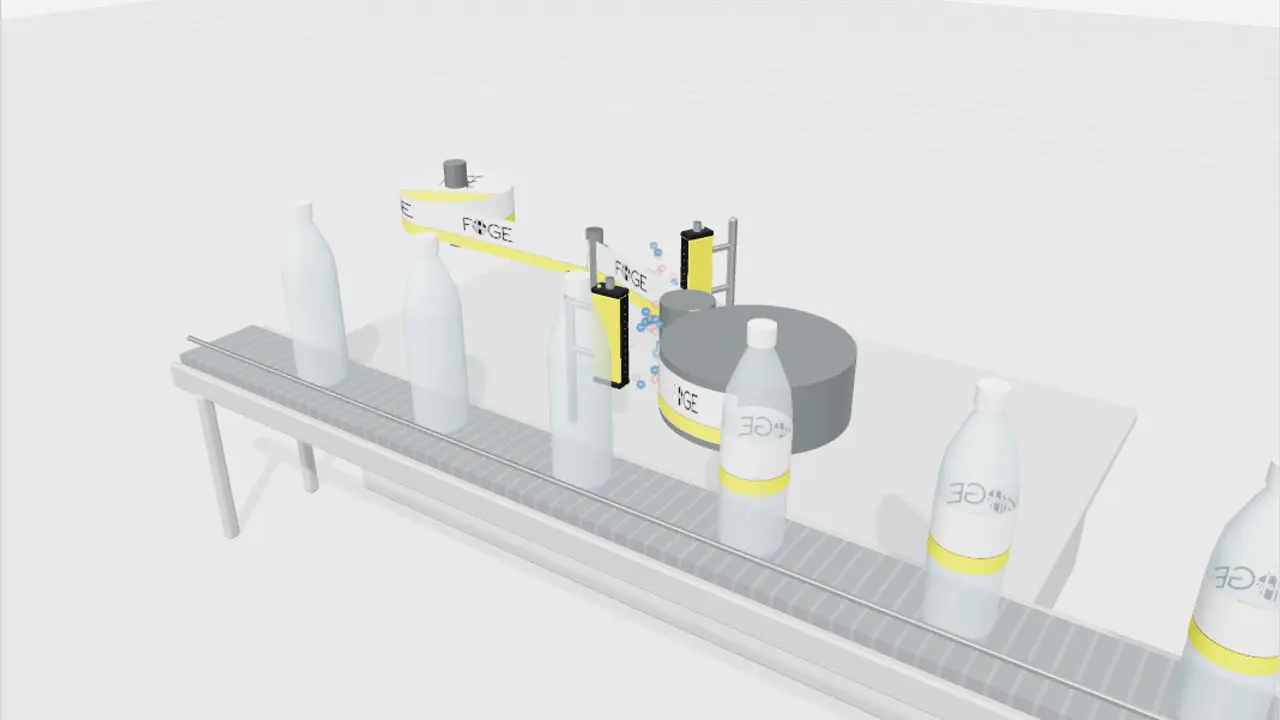
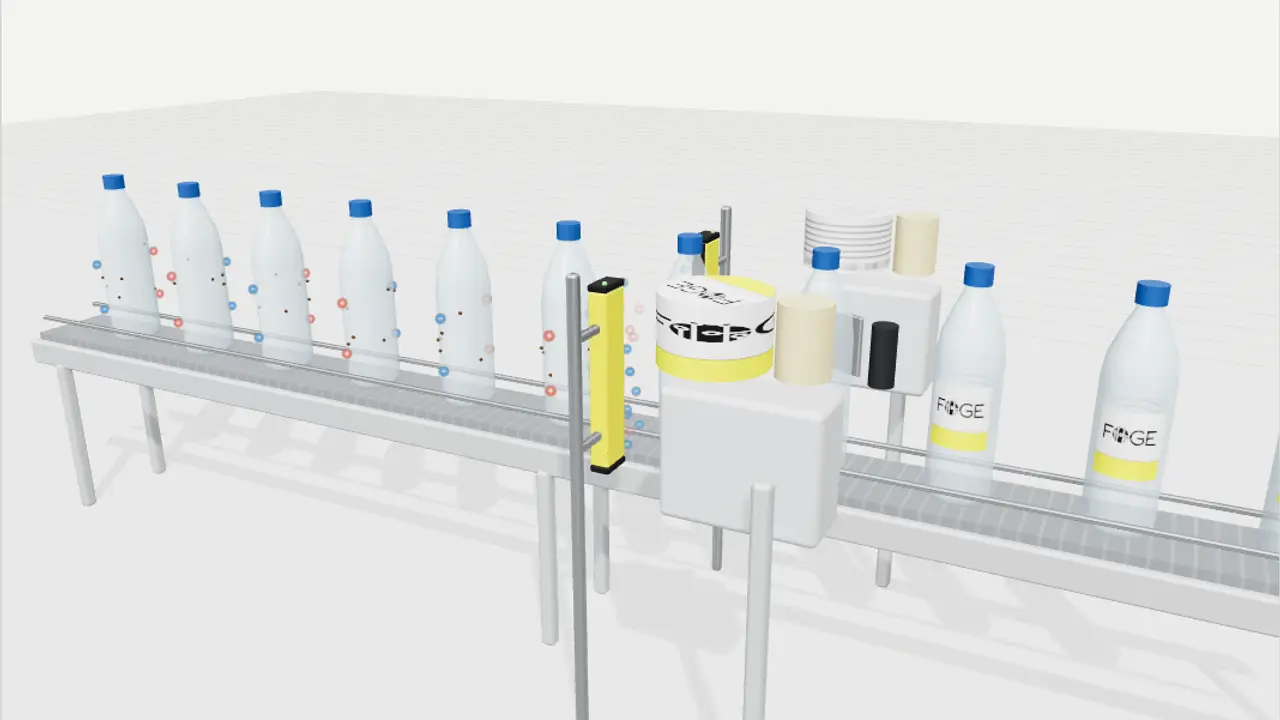
In blow molding—frequently used in the plastics industry to produce bottles and containers—the "parison" or "preform" (the raw plastic material) is heated and moved into the mold. High static charges cause these preforms to move, swing, or misalign as they are transferred. If the raw material is not perfectly aligned when the heavy metal mold halves close, it results in a "crushed" or defective product. Worse, this misalignment can cause the mold to close onto the solid plastic, leading to catastrophic physical damage to the expensive mold faces and core pins.
Products used: SE-DCB-110
Open the 3D application▶ Watch video
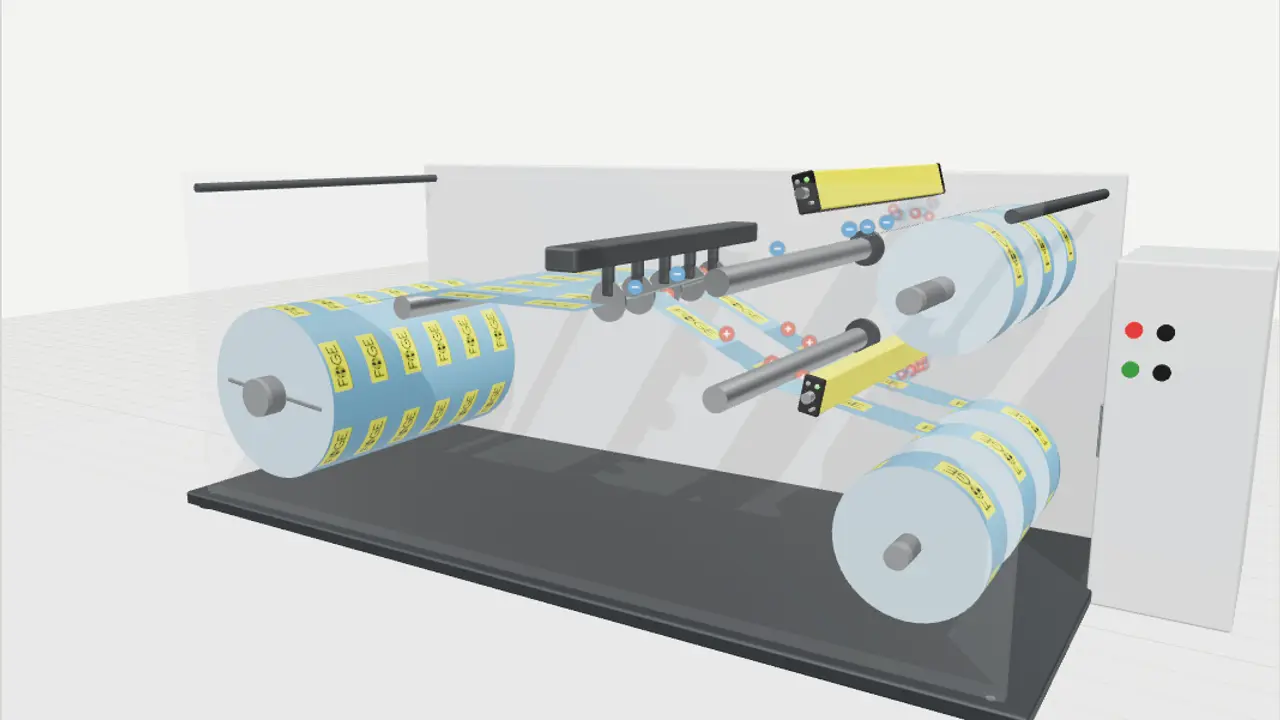
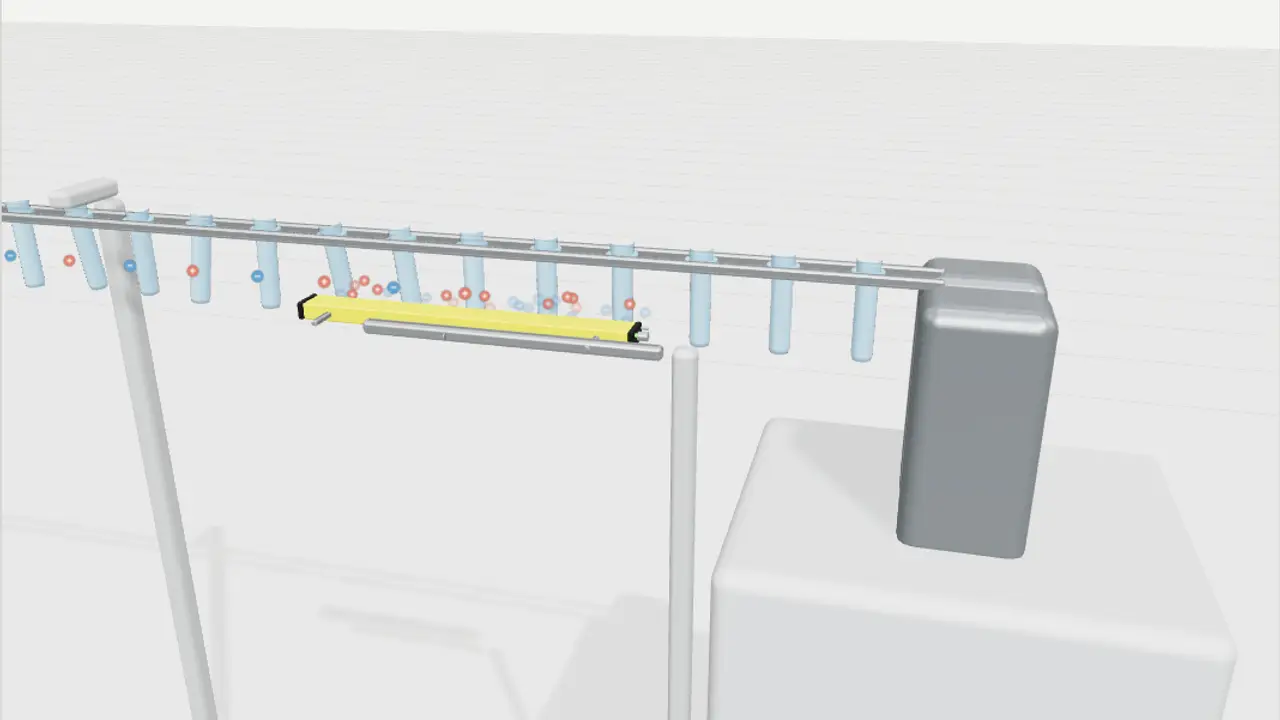
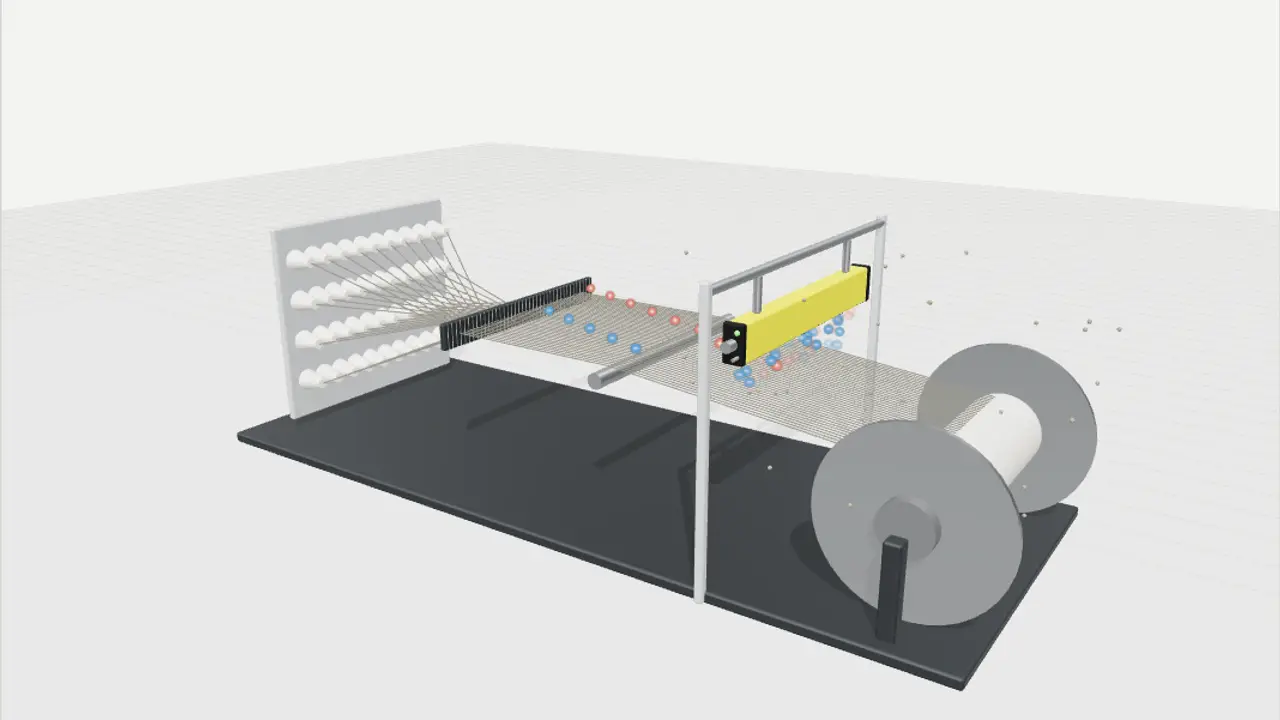
In textile manufacturing, thousands of individual synthetic yarns (polyester, nylon, acrylic) are pulled at very high speeds from a creel to be wound onto a large beam. This rapid movement and friction against thread guides generate intense static electricity. The charged yarns repel each other (causing "ballooning"), stick to machine rollers, or snap. This leads to uneven tension, tangling, and frequent machine stops. Furthermore, the massive static buildup in the finished beam can cause painful shocks to operators and attract significant amounts of dust and lint, degrading fabric quality.
Products used: SE-DCB-110
Open the 3D application▶ Watch video
During the carding process, individual synthetic or natural fibers are combed and aligned to form a thin, delicate web. The high-speed mechanical action and friction between the fibers and the metal carding wires generate massive static electricity. This causes the lightweight fiber web to aggressively cling to the rollers or wrap around the doffer, leading to "web wrap" and immediate machine downtime. Additionally, the fibers can repel each other, causing the web to lose its cohesion and become ragged or uneven.
Products used: SE-DCB-110
Open the 3D application▶ Watch video
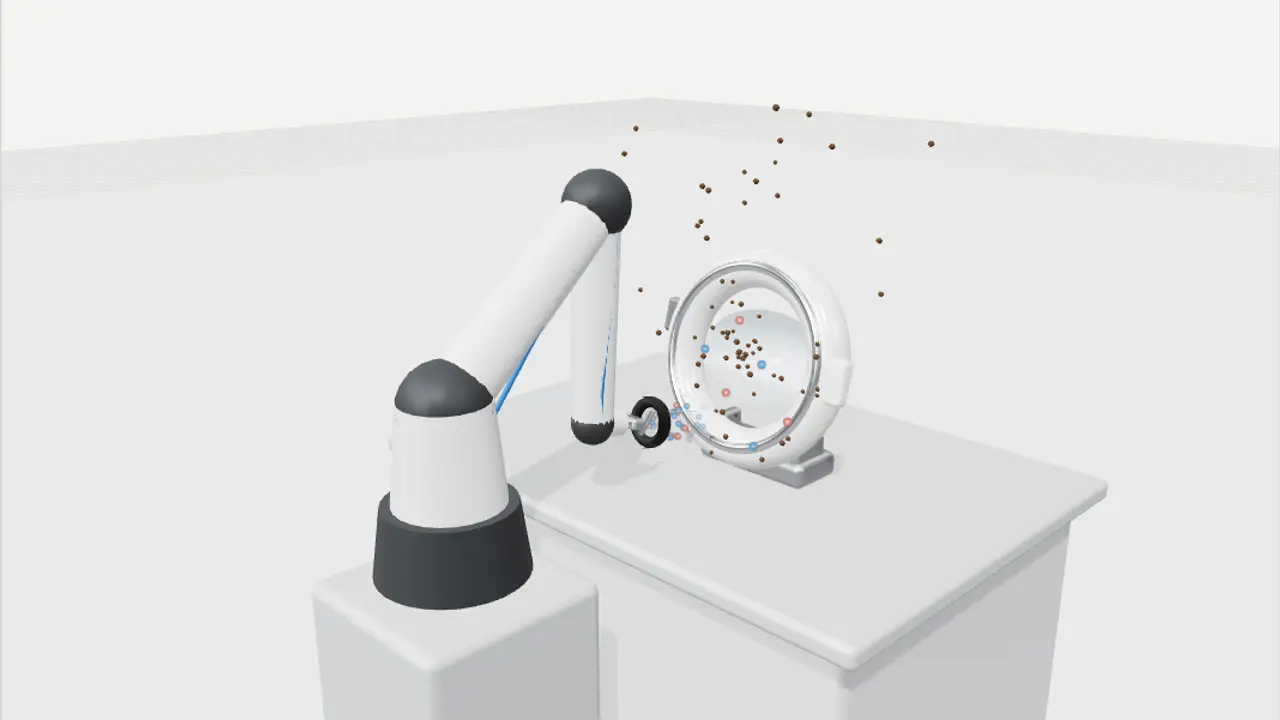
Washing machine doors, typically made of high-gloss plastic or glass, are highly prone to static buildup during the molding and transport phases. On an automated assembly line, this static acts as a powerful magnet for dust, lint, and airborne debris. If these contaminants are not removed before the door is assembled or packaged, it leads to visible surface defects and perceived poor quality. Standard robotic handling doesn't solve this, as the static bond holds the dust firmly to the surface, making it resistant to simple air blowing.
Products used: SE-ARN-80
Open the 3D application▶ Watch video
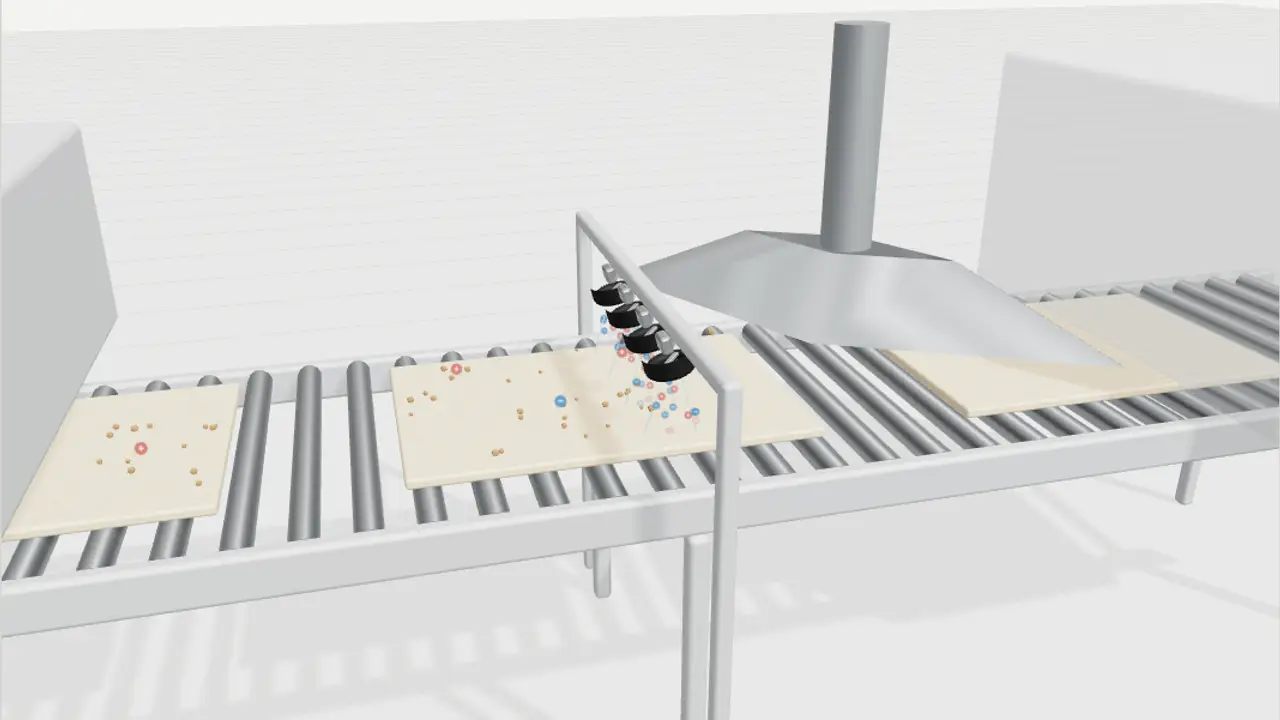
Wood panels (MDF, chipboard, or solid wood) generate extreme static charges during sanding and conveying. This static creates a powerful bond between the wood surface and the fine sawdust or sanding debris. Standard brushes or non-ionized air blasts cannot break this electrostatic attraction, leaving particles trapped on the surface. If the panel moves to the coating or painting stage with this dust, it causes "pinholes," bumps, and poor adhesion, leading to high reject rates.
Products used: SE-ARN-80
Open the 3D application▶ Watch video
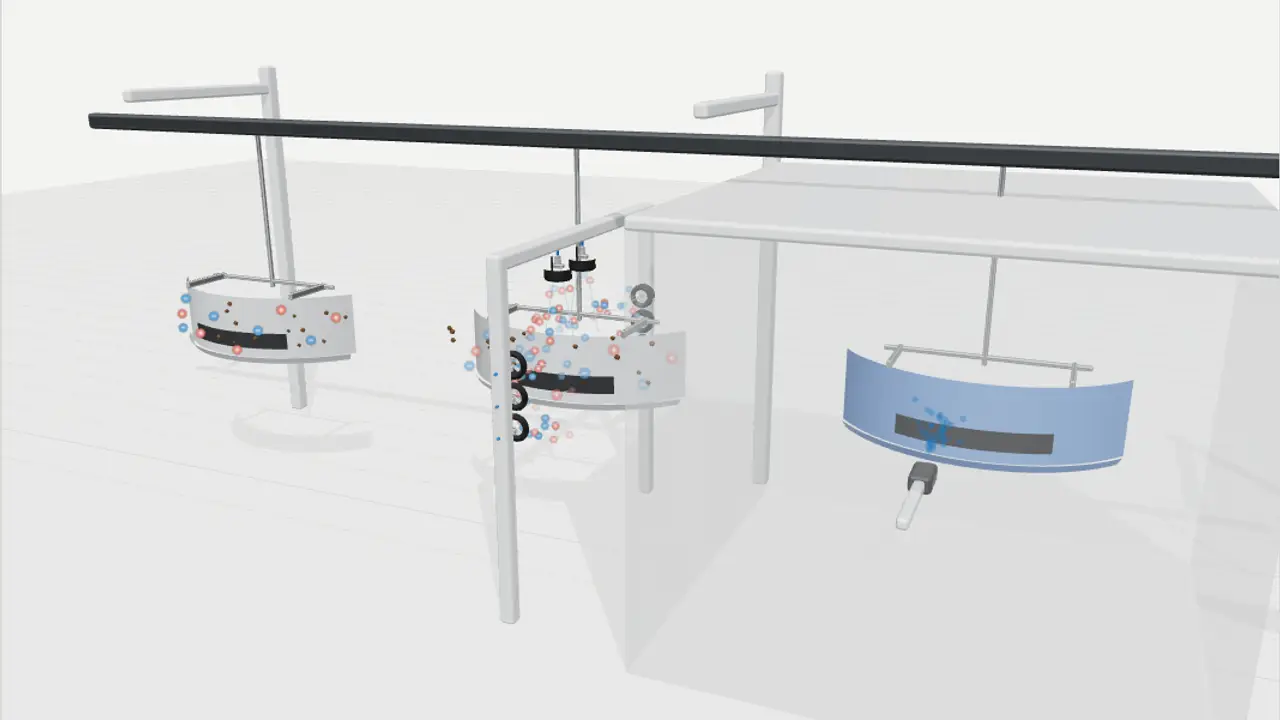
High-performance plastic parts (like automotive bumpers, mirror covers, or consumer electronics) are highly insulative and build up massive static charges during the cleaning and conveying stages. This static creates two critical failure points in the coating process: - "Magnet Effect": The charged part attracts airborne dust and fibers just seconds before the paint is applied, resulting in "dirt-in-paint" inclusions that require expensive sanding and reworking. - Uneven Finish: Static charges on the surface can repel the atomized paint droplets or cause them to cluster unevenly (orange peel effect), preventing a smooth, high-quality finish.
Products used: SE-ARN-80
Open the 3D application▶ Watch video