Textile carding — web delivery with SE-DCB-110
In carding, fibres are combed and aligned into a thin, delicate web. The fast mechanical action and the friction against the card wires charge the fibres: the light web clings to the rollers or wraps around the doffer ("web wrap") — immediate downtime — and the fibres repel each other, so the web becomes ragged and uneven. An SE-DCB-110 across the delivery area, where the web leaves the card, keeps it flat and cohesive on its way to sliver formation.
The problem
During the carding process, individual synthetic or natural fibers are combed and aligned to form a thin, delicate web. The high-speed mechanical action and friction between the fibers and the metal carding wires generate massive static electricity. This causes the lightweight fiber web to aggressively cling to the rollers or wrap around the doffer, leading to "web wrap" and immediate machine downtime. Additionally, the fibers can repel each other, causing the web to lose its cohesion and become ragged or uneven.
The solution
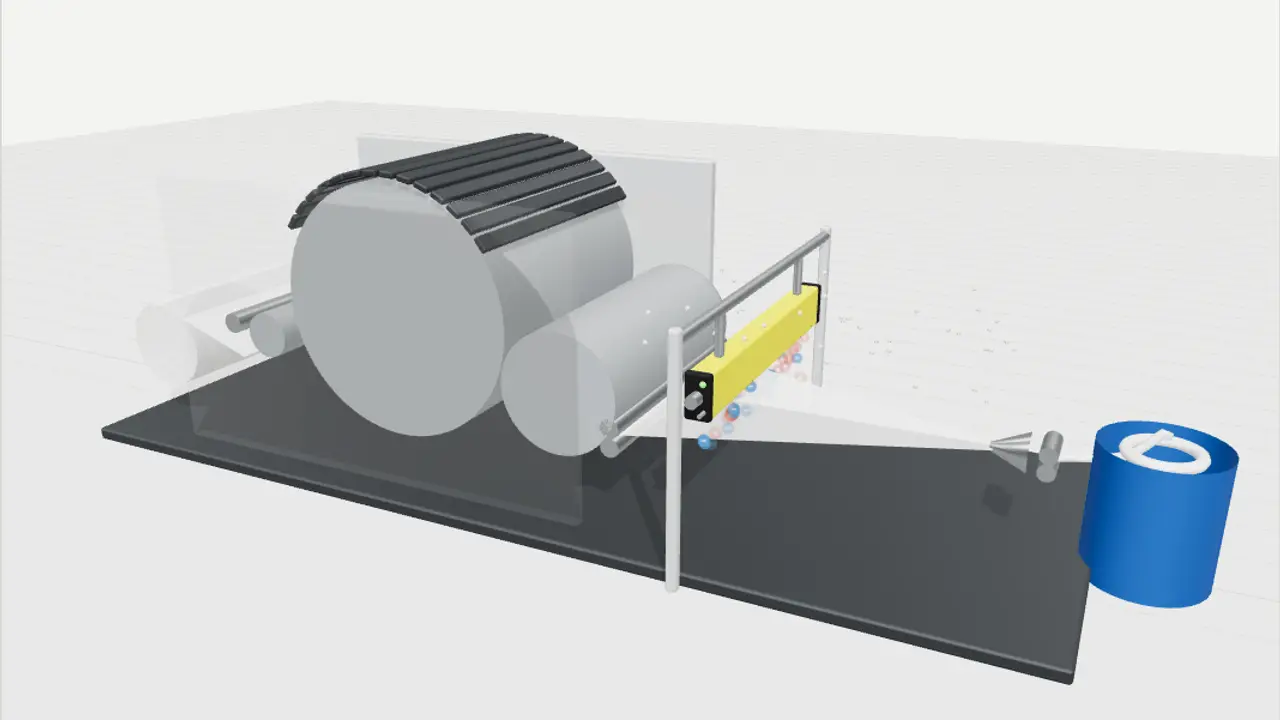
An active ionizing bar is mounted across the delivery area where the fiber web leaves the carding machine. By neutralizing the static charge at this critical transition point, the bar prevents the web from sticking to the machinery and ensures it remains flat and cohesive as it is drawn into the next stage (such as sliver formation).
Application
Fiber web control and sticking prevention in carding, combing, and non-woven textile manufacturing.
1 · SE-DCB-110 — web delivery
Across the delivery area where the fibre web leaves the doffer; the pins point down at the web.
- Ionization
- 11 kV pulsed DC · shockless
- Ionization range
- 100 – 600 mm
- Ordering length
- 300 – 4500 mm (100 mm steps)
- Supply
- 24 V DC · SE-PSU-24-C-M12
Also suitable for carding and web delivery
Other FÖGE antistatic bars for carding, combing and non-woven lines.
Schematic model, not to scale. Machines and parts are generic — no specific manufacturer or brand.